Category Archives: La Befana

Twelfth Night

Twelfth Night

ELEVENTH DAY of CHRISTMAS:
Twelfth Night, Eve of the Epiphany

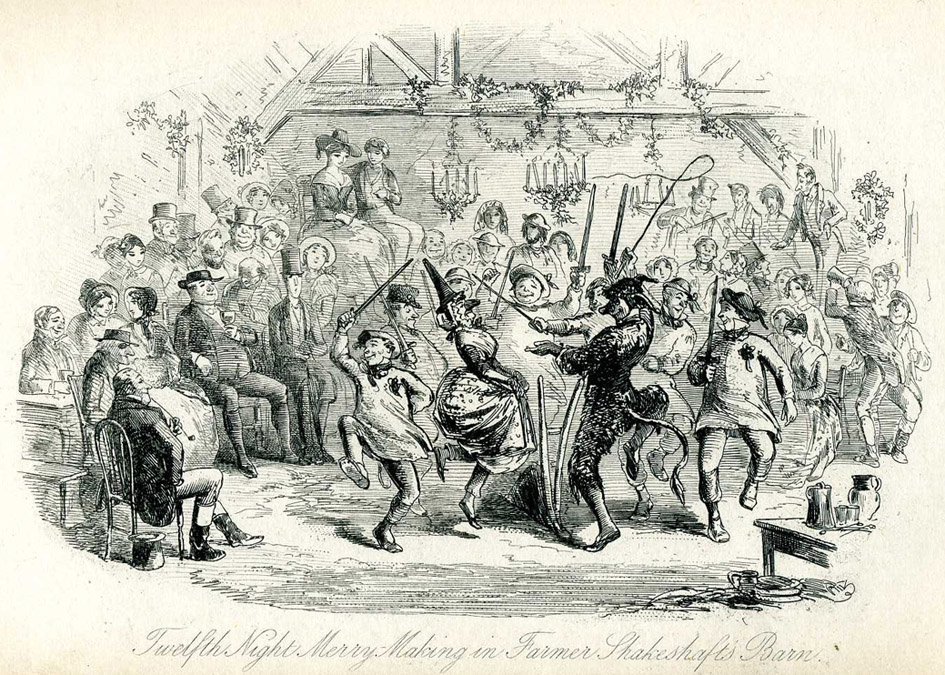
The close of the Christmas season begins here, and just as our Christmas celebration began in the nighttime hours of Christmas Eve, so the same comes Twelfth Night. If this is confusing (that Twelfth Night should come on the Eleventh Day), remember that even today, much of the way we celebrate holidays is based on traditional reckoning of time, in which a new day begins at sunset. This is why the nights before holidays are so important: Consider Christmas Eve, of course, but other nighttime events, as well, like Halloween and Holy Saturday at Easter. And so Epiphany Eve, which is tonight, ushers in Epiphany the next day. The night is best known, though, as Twelfth Night, and it has long been a night of great festivity, much like you’d see in the old engraving pictured above.

I am always fascinated by images of old parties like that. I think it’s because I am the most awkward person at parties; and yet I picture the Van Tassels’ Quilting and Merrymaking Frolic in Washington Irving’s “The Legend of Sleepy Hollow” or the Fezziwiggs’ Christmas Eve party in Charles Dickens’ A Christmas Carol, and I am pretty confident I’d have a grand old time at parties like this. I would love to be right there in the Twelfth Night revels pictured above.

There is very little of this Twelfth Night festivity nowadays, especially here in the States. But I think we need Twelfth Night. Old Father Christmas comes to be with us each year for a visit that lasts but a couple of weeks. It’s only right to send him on his way again in proper fashion, and in our house, that means a celebration––even a small one if that is all we have left in us––is in order. Dinner should be a good one, and a festive Christmas punch is a nice accompaniment. Friends and family would be a great addition, as well as good music and an old game or two, like Snapdragon: Fill a shallow bowl with golden raisins and pour a bit of brandy over them. Darken the room (like the darkness of midwinter) and carefully set light to the brandy. Play the game while the brandy is aflame: Each person in the room snatches a raisin from the bowl and makes a wish upon the raisin before popping it into his or her mouth. This old game from Scotland may sound dangerous, but it’s less dangerous than it would seem. Be careful all the same, of course. Each person’s wish should be granted before the next Twelfth Night… or so the story goes.

Christmas ends each year with Epiphany, which will come tomorrow. Epiphany marks the day the Magi arrived at the stable in Bethlehem after nights of following the star that announced the birth of the Christ child. One of the most endearing figures in the story is an old Italian woman who is known as la befana. She and the Magi are the last of the midwinter gift bearers. Those three kings (los tres reyes) are the ones who bring presents tonight in Spain and Latin America, but in Italy, this is the job of la befana. As the story goes, at that first Christmas oh so long ago, the Magi stopped at la befana’s house and asked her to join them on their journey, but she declined the invitation. “I have so much housework to do!” she told them. And so the Magi left her home and continued on their way.

But as she swept her floors, la befana began to feel a bit remorseful, and once she finished her sweeping, she set out to find the Magi. But she never did find them, nor the child they had told her about. She searched and searched but to no avail. Still, to this day, on each Twelfth Night, la befana sets out upon her broom to seek them. As she makes her rounds, searching high and low for the child and the three kings, la befana leaves small presents for all the sleeping children. Even the ones who were naughty: they get coal, but la befana’s coal is sweet as candy, so even her coal is a nice present to receive.

It is la befana’s job to sweep away Christmas, and so she does this each year. She sweeps and sweeps, and by the time she’s done with her sweeping tomorrow at Epiphany, Christmas will be done. The Magi will return to their distant countries, and Old Father Christmas, whether he was welcome or welcome not, will be on his way back to the Northland. But the wheel of the seasonal round will continue to turn and new days of wonder will be upon us, even as we just begin to miss the Yuletide visitors who came to spend these dark midwinter nights in our company.


Image: “Twelfth Night Merry-Making in Farmer Shakeshaft’s Barn,” an engraving by Hablot Knight Brown (better known as “Phiz”) from the book Mervyn Clitheroe by William Harrison Ainsworth, c.1850.
 

Following that Star

Cappella_dei_magi_paesaggio

TENTH DAY of CHRISTMAS:
St. Titus’s and St. Gregory’s Day

Again today, like yesterday, there are no particular customs associated with this, the Tenth Day of Christmas. It is the Feast Day of St. Titus and St. Gregory. Titus was a disciple of St. Paul in the first century, and St. Gregory was a bishop in the sixth century. It’s also St. Rigobert’s Day and St. Ramon’s Day. But not much is done to celebrate these good guys, and in this house, the Tenth Day of Christmas is typically a day of preparation for the bigger festivities that come next over the two days that follow: Twelfth Night and Epiphany, the celebrations that close the Christmas season.

The celebration of Epiphany on January 6 rivals that of Christmas Day in some countries. It’s the big day for gift giving, and we see the last of the wintertime gift bearers in Italy with la befana and throughout Spain and Latin America, the three kings themselves bringing presents. As for Twelfth Night, well, this is a celebration that has fallen a bit out of favor here in the States, and this is too bad. We think of Twelfth Night and Epiphany as a proper close to the Christmas season. For those of you who feel a bit let down after Christmas, these are especially important celebrations, for they help give Christmas its full life and scope.

Last year I shared with you a recipe for one of the Epiphany traditions in our house: Three Kings Cakes. I’ll share it with you again today, for if you bake them today or tomorrow morning, they’ll be ready in plenty of time for Twelfth Night or for Epiphany. You will need three loaf pans because the recipe yields three cakes, one for each of the Magi: Caspar, Melchior, and Balthasar. The Magi will arrive on the Sixth of January, just in time for these delightful cakes that are flavored with honey and rose water, flavors of the ancient Mediterranean world, flavors they certainly knew well in their day.

*

THREE KINGS CAKES
makes three cakes

For the Batter
1 cup butter
generous 3/4 cup sugar
2 eggs
2 teaspoons vanilla
2 1/2 cups currants
3 cups applesauce
1/2 teaspoon salt
1 tablespoon baking soda
1 teaspoon cinnamon
1/2 teaspoon ground cloves
4 cups flour

Preheat oven to 300 degrees. Cream together the butter and the sugar, then add the eggs and vanilla. Beat smooth before adding the remaining ingredients. Grease 3 loaf pans (about 8″ x 4″ x 3″ or so) and divide the batter amongst the pans. Bake for one hour, or until a toothpick poked into the center of each cake comes out dry. Let the cakes cool in their pans on a rack.

For the Syrup
1/2 cup honey
1/2 cup sugar
1/2 cup water
1 cinnamon stick
6 whole cloves
2 tablespoons rose water

Once the cakes are baked, combine the syrup ingredients, except for the rose water, in a saucepan over medium heat. Once the sugar dissolves, add the rose water. Remove the cinnamon stick and the cloves and then pour the hot syrup over the cakes in their pans, divided equally amongst the three cakes. The syrup will soak into the cakes. Allow to cool completely before unmolding from the pans. Serving the three cakes on three platters makes for a nice presentation on Epiphany Day or on Twelfth Night.

If you have trouble finding good rose water, we happen to sell an excellent one at our website, in the Inspired Living for Everyday pages of our online catalog. Our rose water is made by the Sabbathday Lake Shaker Community in Maine, from their line of culinary herbs and herbal teas that we’ve been selling at conviviobookworks.com for years now. It’s one of the most delightful flavorings you’ll bake with, adding a mysterious and delicate flavor not just to these cakes, but also to apple pie, cookies, and even French toast. It’s pretty wonderful stuff.

Christmas, meanwhile, is soon coming to a close. Somewhere on the horizon there are three old men following that star, nearing their destination, and in Italy, la befana is at her cleaning; she has her broom in hand, and she’s preparing to sweep away the festivities.


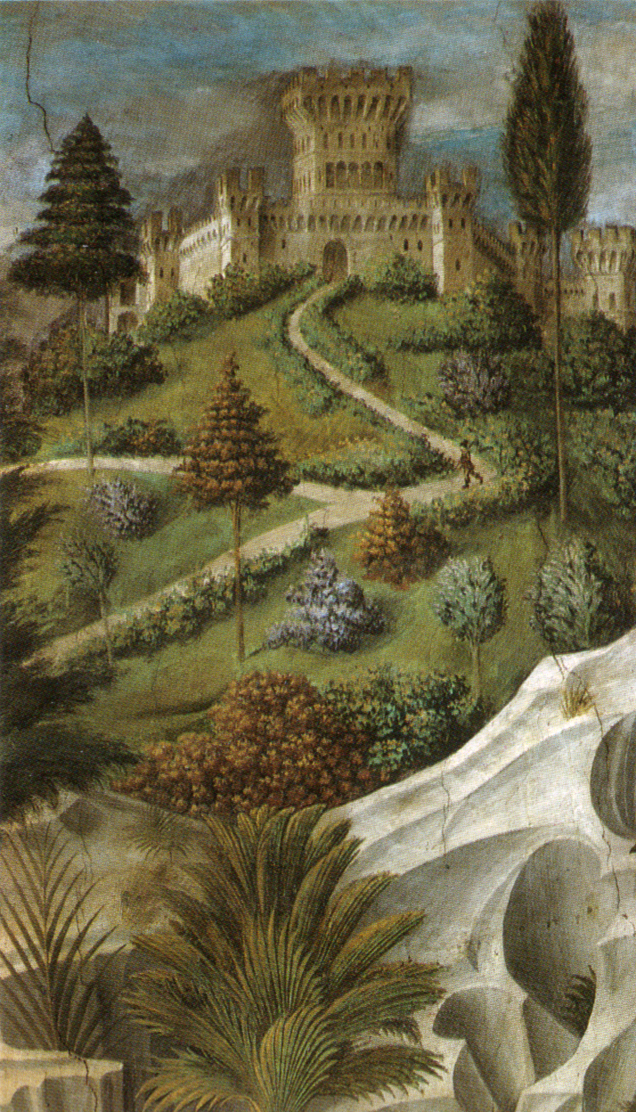
Image: Detail from a fresco by Benozzo Gozzoli in the Cappella dei Magi (Chapel of the Magi) at the Palazzo Medici Riccardi in Florence, Italy, 15th century. [Public domain] via Wikimedia Commons.

Tagged ,

An Epiphany

Magi

TWELFTH DAY of CHRISTMAS:
Epiphany

It’s Epiphany, the day the Magi arrived in Bethlehem to see the child. Children in Italy have awoken to presents delivered over the course of the night by la befana, and in Spain and throughout Latin America, los tres reyes, the three kings, have done the same job. Today, la befana will be back to her housework, back to her sweeping, sweeping the holidays away until the winter solstice returns again next December. An old Italian saying sums it up: E l’epifania tutte le feste porta via.

Most of what we know of the Magi comes down through tradition and not through biblical writings. The story is that there were three wise men and that their names were Caspar, Melchior, and Balthasar, but in fact we don’t know their names for sure or how many there were. We do know, however, that there were three gifts. It’s an old, old story that we know well. The Magi followed the star, finally arrived at the place where Jesus lay, paid homage to him, and brought gifts to the child, gifts fit for royalty: gold, frankincense, and myrrh.

Epiphany is a Greek word, meaning “manifestation.” The local shepherds were the first to come see the child in the manger, but with the Magi, who came from far off kingdoms, the child was made manifest to the world. Epiphany has another meaning, as well, one that James Joyce spoke of, in which characters in stories, people in general, suddenly see things differently. The two kind of go hand in hand. Nothing would ever be the same after that first Christmas night, and nothing is ever the same after a personal epiphany, either.

And so with this night, our celebration of Christmas winds down. While Twelfth Night brings us raucous revelry, Epiphany is generally quieter. The day will proceed much like any other––here in the United States, for most of us it’s just another day at work. Even the Church in this country moves the date of Epiphany to a Sunday (it was yesterday by most church calendars), but traditionalists prefer to keep its date as it always was. In this house, we will celebrate with a quiet dinner. We’ll enjoy the music and the greenery and lights for one last night. And some time in the still quiet of this night, we’ll gather up the people in our home, step out onto the front porch, bundle up if it’s cold outside, and we’ll take turns writing with chalk above the front door the numbers and letters of a traditional inscription: 20+C+M+B+14. These are the initials of each of the Magi, punctuated by crosses and surrounded by the year. The chalk is supposed to be blessed chalk, but I doubt there are many priests left who remember this old tradition and who bother to bless chalk for their congregations, so I think any chalk would be fine, blessed or not. The writing is usually accompanied by a silent prayer that we’ll all be together to do this again next year. The inscription, a magic charm of protection and a reminder of the season, remains there for all to see and it weathers the year, sometimes washing away to a ghost of itself by the following year, and sometimes remaining as vibrant as ever.

After tonight, we might light the candles in our windows, but the Christmas lights outside will no longer be lit. All the greenery and the tree are to be removed. If you have the room, perhaps you can save your tree in a quiet corner of your garden. Just tuck it away there, off to the side, and next December, do what we do: use that tree to fuel your fire on the darkest night of the year that comes when the Winter Solstice returns next December. This is, I think, an honorable way to send off the tree that has brought your family so much joy this year, and continues the spiraling circle of time and seasons that gave that tree life in the first place. The tree, you, the Magi, the child, all are part of this same spiral.

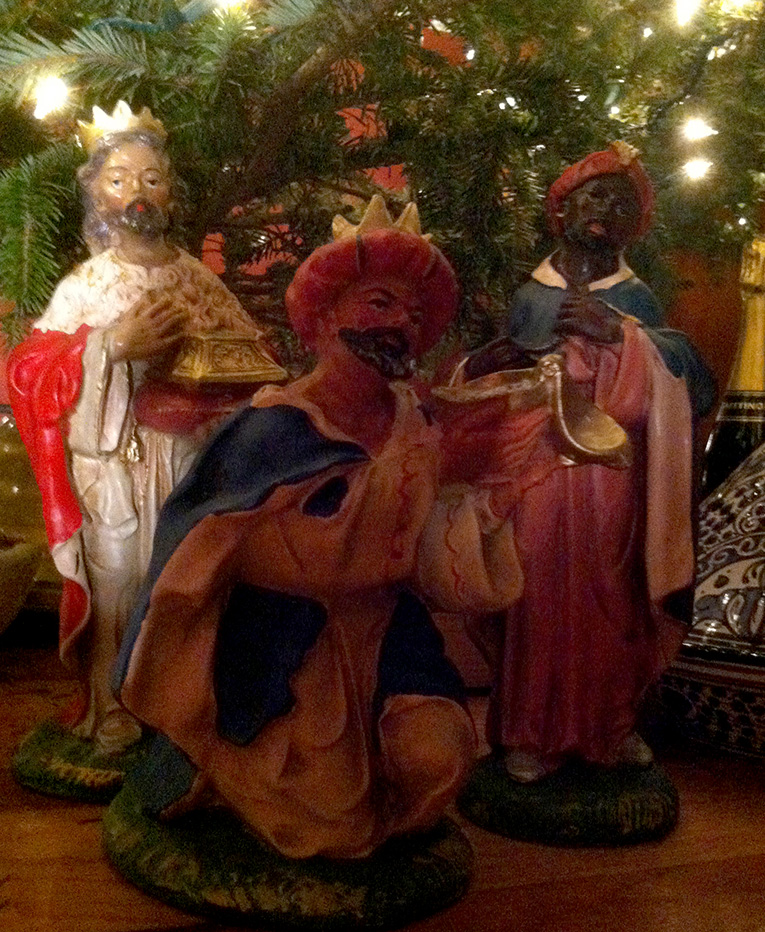
Image: Three kings brought to us as gifts by our neighbors Don and Pat Cortese, Twelfth Night 2013.