Category Archives: Midwinter

We Add Our Light to the Sum of Light

Sunday brought the Midwinter Solstice to our Northern Hemisphere at 10:04 Eastern, in the morning. Shortest day, longest night. We’ve been on the approach to this for six months, a small decrease in light with each passing day, a small dose of change. And now things appear to stand still for two or three days (solstice meaning sun stand still). But change is the only thing that stays the same, and at these darkest nights, we begin our approach now to the next extreme: with the Midwinter Solstice’s passing, light again begins to increase, as darkness decreases, until things shift again in June at Midsummer. The dance of light and dark was here long before we came to be and will be here long after we are gone: a mystery explained in the beauty of geometry, all based on the fact that this old earth is tilted on its axis, causing the seasons, and, in a way, our response to them: what foods we eat, what stories we tell, what songs we sing. The very stuff of this blog.

The Fourth Sunday of Advent happened to coincide with this longest night, a lovely bit of exquisite timing. We’ve been lighting a new candle each Sunday since the 30th of November in a ring of light that began dimly, with the lighting of one purple candle, representing hope. We added a second purple candle the following Sunday, this one representing faith. A rose candle was added next, last Sunday: rose for joy, a distinct break from the solemnity and penitence of purple. And last night, the night of the Solstice, we added the fourth candle in the ring: another purple one, this one representing love. The Advent Wreath, of course, is not exactly celebrating the coming of the Midwinter Solstice; it is helping us prepare for the child born on Christmas Day. There is powerful imagery there, and it is no coincidence that the early Church chose this time of year to celebrate the birth of Christ: think “Jesus the Light of the World” (as the old hymn goes).

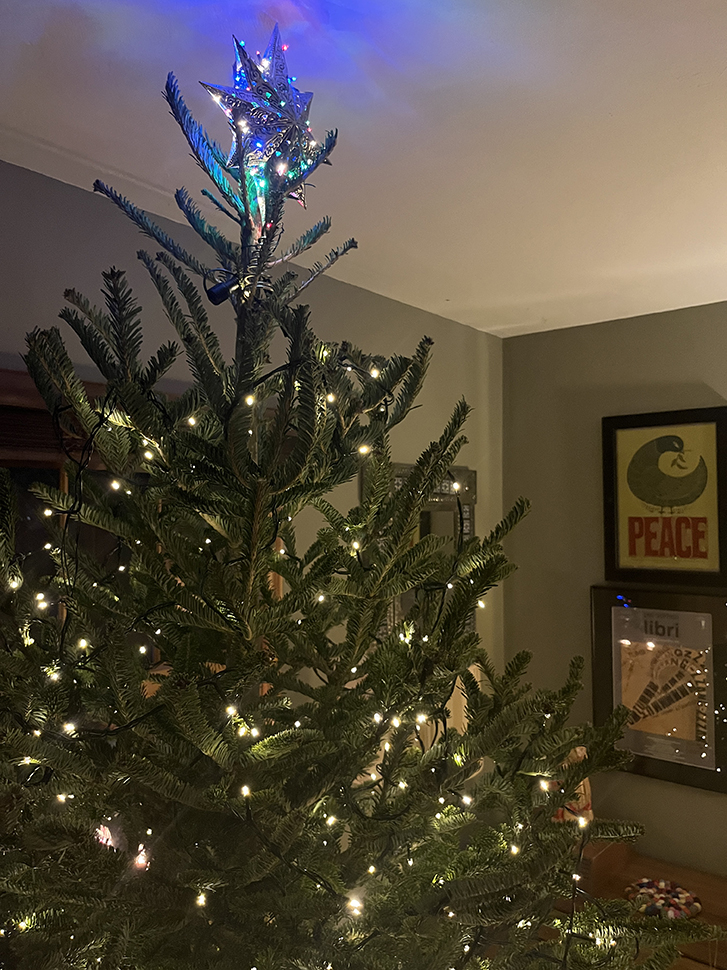
And so the darkest night came and with its passing, we enter soon into Christmastide. Here in this house, we got our tree, under the lights at the tree lot in Downtown West Palm Beach, late last week. It is illuminated now, but not yet decorated… that we’ll get to in the coming nights. Seth was up on the rooftop last night, solstice night, putting up lights there and up on the garden fence, too. We are doing our part to add our light to the sum of light, through light, but also through respect for and acknowledgment of the turning of the wheel of the year, the seasons as they pass, the tilt of this old earth, and the respect and kindness we offer the people we encounter along the way. We use our light to dispel the night, to counter all the darkness in the world, a darkness that is in no short supply these days. It is all we can do.
 

Solstice Coming, or Your Convivio Book of Days for December

Christmas is coming, and Seth and I and our niece Isabella drove up to the Christmas tree lot last night in Downtown West Palm Beach to get a tree. It’s a lot that reminds me always of the tree lot scene in A Charlie Brown Christmas, the one with the search lights piercing the night. There weren’t many trees left to be found: We got one that was too big for our short-ceilinged old home, and when we got it here, Seth had to saw off part of the trunk and snip off part of the spire of the tree, too, so we could stand it up in the living room, and even now, there is barely a wisp of air between the top of the tree and the old plaster ceiling.

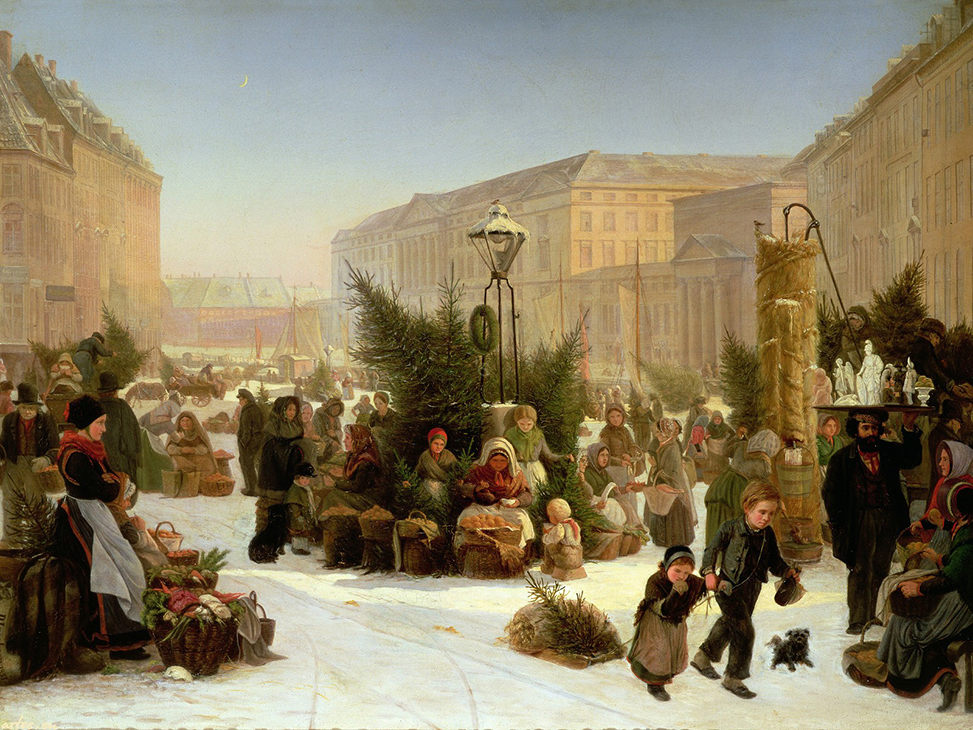
After weeks of belatedness for this month’s Convivio Book of Days calendar, it seemed fitting to design a calendar around a painting of Christmas tree sellers, and so here it is: Your printable Convivio Book of Days Calendar for December, cover star being an undated 19th century painting by a Danish artist called David Jacob Jacobsen.

If there is a new year’s resolution for me to make, it is this: to get these calendars prepared each month well in advance of the First of the Month. I’ve been late before, but never this late. My apologies. I apologize, as well, for now having much time to write these days. Opening the new shop last spring has certainly added a new level of busy-ness to my life. But I miss writing, and I am hopeful that once we enter a new year, there will be less to do at the shop, and that things will begin to take on an air of familiarity and repetition. We shall see what we shall see.

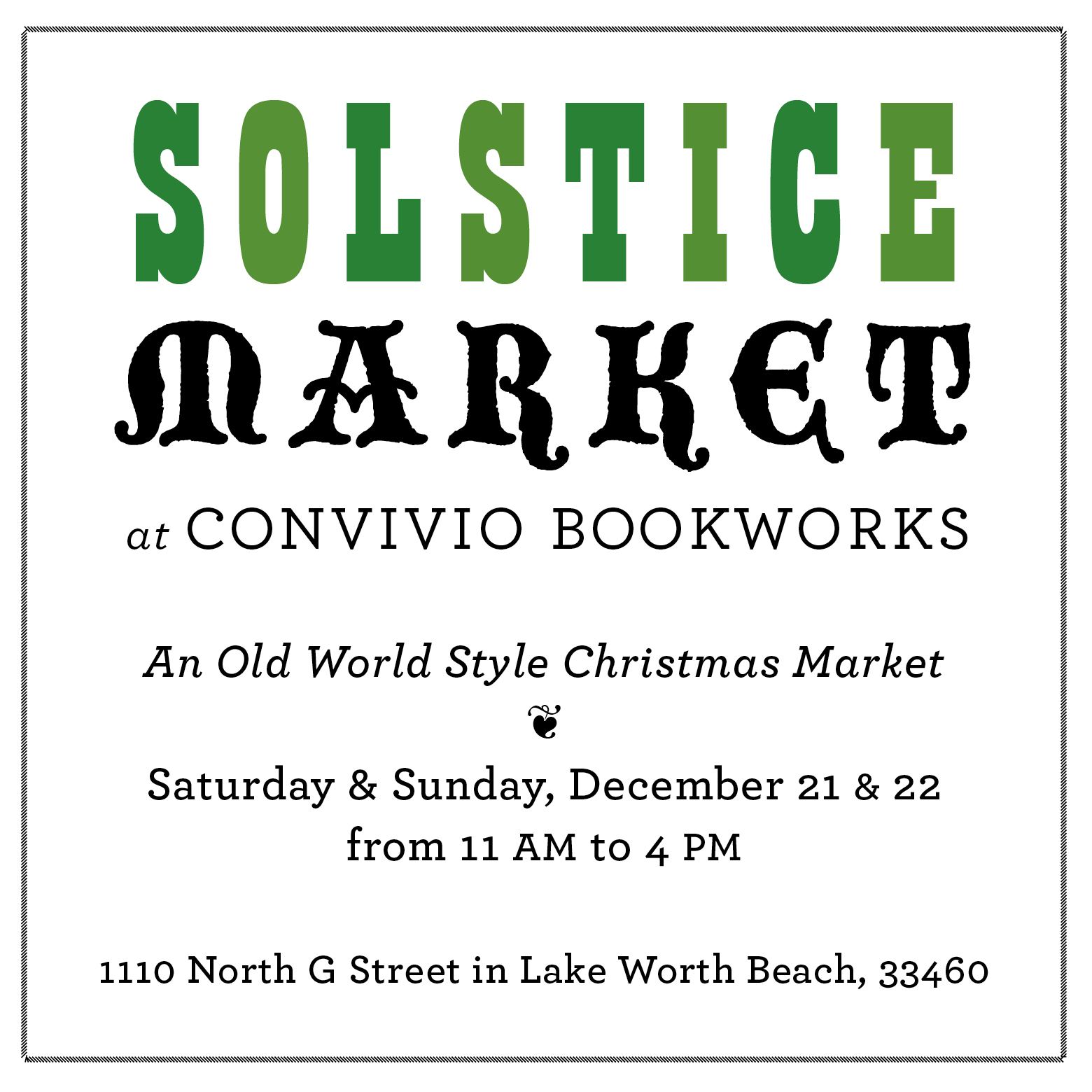
Speaking of the shop, if you’re local, the family and I would love to see you this coming weekend for our inaugural Solstice Market. We’ve turned the shop into a lovely European-style Christmas Market, and I think you’ll really enjoy visiting! There will be festive shopping, plus we’ll be serving homemade Struffoli (a classic Italian sweet for Christmas) and our own Löfbergs Coffee from Sweden. There will be good company and good music and a festive atmosphere. And it’s your last chance to visit the shop before Christmas begins. The Solstice Market at Convivio Bookworks is on Saturday & Sunday, December 21 & 22, from 11 AM to 4 PM each day. Please come!

Image: “Selling Christmas Trees” by David Jacob Jacobsen. Painting, unknown date (circa mid- to late-19th century) [public domain via Wikimedia Commons].


Snow on Snow on Snow

If you read as many 19th and early 20th Century books as I do, you may come to the same conclusion as I have about the weather: Christmas was definitely colder and snowier back then. Washington Irving’s traveler in the Sketchbook of Geoffrey Crayon, Ebenezer Scrooge and the ghosts that visit him in Charles Dickens’ A Christmas Carol, Dick Dewey and the full cast of characters of Thomas Hardy’s Under the Greenwood Tree, Dylan Thomas’ child in A Child’s Christmas in Wales: all of these characters experience frosty, snow blown Christmases, the likes of which we rarely see these days, or so it seems to me. But what do I know? I live in Florida. It was 1977 when it last snowed here in Lake Worth. Our niece, who lives nearby, is bound for Maine to spend Christmas with her grandparents and she was hoping for snow, but instead the forecast there is calling for unseasonably warm temperatures. Where’s the fun in that, especially when it is Christmas?

Even here in this strange green land, cold is part of what we long for in Christmas, part of what makes Christmas, well, Christmas. We celebrate Christ’s Mass––Christmas––around the time of the Northern Hemisphere’s Midwinter solstice, but, in fact, we don’t really know when Jesus was born. It was the early Church, working within the confines of the Wheel of the Year, that placed his holy birth at the Midwinter Solstice. To the Midsummer Solstice, the Church assigned the birth of his cousin, St. John the Baptist. And so John is born at the brightest time of the year, just a few days past June’s solstice, the time of our longest days. But with Midsummer’s passing, the days already begin to grow shorter, and John himself tells us this: “I must decrease so he may increase.” John prepares the way for Jesus, the Light of the World. Which is why we celebrate the birth of Christ now, at the opposite pole of the year, the time of our darkest, longest nights, just as daily sunlight is at its minimum and is again about to increase. It is the old, old story, a rich and beautiful metaphor, attached to the even older story of the rhythm of our planet as it circles around the sun each year, tilted as it is on its axis, the tilt creating the seasons that are the basis of all our celebrations in the Wheel of the Year. Each day different from the one before and the one after: the constant rearrange that takes us from winter to spring to summer to fall and to winter again. It is the story we all know. And here we go again: In this bleak midwinter, light is born, the child is born, and now light again begins to increase. By Candlemas on the Second of February, when the Christmas season officially ends and when St. Brigid invites us to take our first steps upon her bridge to springtime, we will already be halfway between the Midwinter solstice and the Vernal equinox. There is nothing random about the days we celebrate. There is purpose and meaning behind them, as we tell the story over and over again: this story that never grows old. It is always fascinating. Always amazing.

As precision goes, the solstice moment this time around (more or less, for there are variations east and west within time zones), is 10:27 PM here in US Eastern Standard Time. That is the moment when the sun’s rays strike their southernmost point at the Tropic of Capricorn, south of the Equator, and in the Southern Hemisphere, today brings the Midsummer solstice and the longest day. Polar opposites: their longest day, our longest night.

Here at our home in Lake Worth, we’ll mark this longest night by lighting a fire in the backyard copper fire bowl. Our Midwinter fire will be fueled by the remnants of last year’s Christmas tree, which has been drying in a quiet corner of the yard since we brought it out there last February at Candlemas. A quiet ceremony on a chilly night in which the embers in our fire glow and shimmer and share the same winter sky as the stars that twinkle above.


SPECIALTY FOODS SALE
You’ll find savings right now on European Christmas cookies and candies (and more) in the Specialty Foods section of our online shop (CLICK HERE to SHOP). The markdowns are automatic, and you can also take an additional $10 off your order of $85 when you use discount code SLOWCHRISTMAS at check out, and we’ll pay your domestic shipping at that level, too. (Our flat rate shipping fee is $9.50 for all domestic orders below $85.) While your order won’t be delivered by Christmas Day at this point, you’ll certainly have your order in time to enjoy for the Twelve Days of Christmas, though, which begin only once Christmas Day itself has passed. Aside from the cookies and chocolates in our shop, there are some important pantry items to have on hand to make your Twelve Days as wonderful as possible: I’d suggest stocking up on chestnuts at your local Italian market to enjoy throughout the Christmas season, and from us, may I suggest Shaker Mulling Spices so you can make mulled wine and Shaker Rose Water so you can make baklava and our Three Kings Cake come Epiphany.


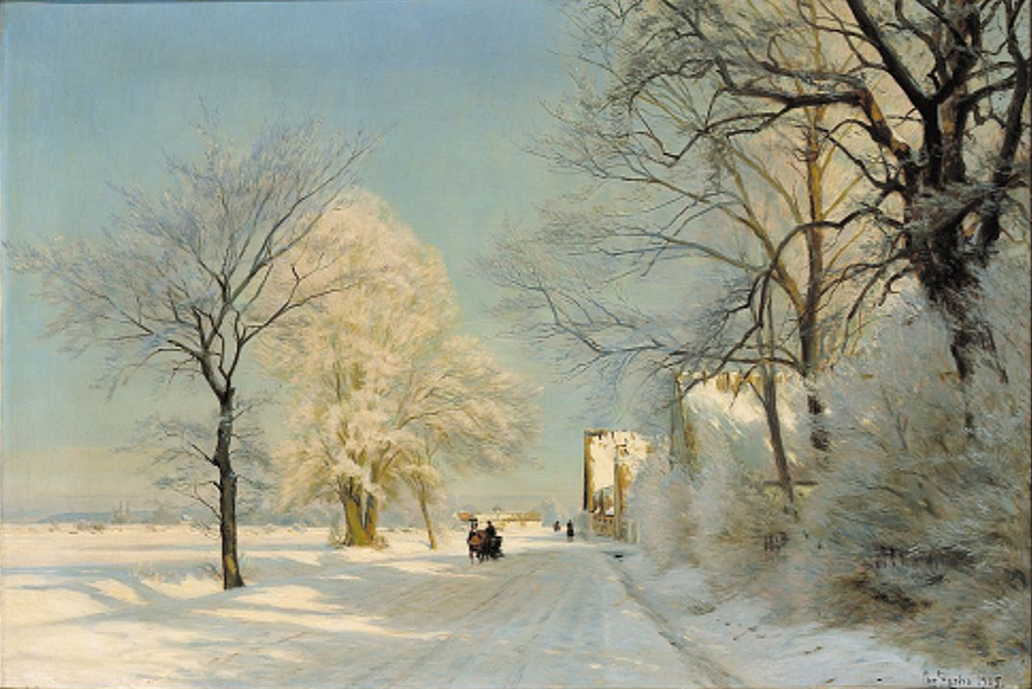
Image: Bernstorffsvejen ved Rygaard, Rimfuld Vintermorgen (The Road Bernstorffsvej at Rygaard on a Frosty Winter Morning) by Christian Zacho. Oil on canvas, 1905 [Public domain, via Wikimedia Commons].