Category Archives: Transitions

Father Seamus

It was Concordia this past Monday: a feast of Ancient Rome in which folks would gather for a meal with the express purpose of resolving all disputes. A lovely idea, I think, but since we are not encouraged to gather these days, I didn’t bother to write about it. Still, Concordia remained at the back of my head all that day: the concept of goodwill behind it felt like the kind of holiday my friend Seamus Murtagh could really get behind.

The weekend before, we got the news that Father Seamus had left this earthly life. If the name sounds familiar, perhaps you are a subscriber to the other bit of writing I do, the Convivio Dispatch from Lake WorthIn the Dispatch, years ago, I made Father Seamus the pastor at St. Bernard’s here in town. The thing to understand about the Dispatch (and I think most of my readers understand this) is that it is an exercise in creative nonfiction: a bit of local reality peppered with some things I’ve made up. When I was a boy, my grandmother, Assunta, an immigrant from Apulia in Southern Italy, would accuse me of “telling stories” whenever she caught me in a lie, and it’s kind of funny that she was right: this is what I do. I tell stories and after a while no one knows what is fiction and what is not, not even me. I mean no harm by it; I just like a good story.

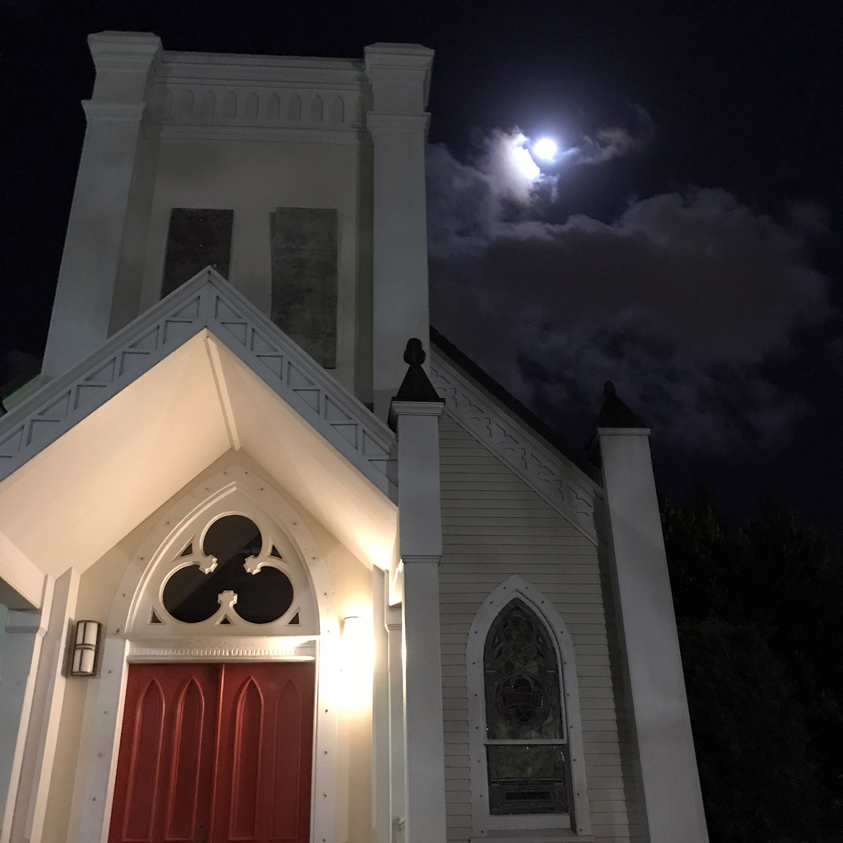
Here’s what is fact: Father Seamus was a great guy. He was the pastor at St. Ann’s in West Palm Beach, the oldest Catholic church in the county, which is the very last church that John F. Kennedy attended, the Sunday before his trip to Texas, and which looks nothing like most churches in Florida for it was built back when this place was a pioneer town, in the very early 1900s. My first visit was for the Feast of the Assumption, my grandmother Assunta’s birthday, on the Fifteenth of August one year soon after we got our home in Lake Worth. Father Seamus was not there then; St. Ann’s was run by Jesuits at first and they were there that first visit. Seamus came not long after the Jesuits left. What a fine man he was. Seamus always warmly welcomed me, and Seth, too . . . which is not the typical response a gay couple get at a Catholic church. He reminded us that it was our church as much as anyone else’s, and that we should always feel welcome.

I’d bring my entire family to Seamus’ special services: to communal reconciliation, to Holy Thursday Mass, to Easter Vigil Mass. Between Adriana Samargia’s beautiful singing and Father Seamus’ moving homilies, the experience was always sublime. He’d tell great stories. And he’d recite poetry. Out of nowhere, it would seem: standing before the congregation, holding the inside sleeves of his vestments as he recited––a habit, you could tell, that he picked up as a schoolboy. He was Irish through and through, born in the old country in County Roscommon, and when he told jokes his accent would grow thicker the nearer he got to the punch line. Father Seamus made us all feel so good about being human and striving for connection with others and with God. And I will always remember him, too, quietly launching into these words at every Mass, after communion:

Lord, I believe in you: increase my faith.
I trust in you: strengthen my trust.
I love you: let me love you more and more.
I am sorry for my sins: deepen my sorrow.

I worship you as my first beginning,
I long for you as my last end,
I praise you as my constant helper,
And call on you as my loving protector.

I want to do what you ask of me:
In the way you ask,
For as long as you ask,
Because you ask it.

Let me love you, my Lord and my God,
And see myself as I really am:
A pilgrim in this world,
A Christian called to respect and love
All whose lives I touch.

Amen. It is the pilgrim in this world part that always touched me, and I think it resonated with him, too. And now he has moved on, from this world, on another pilgrimage of sorts. I can count on one hand all the times I’ve been back to St. Ann’s since Father Seamus retired and the day I decided it just wasn’t the same welcoming place for me as it had been whilst in his care. Be that as it may, Seamus and I will still get together at St. Bernard’s in those Convivio Dispatches. He’ll always be the pastor at St. Bernard’s, and Sister Kathleen, the Reluctant Organist, she will always be in charge of the music ministry. Seamus will still come round for bacon and peanut butter sandwiches at Minnie’s Diner, and he will inevitably bump into my neighbor Margaret on occasion. Margaret, too, has been known to recite a poem when the mood strikes. The Great Seamus v. Margaret Poetry Showdown that happened as they sat side by side at Minnie’s counter still is the stuff of legend in this town. We all remember it as the fine spring morning when Margaret got Seamus flummoxed with one of the sexier stanzas of Robert Herrick’s Corinna’s Going a Maying:

And as a vapour, or a drop of raine
Once lost, can ne’r be found againe:
                     So when or you or I are made
                     A fable, song, or fleeting shade;
                     All love, all liking, all delight
                     Lies drown’d with us in endlesse night.

And so Father Seamus will live on here in Lake Worth. I will keep him here with us, for this is my job, this is what I do. No one else will be the wiser, but you: you will know the real story. That this good man really did walk this earth for a spell, and made it a welcoming place.
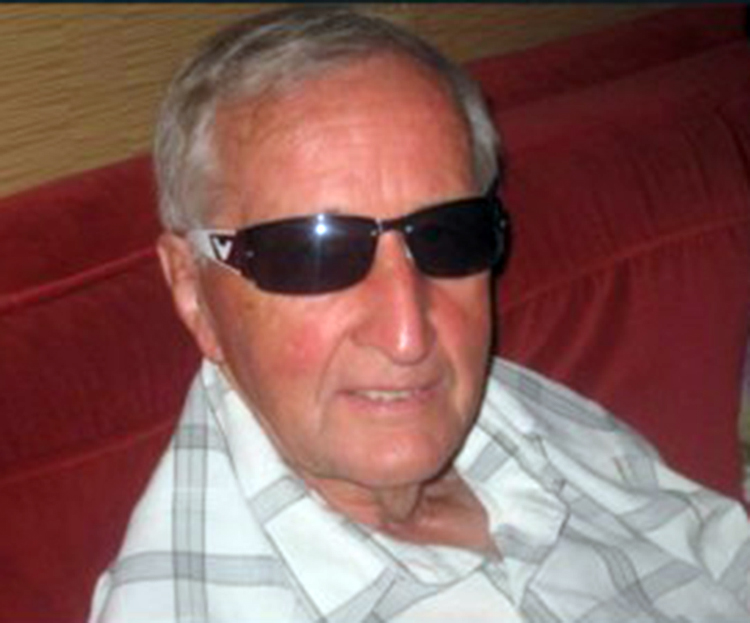
Father Seamus as Uncle Seamus in a family photo shot by his niece, Christina. Top photo: the original St. Ann’s Church, West Palm Beach, built in 1902.

Cutrone Auto Service Co.

My cousin Al came to visit us this past weekend. He’s been here from New York for a few weeks and he wanted some time to pass between his travels and his visit with Mom, just for the sake of caution, but Saturday he came to the house and the five us had a good meal and shared a lot of laughs and stories, too. Essentially, it’s the thing my family loves best, and especially Mom, and it’s probably what Mom misses most these days: just sitting down at a big table groaning heavy with food and eating and laughing. Card tables with people far apart from each other is just not my mom’s style, but we do what we have to do to stay safe. Dinner with Al was wonderful all the same.

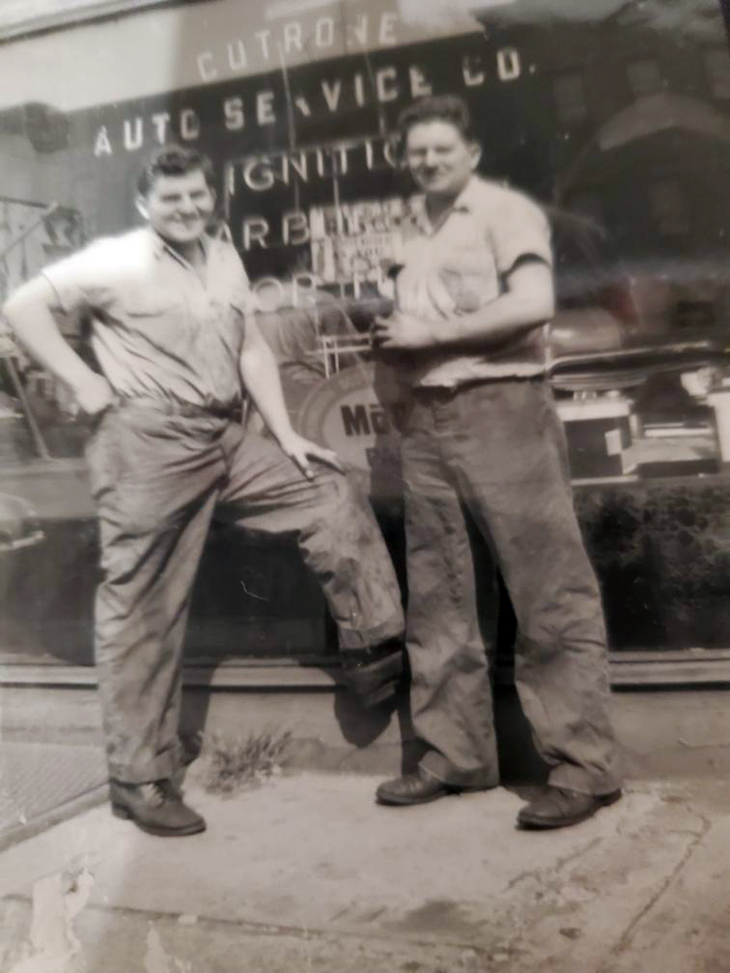
Al’s father and my father were brothers, and when Dad was looking to open an auto repair shop in Brooklyn, he asked my Uncle Al to be his partner. And so they were, for thirty years, from 1948 when they opened the shop until the day they closed it, in 1978. Al is a little older than I am, so while I spent my early summers at the beach, Al got to go in to work with his dad to earn some money. Neither Al nor I took after our dads––our combined mechanical knowledge doesn’t extend much past how a screwdriver works. But Al, at least, got to spend time at the shop, and he got to see the Cutrone Brothers doing what they did, and I envy that.

My dad was not the most patient of teachers, but I think Dad got a bit of a kick out of the things I put him through. I can remember he and I setting up my Aurora HO Thunderjet 500 slot car track on the billiard table in the basement when I was a kid. I was probably 7 or 8 years old. We worked and worked on it (well, Dad did, while I fiddled around), and when it was time to try it out, Dad told me to “give him some juice.” I went to the kitchen and poured him a glass of orange juice. That event pretty much set the stage for my mechanical abilities for the rest of our years together.

It seems my cousin Al did not fare much better; nonetheless they took him in to the shop each summer when he was a teenager, and it was pretty wonderful Saturday night to hear Al’s stories about working with the guys, including the Cutrone Brothers’ methods for tire disposal (let’s just say it was another time) and how they ended up with so much ice cream one summer that Aunt Marie felt the need to buy a new deepfreeze.

The stories were good, and the company was good. And while I did not wake up this morning planning to write about this, something about the stories reminded me about the picture in the photo album of Dad and Uncle Al in front of their shop and this is how it is to be a writer. One thing leads to another and memories start kicking around in my head, and one thing I will always remember about Al is that four years ago, in early February, Al visited my dad in his hospital room after his stroke. Dad was so animated when Al was there. It seemed like the best night he’d had in a while. A few days later, Dad was gone. It surprised all of us. And still at night before bed I turn out the lights and I say goodnight to photographs of the ones I love and very often I have to remind myself that Dad is not here, not in the same way. And maybe that’s ok. Maybe it’s good I usually feel like he is.

I remember pretty much everything about the way the 8th of February played out four years ago, from the time I left work early because I felt I needed to get to the hospital to check on Dad, to my journey, right after I arrived, walking behind his bed as he was rolled down to ICU, to the long wait while I was not allowed in, and all of the other things that led to the way things turned out in the overnight hours that followed. It is, perhaps, the day of the year I dislike most. We all have these days when we are reminded of what we would rather forget. But they, too, are part of the round of the year, and we have no choice but to take them as they come. It has been a tough time for so many, this year and last. If you’re having a rough go of it right now, I can tell you that I get it, and I can tell you that you are walking in good company. We’re all there with you. And while, when it comes to loss, things never get easier, they do change. You will always miss the ones no longer physically with you, but the way you miss them will change. Every now and then, though, a jolt will come. Expect this. It’s part of the path, and there is no right way to deal with it. You carry on. You get through.

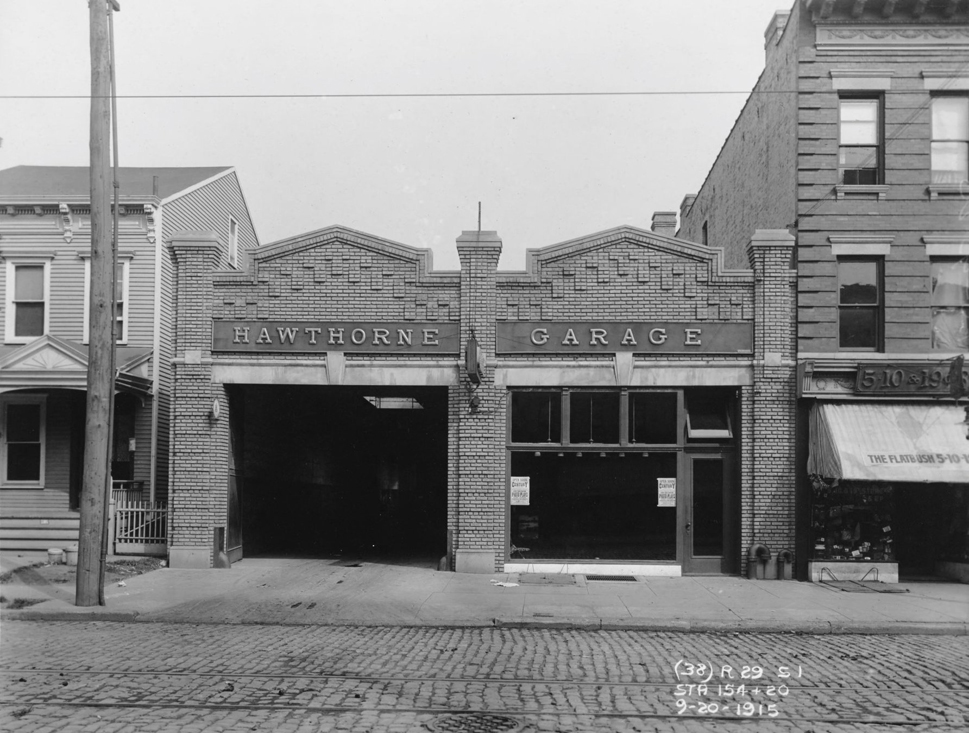
Today, chatting with Mom, I learned some new things about the garage. Before it was Cutrone Auto Service Co., it had been a millinery, and Phyllis Caputo, the woman who set up the blind date that was my mom and dad’s first meeting, worked there making hats. Next door to the millinery, back then, was an Italian merchant who made all kinds of pasta. Records show that earlier on, the shop was another garage: the photo below is from 1915.

I look at the picture of Hawthorne Garage, and I know that at some point, in 1947 or so, Dad and Uncle Al saw that same empty garage that’s in the 1915 picture and thought, Yeah, this place has some potential. And then I look at the picture of Cutrone Auto Service Co., circa 1948. Dad and Uncle Al are smiling, their trousers are mucky… they are two men happy in their work. That shop looks like a great old building. Seth and I drive by old garages these days on Dixie Highway and sometimes we think, Now THAT would be a great place to set up a Convivio Bookworks shop. I didn’t get much mechanical knowledge from Dad, but I did get that ability to dream. And some pretty great stories, too. And even more of them now that Cousin Al has come to visit and reminisce with us.

Love to you all.


Somewhere in the Stars: Tanabata

We are in the midst of summer and a period ruled by stars: Sirius, Altair, and Vega. Sirius, the Dog Star, entered onto the scene a few days ago: by July 3rd, Sirius, in the constellation Canis Major, began rising with the sun. The sun occupies the same part of the sky as Sirius through the middle of August. It just so happens to be the hottest time of the year while all this is going on… and so we call these hottest days of the year, ruled by Sirius, the Dog Days of Summer.

That’s our story about Sirius in Canis Major. Meanwhile, here is an old story from Japan that relates to our other summer stars, Altair and Vega: It is the story of Hikoboshi, the Cow Herder, and Orihime, the beautiful daughter of the Sky King, Tentei. Orihime wove beautiful cloth on the banks of the Amanogawa, the Milky Way. Her father loved the cloth she wove, and so she worked very hard to make enough for him so that he would always have plenty of it. But Orihime worked so hard at her weaving that she never had time for anything else. And as much as Tentei loved the cloth Orihime wove, he knew she needed some balance, some time away from her work, and so he arranged for her to meet Hikoboshi, the Cow Herder, who lived on the other side of the Amanogawa.

And so Orihime and Hikoboshi met. They fell in love right then and there. The two soon married, and that was wonderful, but they became so enamored with each other that all else fell by the wayside. Orihime pretty much gave up her work at the loom, and as for Hikoboshi’s cattle, well, they were soon roaming all over Heaven. Tentei grew angrier and angrier over all this, until finally he had enough. He separated the two lovers on either side of the Amanogawa and forbade them to see each other. Orihime despaired over the loss of her husband and pleaded with her father. Moved by his daughter’s tears, Tentei relented. But he allowed the two lovers to meet only once each year, on the seventh day of the seventh month. And so the story goes each year, and here we are today: the seventh day of the seventh month. It is the Japanese star festival, Tanabata.

As stars, the lovers are Vega and Altair: Vega, the Weaver Star, is Orihime, and Altair, the Cowherd Star, is Hikoboshi, separated always by the Milky Way, except, as legend has it, for this one night each year when they are reunited. Beneath the stars, here on Earth, we honor Orihime and Hikoboshi by writing wishes on strips of paper and tying them to the trees. Bamboo is traditional, and that’s what I tied my wishes to last year, but I would think any tree would do. Heaven and the stars, I am sure, grant us a bit of leeway in these matters.

Two or three of my wishes from last year remain still on the bamboo outside our back door. The ink is long faded. I know I wished for protection, and for good health for us all, and especially for my father. His health gradually faded over the seven months that followed, until his death in February. But I am grateful he did not suffer terribly, and so perhaps that was the best manifestation of my wishes for good health and protection. Will I write some wishes on paper and tie them to the bamboo this year? Probably, though it most likely won’t be until after dark. There are no rules about that, either, and if there are, well, again: Heaven and the stars surely can be flexible with us mortals.

Perhaps it is all these thoughts of stars, but there is a song that popped into my head last night, a song I’ve not thought of in years. In 1982, when my grandpa Arturo died, Rosanne Cash released a record called Somewhere in the Stars. I know the title track is a sappy love song, but even so, I was able to reinterpret it for my own situation. It meant a lot to me then when I was missing Grandpa, and it suddenly means a lot to me tonight, too, missing him again, and my dad, and everyone else who is somewhere other than where I’d like them to be (like right here in front of me). If it’s a little sappy, so be it. I’m a little sappy sometimes, too, and there are nights when we need stories about dog stars and star-crossed lovers and reminders of all the ones we love.


This chapter of the Convivio Book of Days was originally printed on the 7th of July, 2017. Three years later, the sentiment is the same. Top Image: A very particular Somewhere in the Stars. This is a Hubble Telescope wide field image showing the “Summer Triangle,” a giant triangle in the sky composed of three bright summer stars: Vega (top left), Altair (lower middle), and Deneb (far left). Can you make out the triangle? [Public domain] via NASA, 2009.


Tagged