Enter, Again, the Gift Bearers

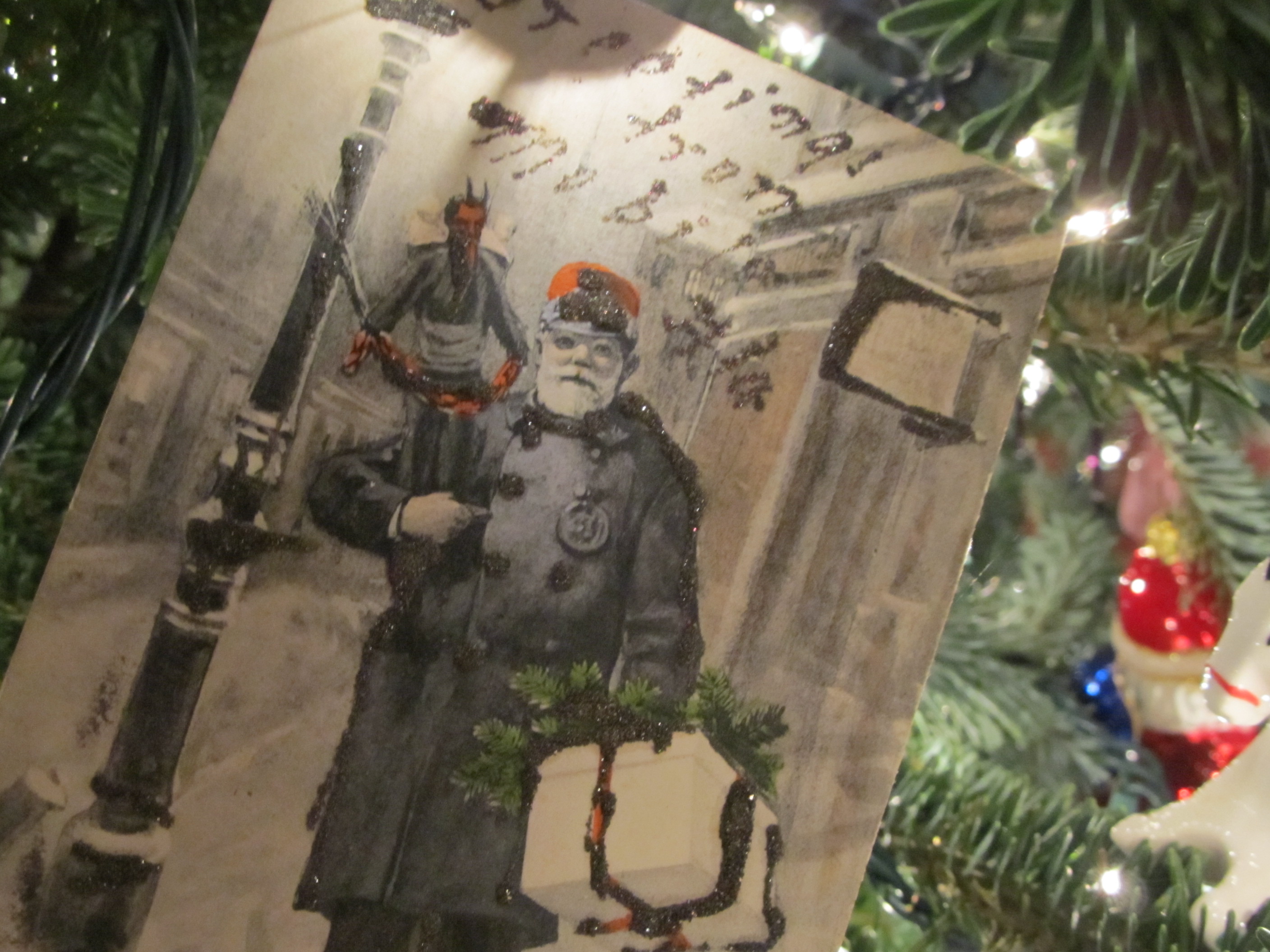
Postcard St Nick

The first of the midwinter Gift Bearers arrives on the 5th of December: St. Nicholas. He is a much older cousin of the American Santa Claus, but there are striking similarities. On the Eve of St. Nicholas, which is tonight, children throughout Europe place their shoes by the chimney before going to bed for St. Nicholas to fill with gifts, as well as set out carrots and hay for his donkey. Good children might wake up the next morning on St. Nicholas’ Day to find their shoes filled with fruits and nuts and sweets. He is the first of many gift bearers across cultures that wend their way through the midwinter darkness. He’ll be followed over the next few weeks by the Christkindl, by Father Christmas and Santa Claus, by los Tres Reyes (the Three Kings) and a kind old witch named Befana.

The Feast of St. Nicholas is celebrated on the 6th of December. He is sacred to countries throughout Europe, but especially to Russia, Greece, the Netherlands, Germany, and Italy (Bari, in particular, where his relics are kept at the Basilica di San Nicola). Nicholas was a bishop of Myra, in southern Turkey, in the fourth century. He is most famous for his generosity, and this, perhaps, is the reason he is connected with the bestowing of presents. One story that has come down through the ages tells of three sisters who were without dowries, for their father was very poor. The situation became so desperate that the father decided his only option was to sell his daughters into prostitution. Nicholas heard of the problem and took action: one night as the household lay sleeping, he tossed a bag of gold through the open window, and suddenly the eldest daughter had a dowry. In time, he did the same for each of her sisters, too. He bestowed these gifts in secret, until the third time, when the father of the girls caught him in the act. He was forever grateful to the good bishop, and thus the legend of St. Nicholas as a gift bearer began.

The Eve of St. Nicholas and its related traditions are, in some places, of greater importance than the arrival of Santa Claus on Christmas Eve. Santa is a relative newcomer compared to St. Nicholas. And one thing St. Nicholas has that Santa doesn’t is a dark companion. He goes by many names throughout Europe: Knecht Ruprecht, Black Peter, Pelznickel… but this dark companion is best known as Krampus. In fact, the 5th of December is known in some parts as Krampusnacht. Krampus is most often depicted with horns on his head, a very long tongue, and cloven hooves or sometimes one human foot and one goat foot. The punishment by Krampus is pretty harsh: he carries switches and rusty chains for the express purpose of swatting naughty children, and then he’ll stuff them in a sack or a basket and carry them off to hell. Serious stuff. And while the American Santa Claus has to do it all––reward good children with gifts and punish naughty ones with coal––you might think of St. Nicholas as a wiser man, a delegator: he gets to take care of the good kids, but he gives the task of punishing the bad ones to Krampus.

So do be good. St. Nicholas would love to fill your shoes with fruits and nuts and sweets tonight. And if you’ve been bad…. Beware the Krampus!

*

This is a slightly edited version of a Convivio Book of Days chapter that was first published on Krampusnacht, 2013. We learn so much from reader comments and here are two that were posted after the original publication of this chapter: Kelly O’Brien wrote, “I live in Germany & just experienced my first Krampus fest in the Austrian Tyrol region over Thanksgiving. It was terrifying! Not only do modern-day Krampus tout chains and whips, but parade through the village with torches and lots of other fiery devices. The costumes & masks were creepy beautiful, apparently a source of local craftsmanship pride. Do you think this is where ‘going to hell in a hand basket’ comes from?”

And Tad DuBois wrote, “I live and work in Germany and we went to sleep to howling winds last night and awoke to snow and ice. The neighbor’s kinder were all standing in front of their windows watching the snow fly (and no doubt hoping for school cancellations). At my office this morning St. Nicholas and Krampus have just visited. St Nicholas dispensed candy canes and Krampus had little bags of something dark, coal or reindeer turds perhaps (actually was dark chocolate molded to resemble bits of coal). To be truthful, the Krampus who visited seemed to be a mash-up of Eye-gore from ‘Young Frankenstein’ and Riff-Raff from ‘Rocky Horror.’ Still a wonderful tradition.”

The image above is from an old penny postcard sent to us by our good friend Linda Dailey in Maine. Is it St. Nicholas garbed in modern day clothing rather than his traditional bishop’s robes? Perhaps. And that, for sure, is a Krampus doll in his hands, just to remind us all to be as good as we can. Sweet dreams.
 

Your December Book of Days

December Field

December now is here, carrying with it so many red letter days. There are the ones we all know, of course, but there are many lesser ones, like Santa Lucia’s Day on the 13th and St. Nicholas’ Eve on the 5th, not to mention the Twelve Days of Christmas that come on the heels of Christmas Day itself. Half of them are in the old year, half in the new, and this alone can be counted as one of the beautiful mysteries of the season, which stands outside of ordinary time. It is a month of gift bearers and light bearers in a time of wintry darkness.

And so it is a complex month, December. To help make it as meaningful as possible, here is your December Book of Days calendar. It is a printable PDF document, designed for standard US letter size paper. Print it and follow along as the Book of Days blog chapters are published.

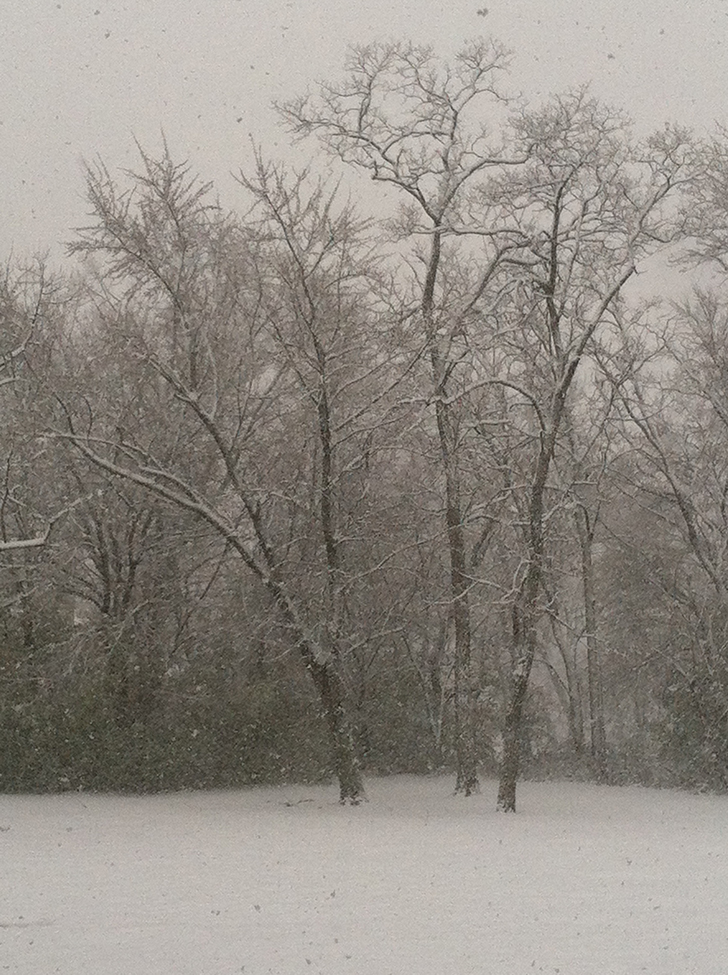
The cover star this month is a snowy field, the front yard at my Aunt Anne’s house in Palos Park, Illinois, where Seth and I and the rest of my family gathered to spend Thanksgiving. The increasing darkness on the approach to Midwinter is much more noticeable in a northern place, and we had many snowy days there, as well. The scene above is what we awoke to on our first morning there. The snow was falling still late that same afternoon, and if you look closely (perhaps not even very closely) you can see the snowflakes that landed on my camera lens. The magic of a snowy field becomes quite apparent when you’re standing in its midst.


Advent

Advent

It is the First Sunday of Advent, and here begins our time of preparation for Christmas. I write this tonight from Chicago, where we’ve been visiting family since before Thanksgiving. 41.8369° North in latitude, which is more than 15 degrees further north than our home in Lake Worth. Darkness falls much earlier here; the increase in darkness is much more apparent, the cold weather more extreme. We awoke on our first morning to a land covered in snow. Here, there is no doubt of midwinter’s approach.

Advent itself is a season of the Church. It is a time of preparation for Christmas much like Lent prepares us for Easter, and in earlier days it was a time of fasting, just as Lent is. It began back then on the 12th of November, the day after Martinmas, the day after our time of remembering the dead, which had begun with Halloween, had just come to a close. This aspect of Advent is now in the past. But the value of Advent is clear even if your Christmas celebration is not one based in religion. It matters not whether we are celebrating the birth of the Christ child or the triumph of light over darkness at the solstice. In either scenario, Advent has its place, for to speak of joy and peace at Christmas seems a bit disingenuous without first setting the stage for needing those gifts, and this is where Advent comes in: Advent humbles us, opens our hearts to this need. Advent provides us a time to make amends, to right wrongs, to repair relationships, to make our house fair as we are able. The days are dark. Advent prepares us for the coming light of the child, of the returning sun.

Over the centuries, many beautiful ways of expressing this have come about. There are many old old songs for this time of year that are not the songs you’ve been hearing in stores for weeks by now. These songs tend to be darker and more reflective. (The Benedictines of Mary have released one of the best collections of music for the season, called Advent at Ephesus. I highly recommend it.) Candles are naturally a big part of the traditions of Advent, too, for their symbolism is clear. Tradition would have us build a ring of four candles, three purple and one rose. On the First Sunday of Advent, which is tonight, we would light the first purple candle. Come the night of the Second Sunday, we light two purple candles. On the Third Sunday, we light those same two purple candles and the rose candle, and on the Fourth Sunday, not long before Christmas, all four candles are lit––as the nights grow increasing darker on the approach to the Midwinter Solstice, we respond with increasing light in our homes and in our hearts.

More secular approaches to Advent include a daily candle that is lit for an hour each day. At our home, we light ours each night at the table with dinner beginning on the First of December. When the candle is nearly done, Christmas has arrived. This tradition is related to the German tradition of the Advent calendar, which is probably the most familiar of Advent traditions. My first Advent calendar was given to me by my sister in 1973. The glitter and sparkle of the nighttime winter scene captured my imagination and I kept that calendar, along with every one I’ve had over the years. It is this same magic that has inspired much of what Convivio Bookworks is all about, and this is a large part of why we sell the things we sell, because I love sharing that magic with you, too.

We want Christmas to be magical for our kids and for ourselves, and Advent is, to me, key to that magic. It’s all about taking things slowly, all about setting the pace, setting the stage. We open our hearts and minds to possibility; we become light bearers in a time of increasing darkness.


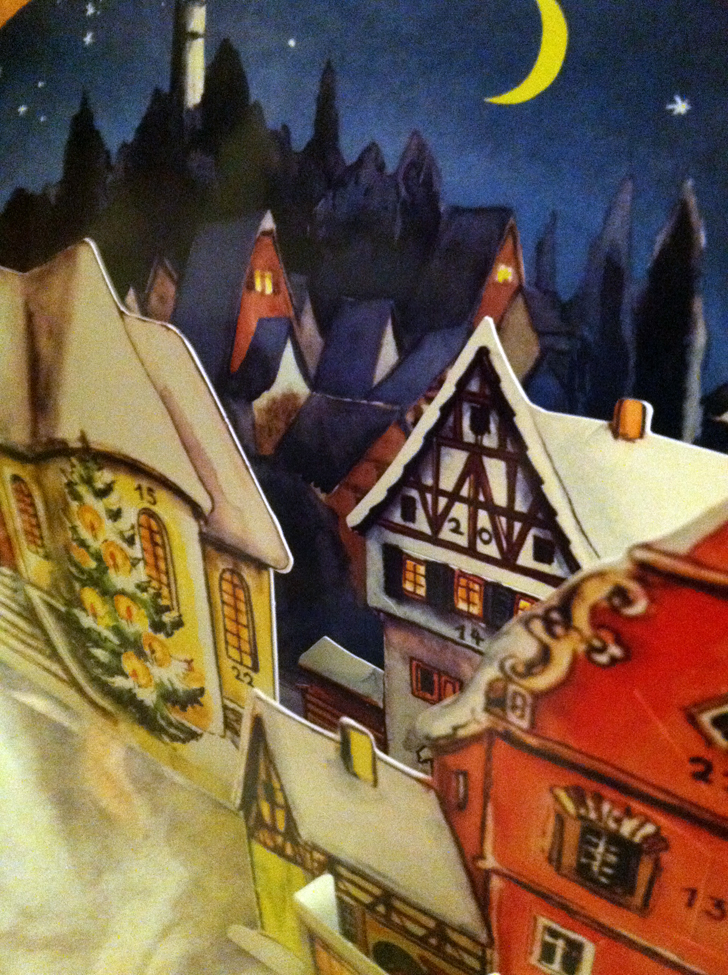
Image: close up view of one of the many traditional German Advent calendars we sell at our website. This one was originally printed in 1955. Seth and I brought it to my aunt’s house in Illinois to help her and my cousins prepare for Christmas once we head back home.