A Sweet Year Ahead

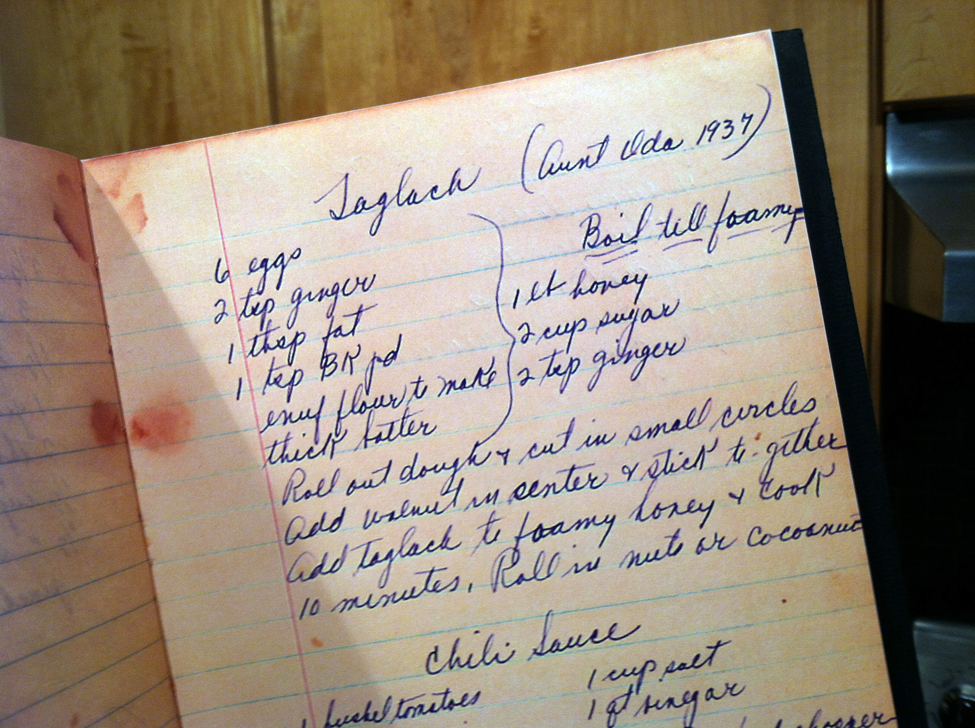
Taglach

Tonight’s setting sun brings a new year in the Jewish calendar. It is Rosh Hashanah. It begins with the sounding of the shofar, a hollowed out ram’s horn, which gives the day another common name: the Feast of Trumpets. The celebration of the new year concludes ten days from now with solemn Yom Kippur; these are the high holidays/holydays of the Jewish calendar.

What I know of Rosh Hashanah is little, but what I love best are the simple things. Years ago at this time of year, at one of the local bakeries near to where my family lives, we would find pie tins full of honey-dipped balls of fried dough mixed with cherries and chopped nuts: Teiglach is its name, we found, and it was part of the Rosh Hashanah celebration, but we would bring it home each year because it reminded us of the struffoli we would make for Christmas. Teiglach provided an early autumn precursor of our delicious honeyed Italian yuletide dessert. And one September not long ago, Seth and I and the rest of my family got to share a Rosh Hashanah celebration with our niece’s family. There was homemade challah bread, round to symbolize the circle of the year, and there were apples dipped in honey, to symbolize a sweet year ahead.

There was much more, I know. There were prayers, and there were pressed linens, and there were more elaborate things to eat on the table. But it is the bread and the apples and the honey that I remember best. The simple things. Happy new year: Shanah Tovah.

Image: Recipe for Taglach (which seems to me for sure like a variant spelling of Teiglach) from Pearl Silberg’s handwritten recipe book, which I made facsimile copies of some years back at the request of her daughter Rita. She was giving the books to her own children, Pearl’s grandkids. I couldn’t resist making myself a copy, too.


Our Lady of the Grapes

Today, a reprint of last year’s chapter for the Nativity of Mary. I know of some folks in Switzerland who will be “driving down” their livestock today, down to the valleys, and the animals will be wearing bells and flowers. As for Seth & me, the coffee is on, and there are Canadian blueberries for breakfast.

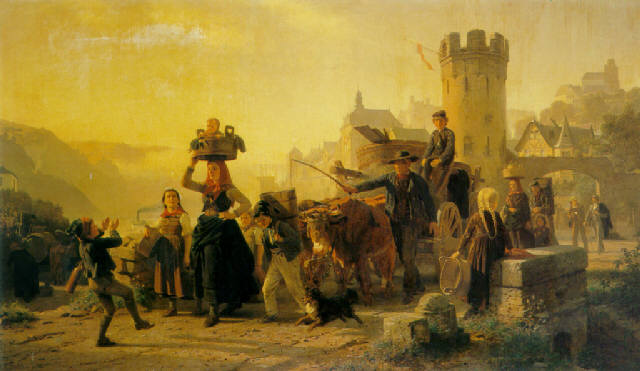
Böttcher,_Christian_Eduard_-_Setting_out_for_the_grape_harvest,_Oberwesel-on-Rhine_-_1867

Now we are well into September and in places where there are vineyards, the grapes are ripening on the vines, speaking of great alchemical potential: crushed and barreled and left to ferment, activating natural yeasts and sugars, the next wines are about to be made.

The timing of today’s feast––at the start of the grape harvest––is, to me at least, interesting. Nine months ago we celebrated the solemnity of the Immaculate Conception, and today, we celebrate the Nativity of Mary. The Church celebrates the deaths of saints (don’t you love when I tell you all those gruesome tales of how saints met their ends?) but in the case of Mary and John the Baptist, also their births. And tradition tells us that Mary was born on this day in Jerusalem to St. Ann and St. Joachim.

Italians like to eat blueberries for this day, a day important to all Marias and Mariettas… and there are many in my family. The blue of the berry is a reference to the traditional color of Mary’s cloak. Lights are illuminated in windows, especially in the rural areas, and bonfires are not uncommon on this night. Across the Alps, in Austria, it is time to bring the sheep and cattle down from the mountains and into the valleys: winter is fast approaching, and the Nativity of Mary on the 8th of September is known there as “Drive Down Day” in honor of this custom of moving the animals, often with some pomp and ceremony.

In France, though, there is this nice connection between the Nativity of Mary and wine: winemakers refer to the day as “Our Lady of the Grape Harvest,” bringing their best grapes to church for blessing. Across France you will find bunches of grapes placed in the hands of statues of Mary on this day. I like this connection between Mary, a goddess of sorts, and wine, especially as we ponder the bread and wine that is central to each church Mass, but central also to any good meal in places throughout Europe. These two elements can easily be a meal unto themselves (“a jug of wine, a loaf of bread, and thou”), should that be all you have, and you’d walk away sated and probably quite happy.

Image: Setting Out for the Grape Harvest by Christian Eduard Böttcher. Oil on canvas, 1867, [Public domain] via Wikimedia Commons.


By Our Labor

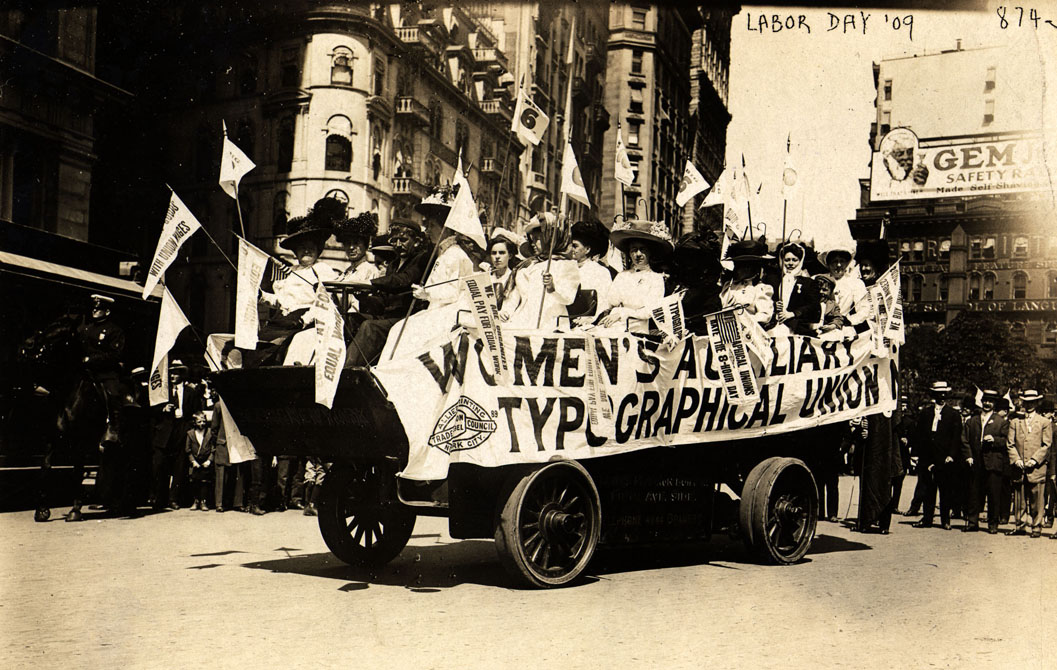
LaborDay1909

It is Labor Day. For some, an unofficial closing of summer. More importantly, though, Labor Day celebrates the American worker and the accomplishments of labor throughout our history. It is the day we recognize that our accomplishments as a nation are collective and cooperative. We each do our share and when we do, great things happen.

The Central Labor Union organized the very first Labor Day celebration on the Fifth of September, 1882. It was a Tuesday, and organizers were more than a little concerned about turn out: Would workers show up if it meant losing a day’s pay? At the start of the parade, in Lower Manhattan, the answer seemed to be “no.” Just a few people showed. But as the parade progressed through the city, more and more workers joined in, mostly union members. By the time the parade concluded, more than 10,000 workers were marching, and plans were set in motion for a second Labor Day celebration a year later. Twelve years after that first organized parade, Labor Day was a national holiday. Congress set its date as the First Monday of September.

Here’s a confession: I don’t believe much in the myth of the Self Made Man. I know, I am always encouraging my readers to suspend disbelief. But I am too much of a realist to believe in this. The way I see it, we build on what others have already built. My success is built on the foundations that were laid by my parents, by my grandparents, by all the people who have come before me. My success is dependent on the others I work with, dependent on each contributing their share. In a country whose overriding narrative tends to focus on the great I, Labor Day celebrates what is possible when we work cooperatively together. Labor Day is about us all.

Image: Members of the Women’s Auxiliary Typographical Union in the annual Labor Day parade, New York, 1909. Courtesy United States Department of Labor.