Chosen Land

TreeOfLife

The Sixth of August is an important day for a small group of folks Seth and I know and love in Maine. They call each other brethren and sisters and they respond to questions in the old style yea and nay. They are the Shakers of Sabbathday Lake and there are four of them, currently: Sister Frances, Sister June, Brother Arnold, and Brother Brian.

August 6 marks the anniversary of the arrival of Shaker founder Mother Ann Lee in America. It is a day the Shakers call The Glorious Sixth. Mother Ann and a small band of followers left England and came to New York in 1774. Their official name was the United Society of Believers in Christ’s Second Appearing, but they were ridiculed for their whirling dances and outsiders began calling them Shaking Quakers, which was meant to be derogatory. They embraced the name and soon began referring to themselves as Shakers. The movement found fertile ground in America and Communities were founded in the 1700s and 1800s throughout New England and New York and west to Ohio, Indiana, and Kentucky, and there was even a short-lived southern Community in Florida, up near Kissimmee.

Don’t let the yeas and nays fool you: the Shakers are a progressive bunch. From the start, they stressed equality of the sexes and the races. They refer to God as Mother/Father and women have always held prominent leadership roles. Early Shakers were quick to jump on board with technology and even invented many early versions of tools we use even to this day. A prominent Shaker motto is “Hands to work and hearts to God,” a tenet of their belief handed to them by Mother Ann. Technology was useful in helping them make the work they had to do more beautiful, more prayer like. To that end, the things that Shakers made in their Community industries over the years have become known for their exquisite craftsmanship. And there have been many things: furniture, of course, as well as oval boxes, poplar ware, even the culinary herbs and herbal teas they package today (which we offer at the Convivio Bookworks website and which the Sabbathday Lake Shakers have been selling since 1783).

And so today it will most likely be Brother Arnold who prepares a big meal for the Community and friends who will gather. Perhaps they will eat out on the lawn or in the dining room of the Dwelling House. Come sundown, they will gather up and head across the street, to the 1794 Meetinghouse, a building so beautiful in its simplicity. There are no column supports to interrupt the openness, which gave the early Shakers plenty of room for their ecstatic dancing. The Shakers today do not dance, but still the building inspires. Whenever I am there, I look at the wide plank floor. I think of all the Shakers who whirled and danced on that floor. I look at the beams painted with blueberry milk paint, the original paint from 1794, still blue, still the hue of sky at dusk.

There will be readings and set Shaker songs. One song that is always sung on this night begins At Manchester in England, this blessed fire began / And like a flame in stubble, from house to house it ran…. There will be testimonies from anyone who is moved to speak, followed always by Shaker spirituals inspired by those testimonies. And through it all, despite the lanterns, night will slowly descend on the Meetinghouse and the Community gathered, wending its way, weaving its magic.

Seth and I were there with them only once for this occasion, in 1996, when I was a printing intern with Brother Arnold. And I remember always what happened as the room filled with darkness and lamplight. The women sat on one side of the room and the men on the other, as is the Shaker custom, and in the faces of the sisters and other women across from me, I could discern the faces of Shakers throughout time. We may have entered the Meetinghouse in 1996, but it didn’t seem to remain 1996. Sacred spirit filled that sacred space.

Seth and I will be thinking of our Shaker family tonight as the sun sets, as we do each Sixth of August and so many times through the year. We will think of them and remember this night and our privilege of sharing it with them. The Sabbathday Lake Shakers call their home Chosen Land. To be there is to understand why. Especially on the Sixth of August: it is one night where this title becomes particularly apparent.


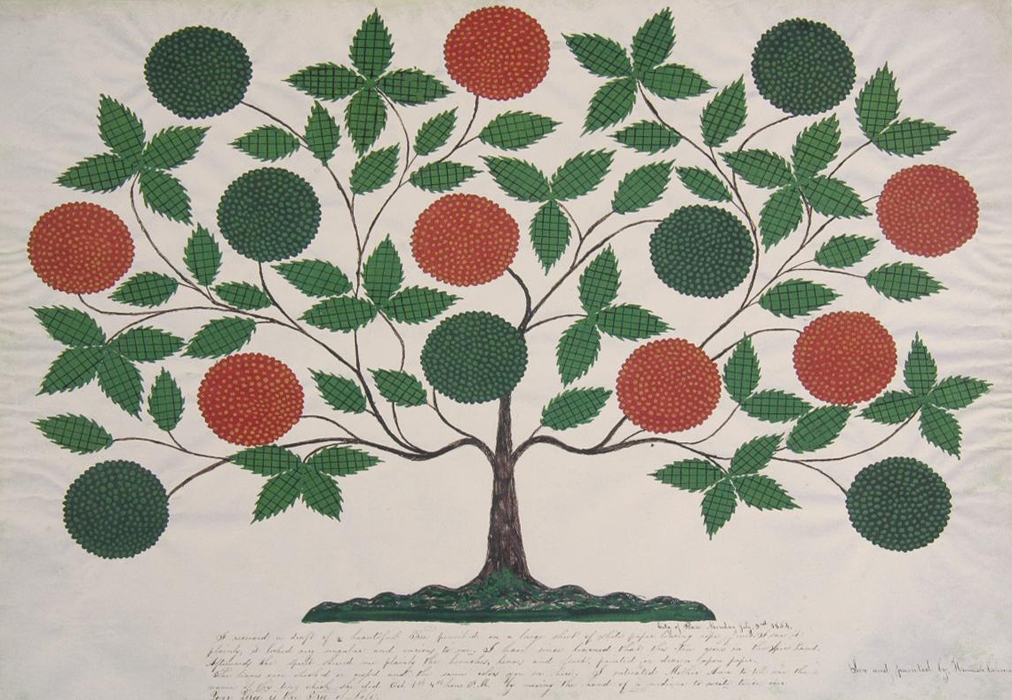
Image: This is the most famous of the Shaker gift drawings received from the spirits in the Era of Manifestations: a mid-nineteenth century period of intense Shaker spiritual revival. The drawing is called “The Tree of Life” and it was seen and painted by Sister Hannah Cohoon at City of Peace (the Hancock Shaker Community in Massachusetts) on July 3, 1854.
 

Your August Book of Days

August15Corn

August is a time of abundance of the summery sort: peaches and plums, raspberries and sweet corn. It is a month of small celebrations and the August edition of the Convivio Book of Days Calendar is here to help you mark them all. The month begins today with Lammas, the celebration of the first harvest, our escort toward autumn. It is, in Italy, the time of Ferragosto, when folks leave the cities and head for the sea. It’s a tradition that dates back to Ancient Rome, and it matters not how much it confounds tourists to Italy (good luck finding open restaurants should you visit at Ferragosto).

In Maine on the 6th, at the Sabbathday Lake Shaker Community, it is their celebration of the Arrival of the Shakers in America: one of their most important celebrations. Seth and I were privileged to share in that celebration once when I was a print intern there with Brother Arnold Hadd. It was one of the most magical evenings I have known, sitting there in the 1794 Shaker Meetinghouse and joining them in reflection and song as the sun set over the village. I don’t know if I believe in ghosts, but I swear the Shakers through the ages were present in that room with us.

It is the time of Obon in Japan, the beautiful outdoor festival celebrating and honoring the dead with street fairs, bon odori dances, and at the festival’s conclusion, thousands and thousands of illuminated lanterns set on the water, each carrying the spirit of an ancestor off to the other shore until next year’s return.

And for us printers and book artists, it is the month we honor St. Bartholomew, a patron saint of bookbinders and book artists and it is in his honor that the traditional printers’ Wayzgoose celebration comes, marking the day each waning summer when printers typically began setting type by lamplight and candlelight once again, for sunlight was no longer enough. Lammas, at the start of the month, reminds us that summer is ripening all around us; the Wayzgoose brings a more concrete reminder of the approach of winter.

This month’s calendar is, as usual, a printable PDF document designed for standard US letter size paper, 8 1/2″ x 11″, easy to print, easy to pin to a bulletin board, a nice accompaniment to the Convivio Book of Days blog. Enjoy.


First Harvest

Sommer

July comes to a close and August begins: this is Lammastide, an old holiday few will recognize, yet one very valuable, Lammas helps us begin our gradual transition from summer to fall. Indeed, it is the start of the autumnal season in traditional reckoning of time, for here in the Northern Hemisphere we are now halfway between the summer solstice of June and the autumnal equinox of September. This makes Lammas one of the cross-quarter days, like Imbolc at the start of February, which brings the start of spring to a winter-weary world.

Lammas is perhaps more bittersweet, for it is more difficult to be weary of such a gentle season as summer. But in the spiraling circular nature of time, everything is in flux, and each day since Midsummer in June has brought us increasing darkness. The days will continue to grow shorter and shorter until Midwinter’s solstice in December. The weather may lag behind somewhat, but there is no question that summer is ripening and growing old. In the fields, the grain is ripening, and the first harvest traditionally took place right about now. This is the origin of Lammas. The name comes to us from the Anglo-Saxon Hlafmass, or “Loaf-mass,” and at Lammastide, the first loaf of bread would be baked from the newly harvested grain and brought to the church to be blessed. All labor would cease and there would be community gatherings, perhaps the precursors of our contemporary county fairs that begin to pop up this time of year and which also, at their heart, celebrate agriculture and the harvest.

Grain yields not just bread but also whisky and ale, and all of these things play a part in Lammastide celebrations. If you are celebrating with us, Lammastide begins tonight with Lammas Eve and continues on to Lammas tomorrow, the First of August. The needs for a proper celebration are simple: a good loaf of bread and a festive beverage should be your table’s focal point. Some bakers make elaborately shaped breads just for Lammas, but simple is good, too. Never underestimate the power of simplicity.

Lammas was a big deal in Elizabethan England, and William Shakespeare brought some of the symbolism of Lammas into his tragedy Romeo and Juliet, symbolism that perhaps escapes our modern sensibilities. The play takes place in the heat of July, just before Lammas. Juliet’s nursemaid in Act I describes the fair Juliet and tells us, “On Lammas-Eve at night shall she be fourteen.” English majors like me who love to find connexions in these things almost always view Juliet in terms of the sacrificial first harvest. She is, in fact, in her tomb before Lammas arrives, less than a week after meeting Romeo. (Sorry for the spoiler… and try topping that next time you’re complaining about having a bad week.)

You may also hear this time of year called Lughnasadh––this is the Celtic version of Lammas. The celebration is much the same. Our suggestion, as you might easily assume, is to celebrate and mark this day. We are not, for the most part, an agrarian people anymore, and this explains the waning of a celebration like Lammas. But we rely on those who grow the grains we eat, and so why not set some time aside to enjoy with gusto the fruits of their labors––the farmers, the bakers, the brewers and distillers. Honor them, honor the bread you eat, the ale you drink, celebrate with us this first harvest as we begin to set our sights toward autumn.

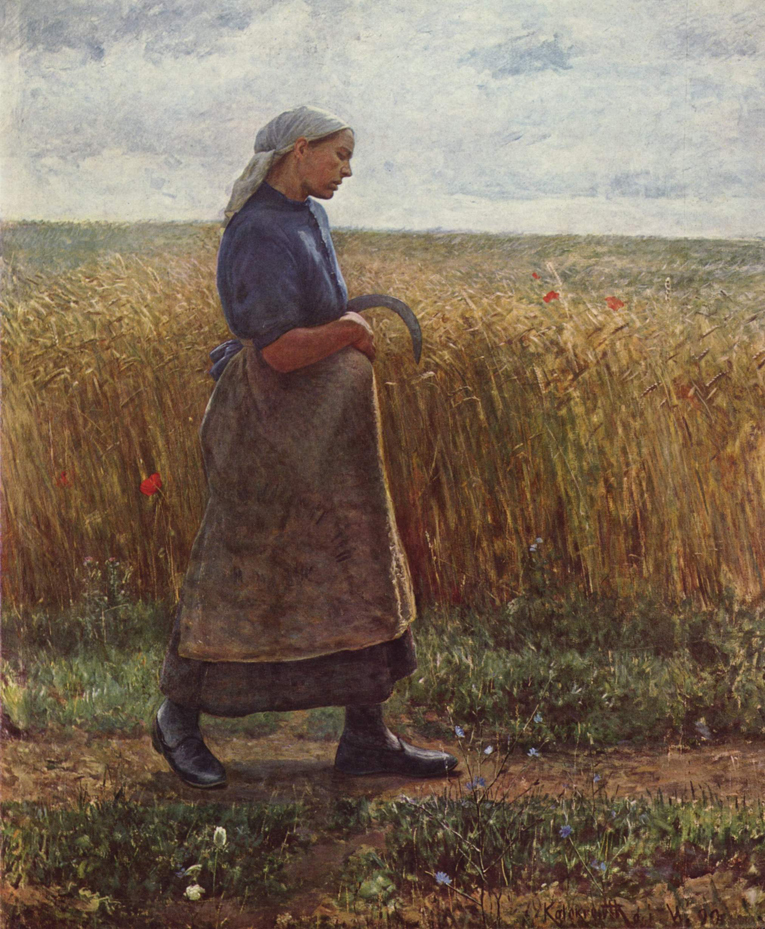
Image: Sommer by Leopold Graf von Kalckreuth. Oil on canvas, 1890. [Public domain] via Wikimedia Commons.