St. Stephen’s Day

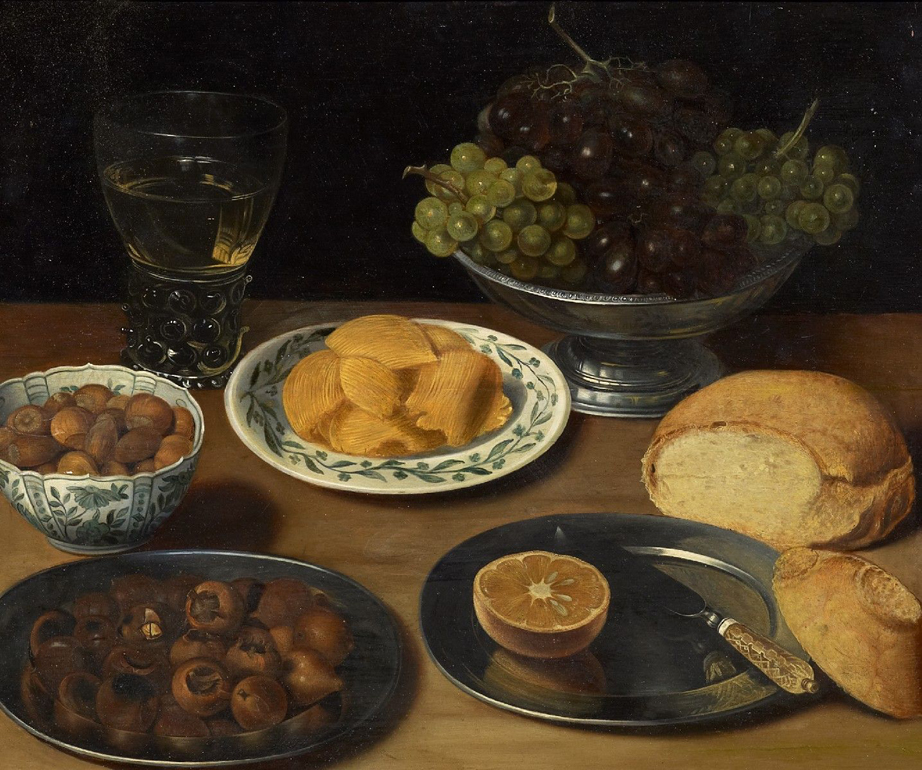
Frühstück mit Trauben, Nüssen, Kastanien und Brot

FIRST DAY of CHRISTMAS:
St. Stephen’s Day, Boxing Day, Day of the Wren

Christmas Eve ushers in Christmas Day, and now Christmas Day is past and we enter into the Twelve Days of Christmas, days that stand outside of ordinary time. This is Christmastide, or Yuletide, and there is a delightful dance between the newer Christian religion and the older Pagan one that make up the ceremonies of this period. The Twelve Days of Christmas will take us to the Feast of the Epiphany on the sixth day of January, though you will meet people who consider the Christmas season to run through to February 2, the next cross quarter day, which is halfway between the Winter Solstice, which has just passed, and the Spring Equinox. We mark the Second of February here in the States as Groundhog Day, but it is known also by its traditional name as Candlemas or by its even more traditional name: Imbolc.

But I’m getting far ahead of myself. The point is Christmas has just begun. Christmas exists on its own as Christmas Eve and Christmas Day, and today, December 26, is counted as the First Day of Christmas. On this day we celebrate St. Stephen, the first Christian martyr. Being the first to die for his faith (about 34 AD), the Church gave Stephen the first saint’s day after Christmas Day. There is a second St. Stephen who came many years later. This St. Stephen is associated with animals, and particularly horses, and so the First Day of Christmas is a good day to honor animals.

In earlier times St. Stephen’s Day was celebrated by hunting a wren and parading the wren’s corpse through the village. There are some places where this still takes place, especially in Ireland, but it is most often a fake wren that is paraded through town now. Traditionally, though, the day does not go well for wrens. The story goes that it was a wren who betrayed St. Stephen: Stephen had been captured and was about to make his escape when a wren began squawking, awakening the guards who were supposed to be watching him. Wrens have since been considered very unlucky… hence the Day of the Wren. Today’s village parades in Ireland and elsewhere will be attended by wrenboys in bright costumes and strange conical straw hats.

And finally it is Boxing Day today, as well, a British tradition in which gift boxes are given to servants and workers by their employers. Most servants had to work on Christmas Day to help make the day as merry as could be for the families that employed them. But the day after Christmas was usually their day off to spend with their own families. Their employers would send them off with a box containing gifts for themselves and the families they’d go home to.

In Italy, St. Stephen’s Day and the day that follows, St. John’s Day, calls for mulled wine and roasted chestnuts. This is the tradition we like best for this First Day of Christmas.

Image: Frühstück mit Trauben, Nüssen, Kastanien und Brot by Georg Flegel. Oil on oak panel, c.1638. [Public domain via Wikimedia Commons.]  The chestnuts are the “kastanien;” “castagne” in Italian.
 

Tagged , ,

Now It Is Christmas Again

Glade Jul

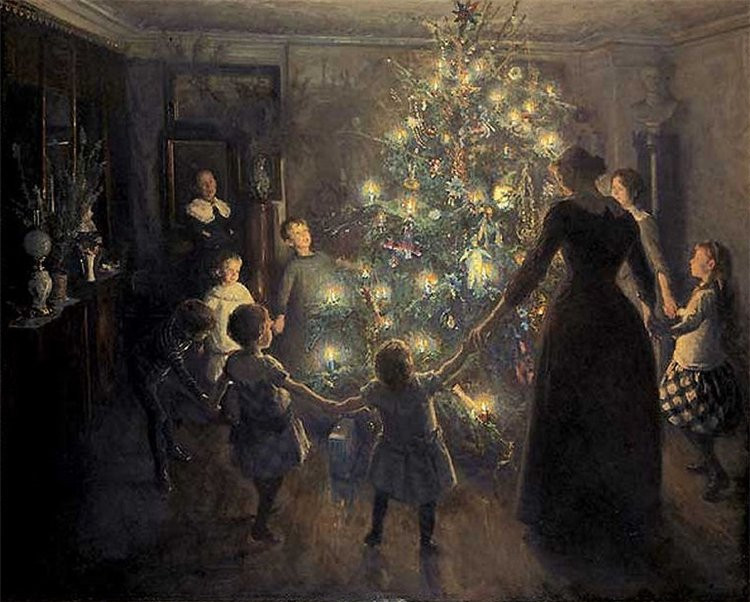
And now it is Christmas again. There is an old Swedish Christmas carol, “Nu är Det Jul Igen,” that says just this, and you can count on Swedes around the globe to be singing this very carol this very night. It is usually sung while dancing around the Christmas tree. The song, the dance, the tree aglow in the night… all of these things point toward the fact that this night is not like other nights: This is a night charged with magic. This is something we know deep in our bones. We know it from the time we are little children and we know it when we are old. Christmas Eve offers us a free ride back to that childhood, just a brief visit. We either hop aboard or we do not, but the offer is there.

Christmas has a lot of pressure put upon it. As magical nights go, this is the one most of us connect to. But it’s hard work connecting with that portal. We know the stories that have been passed down through the centuries––that the water in wells turns to wine at midnight on Christmas Eve and that magic lights twinkle at the deepest depths of those wells, that even rivers run with wine at the midnight hour, and that animals are given the power of speech and that they kneel in their barns in the cold night air, in reverence to the divine child that enters our common world. Those who set out to prove the magic are usually punished for doing so and so we do well to leave well enough alone. If the animals are kneeling and speaking, so be it. There is magic more readily available and apparent in the tree, in the lights, in the incense and candles, the cookies and songs we taste and sing just at this time of year.

But we try so hard to make Christmas perfect that sometimes it exhausts us. I think this is because we are so disconnected from the magic, the ceremony, of the everyday. We try to do it all now, in this one magical night, because it is the granddaddy of them all. But one of the most magical things about Christmas is that it comes whether we are ready for it or not. There is another old text, that of a Christmas play from Cornwall that is performed by morris dancers now all over the world. Father Christmas is one of the main players, and he enters, always, with the same words: Here comes I, Old Father Christmas; Welcome or welcome not.

Apparently, even in ancient times in Cornwall, Christmas would come upon us too quickly. A good thing to keep in mind today. The presents may not be all wrapped and the decorations may not be all up and the cards may not be all written and sent… but Christmas comes in its own time, and the magic is that we are swept along into it, and we are powerless in its wake. We are taken up in its quiet procession, and we either fight it or go along with it. If we go along with it, we let go of all that is not perfect and accept it for what it is: A quiet night, full of magic real or imagined. And what is the difference? What does it matter? “Now it is Christmas again.” Certainly there will be some quiet time for you tonight, time when you will sit and realize that all you did not get to do is not done but it’s okay, still it is Christmas. Its time is just beginning. Allow yourself to be immersed in it. Enjoy the magic.


Image: Glade Jul by Viggo Johansen. Oil on canvas, 1891. [Public domain, via Wikimedia Commons.] Johansen was a painter from Denmark, not far from Sweden, and certainly he knew a bit about “Nu är Det Jul Igen.”


The Longest Night

Snow Fields

Tonight at 6:03 PM here in Lake Worth, which is Eastern Standard Time, comes the Winter Solstice. But you don’t need a precise moment in time so much as a sense of wonder and a celebratory spirit to mark this longest night. The longest night is accompanied, by definition, by the shortest day.

And so the Shortest Day came and the year died
And everywhere down the centuries of the snow-white world
Came people singing, dancing,
To drive the dark away.
They lighted candles in the winter trees;
They hung their home with evergreen;
They burned beseeching fires all night long
To keep the year alive.
And when the new year’s sunshines blazed awake
They shouted, reveling.
Through all the frosty ages you can hear them
Echoing behind us––listen!

So goes “The Shortest Day,” a poem by Susan Cooper that is central to the Christmas Revels each year in Boston. Seth and I got to attend one year when we spent Christmas with his family in Maine. It was a matter of pure serendipity that we happened to be at the Revels on the night of the solstice. It was the year of their Scottish Revels theme, and it was an incredibly special way to welcome Yule. Be that as it may, I think my favorite way to welcome the season is the way Seth and I welcome it now, and I don’t know if it’s our own tradition or if anyone else does the same, but here it is: We take what is left from last year’s Christmas tree, which has been quietly resting in a corner of the garden, and with it we build a fire to bring light to this longest night. Our celebration is outdoors in a copper fire bowl in the back yard, but this is Lake Worth, where our nights are generally mild, even this time of year, and even if there is a chill in the air, the fire is there to warm us. In more northern places, a fire with last year’s Christmas tree could be built in the fireplace. It is, to us, a sacred way to mark the passing years and to honor the trees that bring us such joy each Christmas. So much more honorable than tossing the tree at the roadside for the trash pickup.

It is this night that really welcomes in the Christmas season for us. We will sit by our fire with those who will join us and we will pass around something warm to drink, most likely St. Bernardus or Baladin Nora, two wintry spiced ales, or maybe some mulled wine. I think the spice is important, for ginger, cloves and cinnamon light fire within; so outside so inside. In the house, this year’s tree will be illuminated. We bought it just two nights ago at the tree lot at Yamato Road and US-1, from the same people we’ve been buying our tree from for years and years. They remember us, we remember them, we see them once each year and it is part of the ritual.

You can take part, too, even if you don’t have last year’s Christmas tree. Light a fire, or light a candle if you don’t have a place to light a fire, bring some light of your own to this longest night of the year. These are busy days, I know, but I guarantee you a quiet ritual like this will find and occupy a place in your memory for a long time, whereas the rest will fall by the wayside. Tonight also happens to be the Fourth Sunday of Advent, in which we light all four candles in the round of our advent wreath. Three purple candles and one rose: all four candles are lit and that signifies that Christmas, the old welcome guest, is soon to be with us.

And so raise your glass with us if you care to, or speak a quiet prayer softly to the dark and holy night. Light, now, begins its gradual return. Happy Midwinter. Welcome Yule.


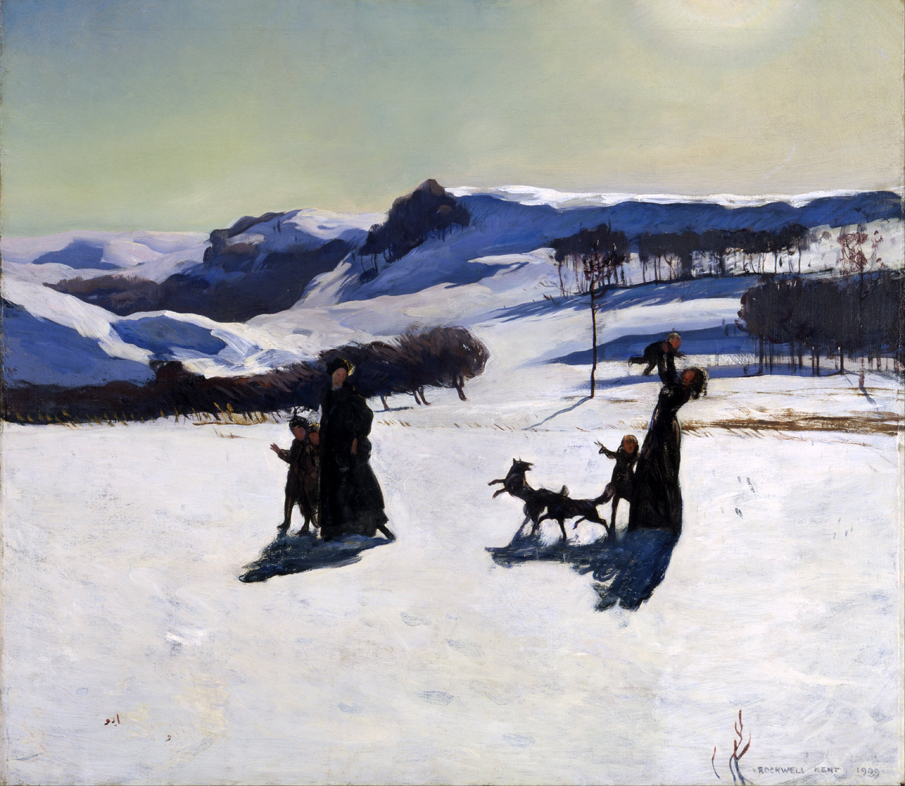
Image: Snow Fields (Winter in the Berkshires) by Rockwell Kent. Oil on canvas, 1909. [Public domain, via Wikimedia Commons.]