Thanksgiving

Aftermath

Happy Thanksgiving. Not much more to say than that. I’m spending my day at the press, printing new works for an exhibition I’m in that opens on the 6th of December. Not much time between now and then, and so here I am, but I’m happy to be here. There were Shaker spirituals playing on the stereo a moment ago, and now it’s Jay Ungar & Molly Mason, and before that it was Jane Siberry. The cat’s hanging out with me and there are pleasant stirrings in the house. I’m quite content.

Thanksgiving should be this way: a day spent doing what is most important to you. We’ll gather later with the family for dinner and complete the day in the company of those we love. What could be better? At the table, I’ll think of all I’m thankful for, and it will include all of you, for liking what we do, for letting us be a part of your days.

I wish you a day that makes you as happy as mine is making me. Happy Thanksgiving.
John


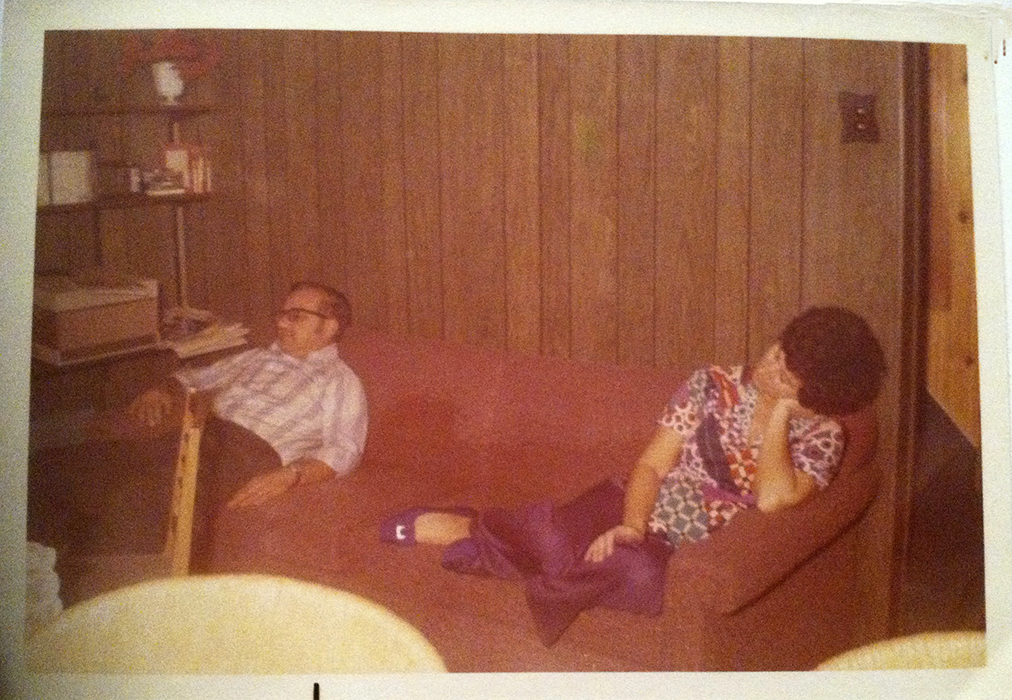
Image: Thanksgiving circa 1973. We had company from Connecticut. After dinner, almost everyone found a spot and fell soundly asleep. Contentedness was in the air.


Thankful

Rouge vif Detampes

This chapter of the Book of Days Blog comes to you from Table #12 at the Farmer Girl Restaurant on North Dixie Highway in Lake Worth, where I almost always see someone I know (this morning it’s Frank: Howdy Frank!) and where each Thanksgiving, Pete Roubekas, the owner, serves up a traditional Thanksgiving dinner, turkey and dressing and cranberry sauce and all the trimmings, on the house, for anyone who has no place to go… be it no family to cook for or no invitation to accept or decline or even no home to call their own. Pete’s been doing this for 30 years now, but that’s Pete, and that’s the spirit of this town. Sure, there are plenty of not-so-great folks here (don’t fall for the story of the woman who says her scooter’s broken down and needs to borrow 20 bucks––her scooter’s been broken down for as long as Pete’s been serving free Thanksgiving dinners), but people like Pete make Lake Worth what it is: a solid community, filled with people who are willing to take care of you, even when you don’t necessarily feel you deserve it. We are content, and we are thankful. The two go hand in hand.

I love that Pete does this. Another thing I like about Pete is the fact that his place is decorated today with pumpkins and dried corn. It’s clear the man is ready for Thanksgiving. And there is not a hint of yuletide cheer to be found. Which, we heartily believe, is how it should be.

If you know us well, you know Seth and I refer to this as the Slow Christmas Movement. You’ll be hard pressed to find anyone who loves Christmas as much as we do, but we don’t like seeing Christmas throwing its weight around and bullying lesser holidays. Especially Thanksgiving, which, each year, seems to get swallowed up by Christmas more and more so that it seems like one long holiday from our day of thanks all the way through the 25th of December.

Each year, we issue an invitation: Join us in the Slow Christmas Movement. Take your time. Enjoy Thanksgiving and all its autumnal bounty. What comes next––and this year it begins on the Sunday after Thanksgiving––is Advent, a time of preparation for Christmas. The nights grow increasingly darker and we acknowledge this by illuminating more and more candles on the Advent wreath as we approach Christmas. And each night we light our daily Advent candle during dinner. We watch it get smaller and smaller as Christmas approaches. And then, before bed each night, we open another window of the Advent calendar to see what surprise awaits us there. Here’s a secret: We like to hold the open calendar window up to a light source from behind, so the picture in the window glows.

If these seem like simple celebrations, they are. And that’s the point. Christmas is a big deal. It comes in with a bang and it actually lasts for another twelve days after Christmas Day. Those are the Twelve Days of Christmas we sing about in the famous carol, running all the way up to the 6th of January. So why rush now? There’s plenty of time to enjoy Christmas once it comes, but for now, enjoy Thanksgiving. Be like Pete. Be thankful and give each day its time and space.

*

At our website, www.conviviobookworks.com, you’ll find all kinds of traditional German Advent calendars (the ones with lots of glitter you remember from your childhood) as well as British ones, and some very lovely Advent candles, two of which are handmade in England.


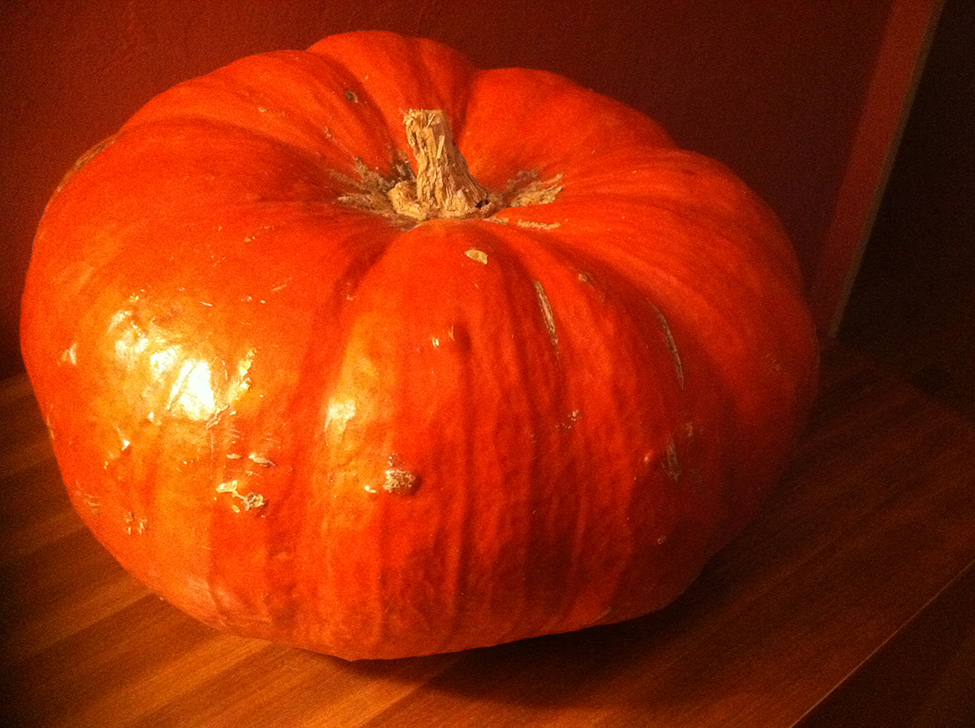
Image: One extremely beautiful Rouge vif D’Etampes pumpkin, given to me by a very kind person who knows how much I love heritage pumpkins. The world is full of kind people.


Oranges & Lemons

Oranges and Lemons

November 23 is the feast day of St. Clement: St. Clement’s Day, or Old Clem’s Night in England. He’s the patron saint of metal workers and blacksmiths, and Old Clem’s Night traditionally begins at the anvil, which is struck pretty consistently in the blacksmith’s trade, but on Old Clem’s Night, there is the addition of a small measure of gunpowder. The ensuing small explosion is what rings in the celebration. It’s a boisterous one, to be sure, involving processions of smiths, some of whom are dressed as St. Clement, with stops at every tavern along the way. We can assume there was no shortage of ale on Old Clem’s Night, and there also was no shortage of toasts and huzzahs for the smiths. Toasts like:

Health to the jolly blacksmith, the best of all fellows,
Who works at his anvil while the boy blows the bellows!

One of the legends of St. Clement places him as the very first man to refine iron, and to shoe a horse. That’s not terribly likely, however, and our ancestors may have been confusing Old Clem with a mythical blacksmith of Saxon origin: Wayland the Smith, whose feast day was also about this same time of year. But St. Clement has always gathered romantic legends about him. What we know for sure is he was one of the early Christian martyrs, being thrown overboard from a boat and fixed to an old iron anchor in the First Century AD.

He’s an interesting fellow, Old Clem. While the smiths were most likely getting drunk on ale, the children were going about clementing: going door to door, begging for apples and pears and nuts in exchange for singing old rhymes. When I asked my mother many years ago about her recollections of trick-or-treating when she was a little girl in Brooklyn, one thing she remembered was going door-to-door not at Halloween but rather around Thanksgiving. She didn’t call it clementing, but it sure sounds like it to me, especially when you realize that on some years, Thanksgiving and St. Clement’s Day would even fall on the same day.

One of the rhymes clementing kids may have sung in exchange for apples and pears was probably an old nursery rhyme that is still well known. Do you know it?

Oranges and lemons,
Say the bells of St. Clement’s.
You owe me five farthings,
Say the bells of St. Martin’s.

When will you pay me?
Say the bells of Old Bailey.
When I grow rich,
Say the bells of Shoreditch.

When will that be?
Say the bells of Stepney.
I do not know,
Says the great bell of Bow.

Here comes a candle to light you to bed,
And here comes a chopper to chop off your head!

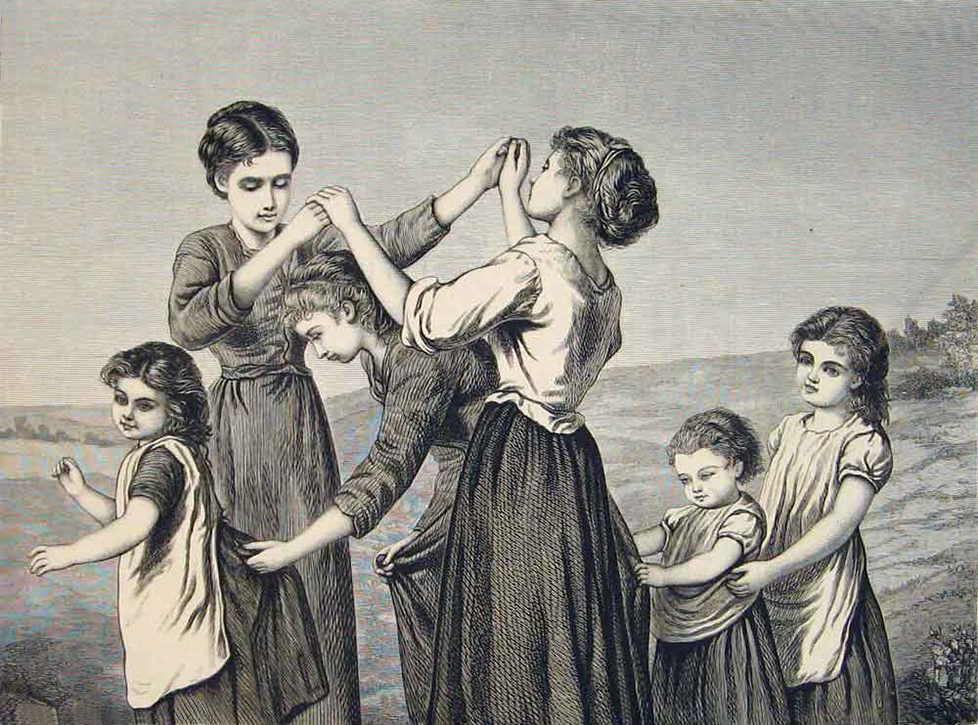
The bells in the song refer to the bells of churches in and around London. The ending is rather abrupt, isn’t it? But it’s part of a game that’s being played by the girls in the old engraving above. Two players form an arch with their arms, and at the end of the rhyme, things really speed up––both the song and the running through the arches. But finally the arches come down… and then that’s it for the kid who’s trapped in those arms: Off with her head! Or at least out of the game.


Image: Oranges and Lemons by Nicholl Bouvier Games. Engraving on paper, from the book The Pictorial World by Agnes Rose Bouvier, 1874. [Public Domain] via Wikimedia Commons.