With the possible exception of the three years I spent in Alabama, I have always lived in places where it is common to see religious statues in front yards. St. Francis is one you see often. But if we’re talking about a statue of the Blessed Mother or of St. Joseph or St. Anthony, and especially if it’s enclosed in a little enclave, most especially if a spotlight is trained on the statue at night, well, chances are very good that these are my people. We Italians love our saints, and it’s hard to say which is most beloved… but surely a contender for that top spot would be San Antonio, St. Anthony of Padua.
He is a populist, a saint of the people, a saint you can talk to, one who will help you with trivial matters. Finding lost car keys, for instance, or anything at all you’ve misplaced… St. Anthony is there, ready and willing to come to your aid. Case in point: one Labor Day, on a family trip to the beach, when my nephew lost the same gold bracelet off his wrist not once but twice in the surf, my mother retrieved said bracelet both times after praying to St. Anthony. We’re talking needle in a haystack here, folks. Mom swears by St. Anthony’s helpful powers to find lost articles. You may even be familiar with the old children’s rhyme: Tony, Tony come around, something’s lost and must be found. If you’ve ever said that, it’s St. Anthony you’re invoking, and he’s all too happy to assist in your trivial worries. He is an all-around good guy and today, June 13, we celebrate the feast day of San Antonio.
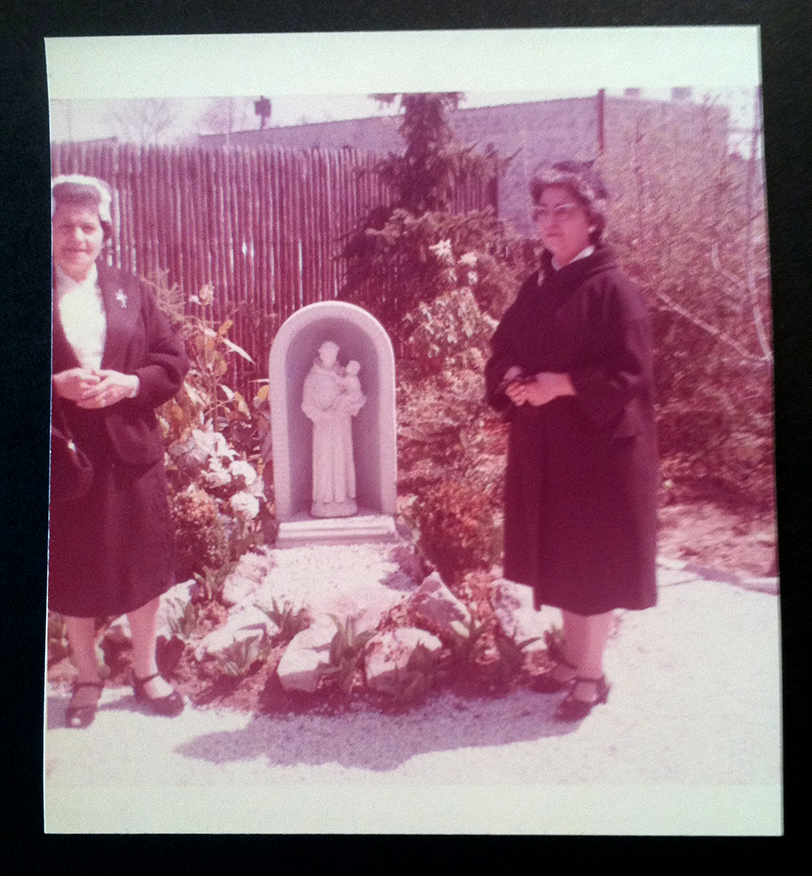
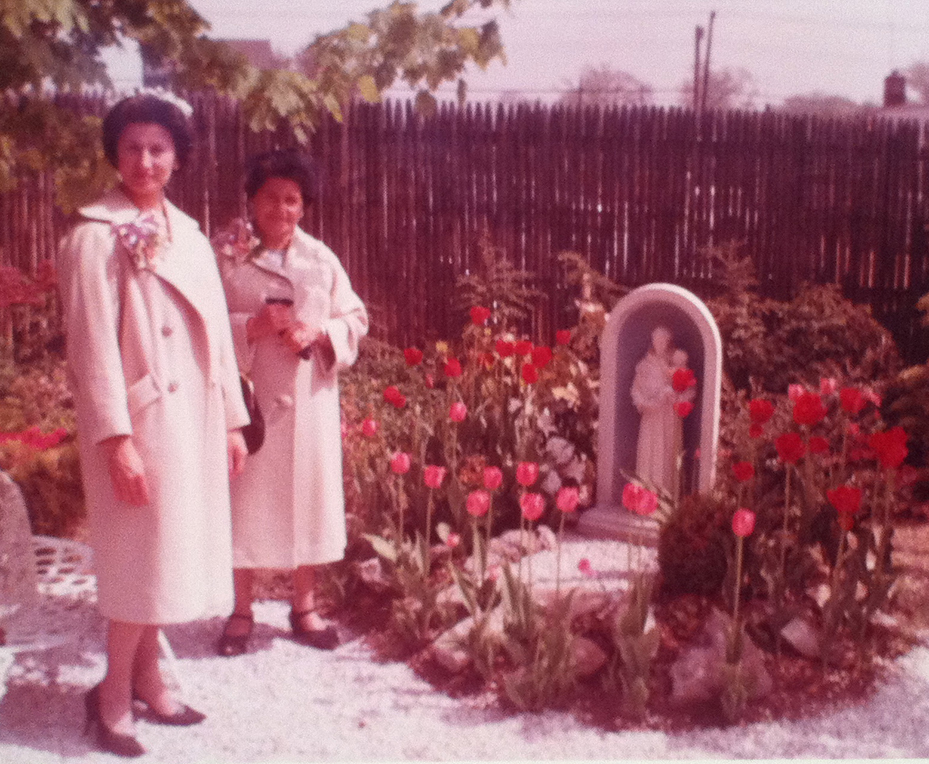
What I remember most about June as a boy was Grandma sitting in a folding upright lawn chair in front of our statue of St. Anthony, which was in the back yard. Grandma always sat in the upright chairs; never a lounge or God forbid a sand chair (she’d never get out of one of those), and in June, her chair was there in front of St. Anthony and in her hands were her little prayer books printed at the orphanage of San Antonio in Italy that she supported and usually a rosary, as well. She sat there for what seemed to me hours. And very often she would have a friend over doing the same thing, a friend just like her, muttering prayers in Italian into the thick summer air.
They were saying their Novena to San Antonio. Novena as in nine. It is a prayer that is said for nine consecutive days, and there are variations of the novena: it could be offered for St. Anthony’s general intercession in a problem in your life or it could be offered for no reason in particular or it could be offered even to help you find something, though one would think after nine days you might move on (the novena does even offer this option as a viable suggestion: St. Anthony, perfect imitator of Jesus, who received from God the special power of restoring lost things, grant that I may find [name the item] which has been lost. At least restore to me peace and tranquility of mind, the loss of which has afflicted me even more than my material loss.)
St. Anthony was born in Lisbon in the late 12th century but spent most of his life in Italy. He was an early Franciscan: cowled brown habit, sandals, tonsured haircut. He is known for many miracles, one of the best known being his preaching to the fishes, who gathered in great numbers to hear St. Anthony speak. He preached to the fishes after trying first preaching to people, but they weren’t much interested at the time, so he took his lesson to a nearby body of water and found a more receptive audience… which then impressed the people enough that they began listening.
The feast day of St. Anthony is a day that, for me, always calls to mind Italian grandmothers, which were the only kind of grandmothers I knew as a boy. Occasionally I would meet a grandmother who wasn’t Italian if I went to a friend’s house after school, and I would be a little taken aback sometimes if their Grandma was tall or spoke good English. And one thing all of these Italian grandmothers seemed to have in common, whether they were my grandmothers or a cousin’s, was this devotion to St. Anthony. There may have been one summer day I recall when Grandma was joined by three or four of them, all saying their novenas, all sitting on folding upright lawn chairs, all muttering in Italian, lips moving just slightly, eyes fixed lovingly upon the statue of St. Anthony in his little enclave in our little back yard.
The image above is of Mom and Grandma with corsages and fancy coats, posing near San Antonio, for my sister’s first communion, and below, that’s Grandma with one of any number of her friends, all Italian, and all of whom were referred to as “Cummara”.