Author Archives: John Cutrone

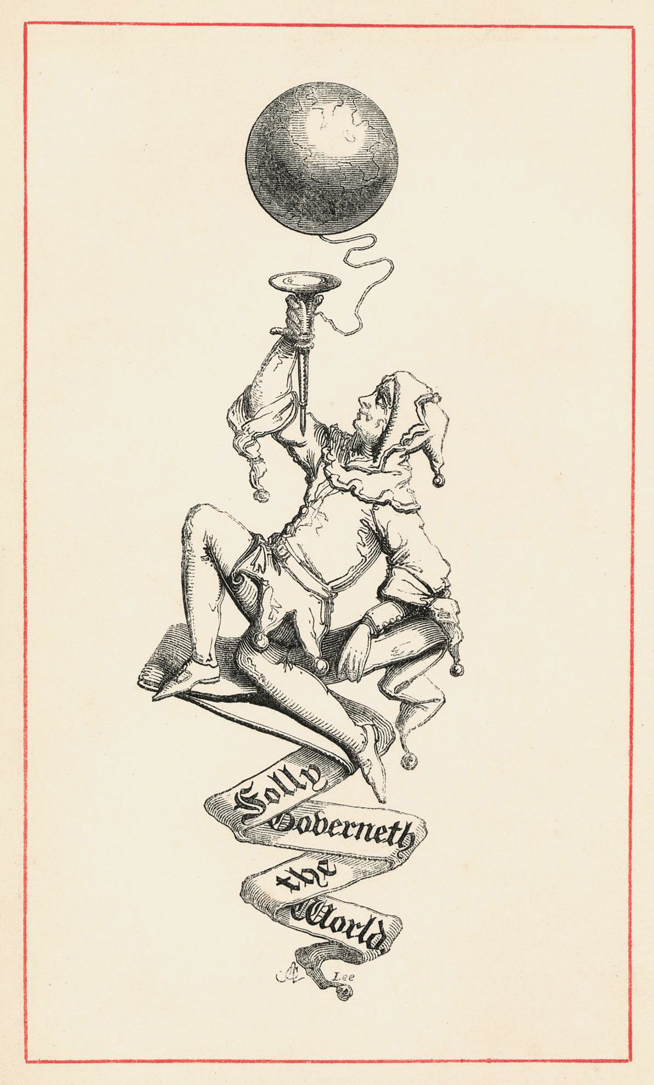
Folly Governeth the World

FOURTH DAY of CHRISTMAS:
The Feast of Fools

Chaos reigns today. It’s the Feast of Fools, a direct descendant of the Roman Saturnalia that many say inspires our Christmas traditions. For both the Saturnalia and this Fourth Day of Christmas, the normal order of things is ceremoniously reversed. And it is with a day like this that we see why our ancestors for the most part ceased all labor during the Christmas season. Who could possibly get any work done when chaos ensues? Why even bother?

In times more ancient, some lucky (and hopefully brave) soul would be elected Lord of Misrule for the Feast of Fools and would lord over the day’s revels. The election might come through the finding of a coin baked into a pudding. The Lord of Misrule was in charge of everything for the day, and much like a jester at court, could say and do what he or she wished without fear of repercussion, often revealing truths that the rest of the company would not dare speak. This, done under the guise of humor to make things more palatable… and hopefully to effect some positive change once the Feast of Fools was past. While the Feast of Fools and the Lord of Misrule are mostly things of the past, one can see the usefulness of these things. One might say that we could use a healthy dose of this right now.

All of this chaos is the result of the old year dying. It is falling apart at the seams. But the old year must die for the new year to be born. As the year goes, so have gone other things this time of year: the sun must die at the solstice to rise again, the son born at Christmas must die to rise again at Easter. The story is an ancient one, told over and over again, in many guises. The story never grows old, and it is the story even of our Convivio Book of Days: it is the wheel of the year, turning always, renewing always, and yet the story is the same. It is, to me, both comforting and perplexing.


Image: “Folly Governeth the World” by Alfred Henry Forrester. It is the frontispiece to The Marvellous Adventures and Rare Conceits of Master Tyll Owlglass by Kenneth R.H. Mackenzie, 1860. Some things never change.
 

Our First Language

THIRD DAY of CHRISTMAS:
Holy Innocents’ Day, Childremas

The focus this Third Day of Christmas is on children, so go on: dote on your kids. Equally important, though, I think, is to reconnect this day and every now and again with the children we once were. Are there favorite things you used to do then that you just don’t do anymore? What was your favorite book when you were a kid, or your favorite movie, or your favorite thing to eat? Today, Childremas, is a good day to go back and give those things another try. It is a day to reconnect and speak, as Garrison Keillor once said, our very first language. Christmas gives us this excuse, and Childremas does especially.

While the focus is on children, Childremas takes its name from the darker side of the Christmas story. When King Herod learned of the star over Bethlehem and the child that was born there, he became anxious about his throne. These are some of the most dangerous people: insecure people in positions of power who feel threatened. And so Herod ordered the slaughter of all the children of Judea. They are remembered as the Holy Innocents, and another name for this day is Holy Innocents’ Day. It is considered the unluckiest day of the year, and not a day to begin a new project or business. It’s probably better all around if we just take the day to play.


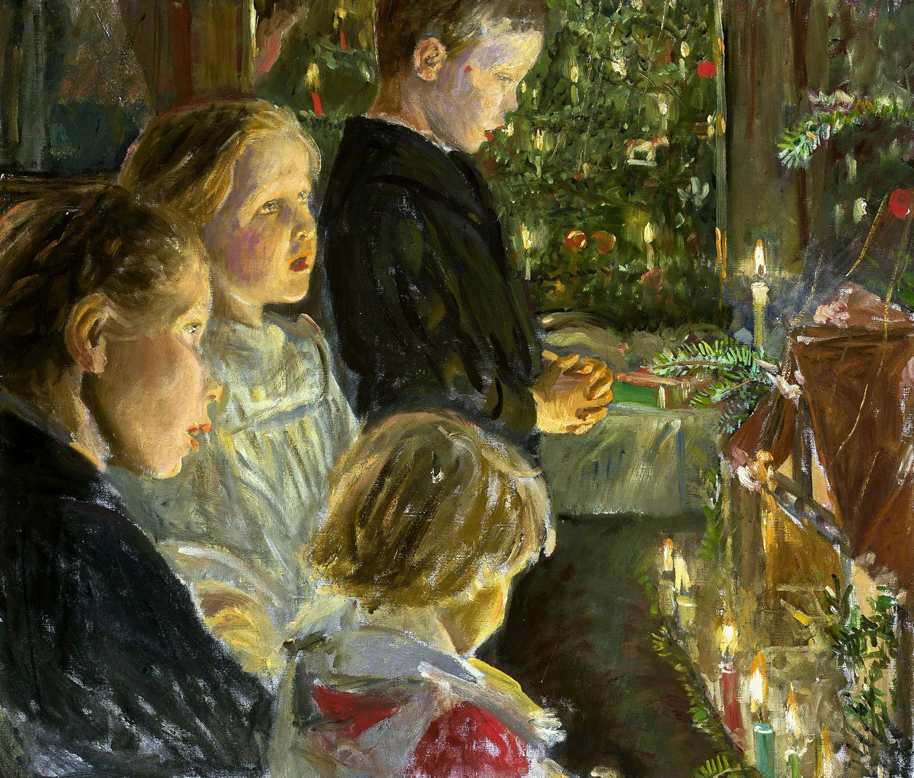
Image: “Children by the Christmas Tree” by Leopold Graf von Kalckreuth. Oil on canvas, c. early 20th century. [Public domain] via Wikimedia Commons. 


Wine & Chestnuts

SECOND DAY of CHRISTMAS:
St. John’s Day

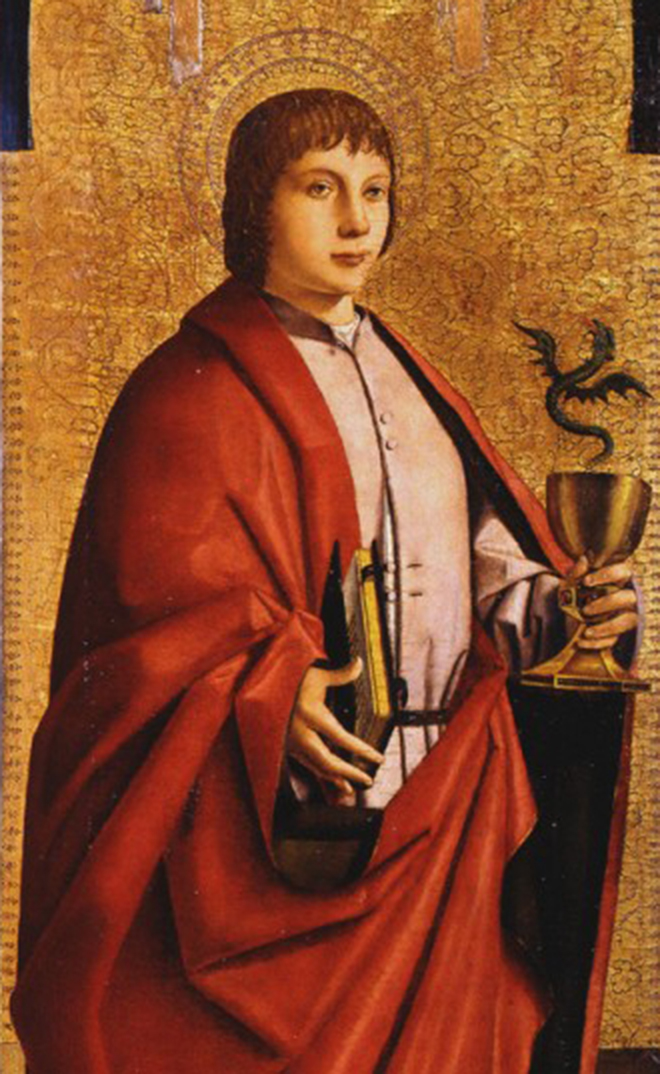
St. John the Evangelist was the only one of Christ’s disciples who did not meet a violent death for his beliefs. While his counterparts were martyred off, one by one, John lived to be an old man. Not that no one tried to get rid of him. No, John the Evangelist had many attempts on his life. The most famous failed attempt is what gives us our tradition for today, the Second Day of Christmas. The story goes that St. John drank wine that was deliberately poisoned and meant to kill him… but it had no effect on the man. And so on his feast day, which happens to be this Second Day of Christmas, it is traditional to bless our wine. In Europe especially, it is traditional to bring wine to church in order for the priest to bless it. This blessed wine is reserved through the year and given as a healing tonic to those who are ill. The blessed St. John’s wine is also thought by many to have a better flavor. And no need to bring all your stores of wine to the church for a blessing; blessed St. John’s wine is said to even impart better flavor on wine that is stored in its vicinity. That’s some powerful stuff.

Whether you have your wine blessed today at church or not, one thing is clear in the spirit of this merry Christmas season: it is a night for wine. In Italy yesterday for St. Stephen’s Day, folks ate roasted chestnuts and drank mulled wine, and tonight, for St. John’s Day, this festivity of the simple bounty of the earth will continue. The wine in Italy for these nights is typically mulled, and every year for St. John’s Day I give you my recipe for mulled wine. Here it is again: Pour a bottle of good red wine into a stainless steel pot and set it on the stove over medium heat. Add some mulling spices (we sell some wonderful mulling spices at the Convivio Bookworks website that are from the Sabbathday Lake Shaker Community in Maine… they call it Mulled Cider Mix but it’s just as good in wine), and sugar. Start with a teaspoon or two of sugar and add more to taste. We prefer a less-sweet mulled wine, and while you can always add more sugar, you can’t take it away once it’s in. So I recommend adding the sugar gradually, tasting as you go. Heat to allow the spicy flavors to infuse the wine. Strain before serving in cups (not glasses).

Here’s a little something you may find as fascinating as I did when I learnt it just the other day from the folks at Old Sturbridge Village in Massachusetts: It has to do with our common American expression, “Merry Christmas.” We rarely use the word “merry” other than at Christmas, and yet in England, where the idea of a merry Christmas began, the common greeting at this time of year is “Happy Christmas.” Christmas wasn’t a very big deal in America early on, mainly because the Puritans hated Christmas and made it illegal to celebrate the holiday. They were not fond of all the merriment that went along with a traditional populist Christmas celebration, and so they outright banned its observance. It was Charles Dickens and Washington Irving who really saved Christmas in England and America from extinction, and as Dickens’ Christmas tales grew increasingly popular in the States, folks here began following his texts, wishing a Merry Christmas to everyone they met.

In post-Dickens Victorian England, though, another round of anti-merriment clergy were getting their knickers in a bunch. This time it was the Methodists. They began promoting “Happy Christmas” as a more respectable greeting, more high-brow… less merry, less drunken. That took hold in England, and even today, folks there are more likely to wish you a Happy Christmas.

Despite our Puritanical beginnings, “Merry Christmas” reigns here in the States. It is a decidedly secular greeting, less reverential, more festive. On this Second Day of Christmas, we wish you that lovely balance that contains a bit of both. The blessed (or not) wine and chestnuts pave the way: Happy, Merry Christmas.

Image: San Giovanni Evangelista. A detail from a triptych by Antonello da Messina at the Uffizi in Florence. Oil on panel, circa 1470 [Public domain] via Wikimedia Commons.