Category Archives: Epiphany

Twelfth Night

Twelfth Night

ELEVENTH DAY of CHRISTMAS:
Twelfth Night, Eve of the Epiphany

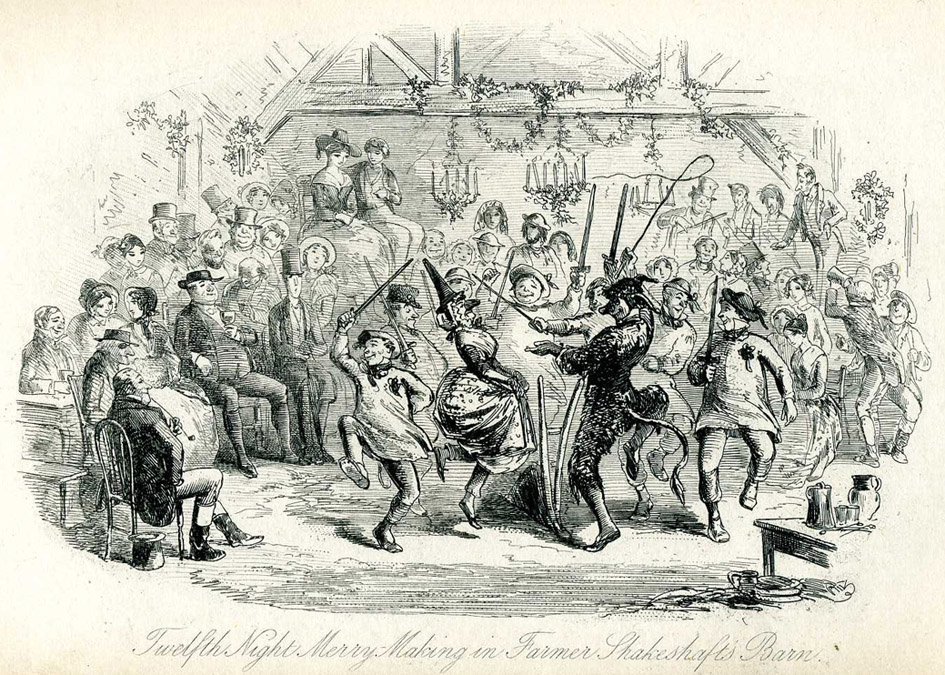
The close of the Christmas season begins here, and just as our Christmas celebration began in the nighttime hours of Christmas Eve, so the same comes Twelfth Night. If this is confusing (that Twelfth Night should come on the Eleventh Day), remember that even today, much of the way we celebrate holidays is based on traditional reckoning of time, in which a new day begins at sunset. This is why the nights before holidays are so important: Consider Christmas Eve, of course, but other nighttime events, as well, like Halloween and Holy Saturday at Easter. And so Epiphany Eve, which is tonight, ushers in Epiphany the next day. The night is best known, though, as Twelfth Night, and it has long been a night of great festivity, much like you’d see in the old engraving pictured above.

I am always fascinated by images of old parties like that. I think it’s because I am the most awkward person at parties; and yet I picture the Van Tassels’ Quilting and Merrymaking Frolic in Washington Irving’s “The Legend of Sleepy Hollow” or the Fezziwiggs’ Christmas Eve party in Charles Dickens’ A Christmas Carol, and I am pretty confident I’d have a grand old time at parties like this. I would love to be right there in the Twelfth Night revels pictured above.

There is very little of this Twelfth Night festivity nowadays, especially here in the States. But I think we need Twelfth Night. Old Father Christmas comes to be with us each year for a visit that lasts but a couple of weeks. It’s only right to send him on his way again in proper fashion, and in our house, that means a celebration––even a small one if that is all we have left in us––is in order. Dinner should be a good one, and a festive Christmas punch is a nice accompaniment. Friends and family would be a great addition, as well as good music and an old game or two, like Snapdragon: Fill a shallow bowl with golden raisins and pour a bit of brandy over them. Darken the room (like the darkness of midwinter) and carefully set light to the brandy. Play the game while the brandy is aflame: Each person in the room snatches a raisin from the bowl and makes a wish upon the raisin before popping it into his or her mouth. This old game from Scotland may sound dangerous, but it’s less dangerous than it would seem. Be careful all the same, of course. Each person’s wish should be granted before the next Twelfth Night… or so the story goes.

Christmas ends each year with Epiphany, which will come tomorrow. Epiphany marks the day the Magi arrived at the stable in Bethlehem after nights of following the star that announced the birth of the Christ child. One of the most endearing figures in the story is an old Italian woman who is known as la befana. She and the Magi are the last of the midwinter gift bearers. Those three kings (los tres reyes) are the ones who bring presents tonight in Spain and Latin America, but in Italy, this is the job of la befana. As the story goes, at that first Christmas oh so long ago, the Magi stopped at la befana’s house and asked her to join them on their journey, but she declined the invitation. “I have so much housework to do!” she told them. And so the Magi left her home and continued on their way.

But as she swept her floors, la befana began to feel a bit remorseful, and once she finished her sweeping, she set out to find the Magi. But she never did find them, nor the child they had told her about. She searched and searched but to no avail. Still, to this day, on each Twelfth Night, la befana sets out upon her broom to seek them. As she makes her rounds, searching high and low for the child and the three kings, la befana leaves small presents for all the sleeping children. Even the ones who were naughty: they get coal, but la befana’s coal is sweet as candy, so even her coal is a nice present to receive.

It is la befana’s job to sweep away Christmas, and so she does this each year. She sweeps and sweeps, and by the time she’s done with her sweeping tomorrow at Epiphany, Christmas will be done. The Magi will return to their distant countries, and Old Father Christmas, whether he was welcome or welcome not, will be on his way back to the Northland. But the wheel of the seasonal round will continue to turn and new days of wonder will be upon us, even as we just begin to miss the Yuletide visitors who came to spend these dark midwinter nights in our company.


Image: “Twelfth Night Merry-Making in Farmer Shakeshaft’s Barn,” an engraving by Hablot Knight Brown (better known as “Phiz”) from the book Mervyn Clitheroe by William Harrison Ainsworth, c.1850.
 

Following that Star

Cappella_dei_magi_paesaggio

TENTH DAY of CHRISTMAS:
St. Titus’s and St. Gregory’s Day

Again today, like yesterday, there are no particular customs associated with this, the Tenth Day of Christmas. It is the Feast Day of St. Titus and St. Gregory. Titus was a disciple of St. Paul in the first century, and St. Gregory was a bishop in the sixth century. It’s also St. Rigobert’s Day and St. Ramon’s Day. But not much is done to celebrate these good guys, and in this house, the Tenth Day of Christmas is typically a day of preparation for the bigger festivities that come next over the two days that follow: Twelfth Night and Epiphany, the celebrations that close the Christmas season.

The celebration of Epiphany on January 6 rivals that of Christmas Day in some countries. It’s the big day for gift giving, and we see the last of the wintertime gift bearers in Italy with la befana and throughout Spain and Latin America, the three kings themselves bringing presents. As for Twelfth Night, well, this is a celebration that has fallen a bit out of favor here in the States, and this is too bad. We think of Twelfth Night and Epiphany as a proper close to the Christmas season. For those of you who feel a bit let down after Christmas, these are especially important celebrations, for they help give Christmas its full life and scope.

Last year I shared with you a recipe for one of the Epiphany traditions in our house: Three Kings Cakes. I’ll share it with you again today, for if you bake them today or tomorrow morning, they’ll be ready in plenty of time for Twelfth Night or for Epiphany. You will need three loaf pans because the recipe yields three cakes, one for each of the Magi: Caspar, Melchior, and Balthasar. The Magi will arrive on the Sixth of January, just in time for these delightful cakes that are flavored with honey and rose water, flavors of the ancient Mediterranean world, flavors they certainly knew well in their day.

*

THREE KINGS CAKES
makes three cakes

For the Batter
1 cup butter
generous 3/4 cup sugar
2 eggs
2 teaspoons vanilla
2 1/2 cups currants
3 cups applesauce
1/2 teaspoon salt
1 tablespoon baking soda
1 teaspoon cinnamon
1/2 teaspoon ground cloves
4 cups flour

Preheat oven to 300 degrees. Cream together the butter and the sugar, then add the eggs and vanilla. Beat smooth before adding the remaining ingredients. Grease 3 loaf pans (about 8″ x 4″ x 3″ or so) and divide the batter amongst the pans. Bake for one hour, or until a toothpick poked into the center of each cake comes out dry. Let the cakes cool in their pans on a rack.

For the Syrup
1/2 cup honey
1/2 cup sugar
1/2 cup water
1 cinnamon stick
6 whole cloves
2 tablespoons rose water

Once the cakes are baked, combine the syrup ingredients, except for the rose water, in a saucepan over medium heat. Once the sugar dissolves, add the rose water. Remove the cinnamon stick and the cloves and then pour the hot syrup over the cakes in their pans, divided equally amongst the three cakes. The syrup will soak into the cakes. Allow to cool completely before unmolding from the pans. Serving the three cakes on three platters makes for a nice presentation on Epiphany Day or on Twelfth Night.

If you have trouble finding good rose water, we happen to sell an excellent one at our website, in the Inspired Living for Everyday pages of our online catalog. Our rose water is made by the Sabbathday Lake Shaker Community in Maine, from their line of culinary herbs and herbal teas that we’ve been selling at conviviobookworks.com for years now. It’s one of the most delightful flavorings you’ll bake with, adding a mysterious and delicate flavor not just to these cakes, but also to apple pie, cookies, and even French toast. It’s pretty wonderful stuff.

Christmas, meanwhile, is soon coming to a close. Somewhere on the horizon there are three old men following that star, nearing their destination, and in Italy, la befana is at her cleaning; she has her broom in hand, and she’s preparing to sweep away the festivities.


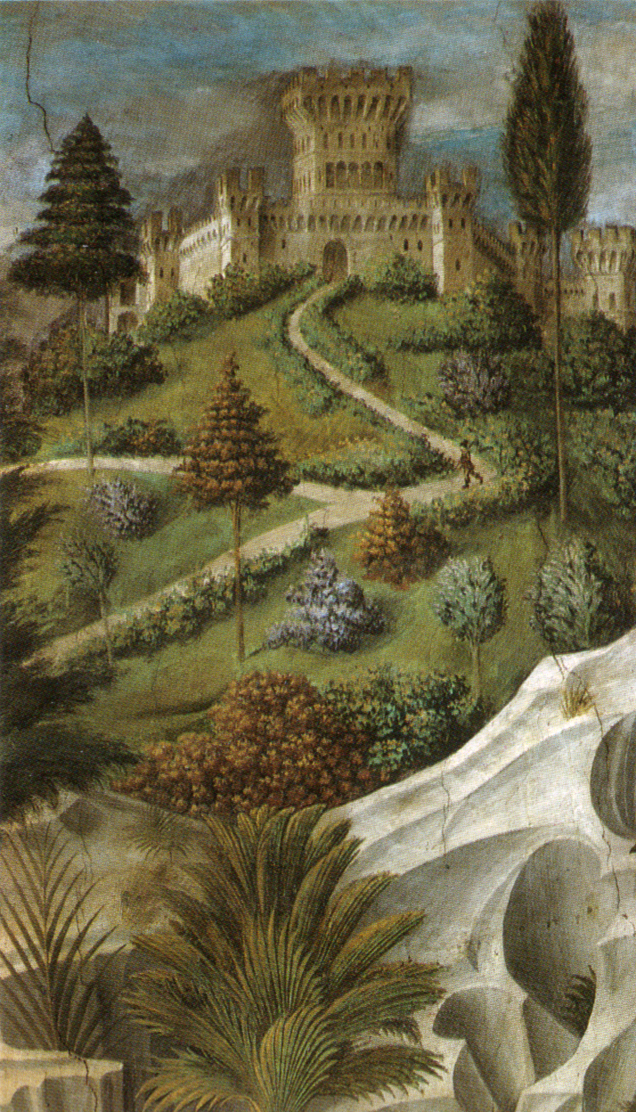
Image: Detail from a fresco by Benozzo Gozzoli in the Cappella dei Magi (Chapel of the Magi) at the Palazzo Medici Riccardi in Florence, Italy, 15th century. [Public domain] via Wikimedia Commons.

Tagged ,

Plough Monday & Copperman’s Day

Copperman

Come tomorrow, the first Monday after Epiphany, we get another of the old agricultural post Christmas “get back to work” celebrations from England. This time, it’s the guys who are back to work with a ceremonial ploughing of the frozen ground on Plough Monday.

Truth be told, Plough Monday is not very much about work at all. It does, however, mark the day the lads return to ordinary time now that Christmas is passed, much like St. Distaff’s Day did for the lasses last week on January 7, the day after Epiphany. It is an old holiday rooted in the centuries that fell out of favor for some time but is seeing a bit of a revival again. You can be sure there was ale involved back in the old days. It was, as well, another big day for mummers and guisers performing street plays. It was perhaps their last hurrah for the winter, and the typical Plough Monday mummers play had the ever present theme of life and death and rebirth––cycles that are very present and familiar to those who are close to the land.

Mummers or not, the day did typically see the local men dressed so as to evoke the fool. The sillier the better and all topsy-turvy, with shirts on top of coats and all bedecked with ribbons, too… a remnant of that Feast of Fools atmosphere that permeates much of the Twelve Days of Christmas. One of the men would dress as an old woman: the Bessy, who perhaps again personifies the old hag of winter, the goddess in her wise crone stage. The men and Bessy would parade through the village with a finely decorated plough, raising a general ruckus of song and cheers and dances (some truly ancient and mysterious ones, like the Sword Dance) and the blowing of horns and the banging of drums, and always in procession, too, the collection box, into which folks were expected to drop a few coins for the Plough Monday merriment. Those who didn’t might have their front yards subjected to the plough. But this mischief was rare; most everyone gave a little something to the sport, and the celebration was, for the most part, a benign and happy one as it progressed through town.

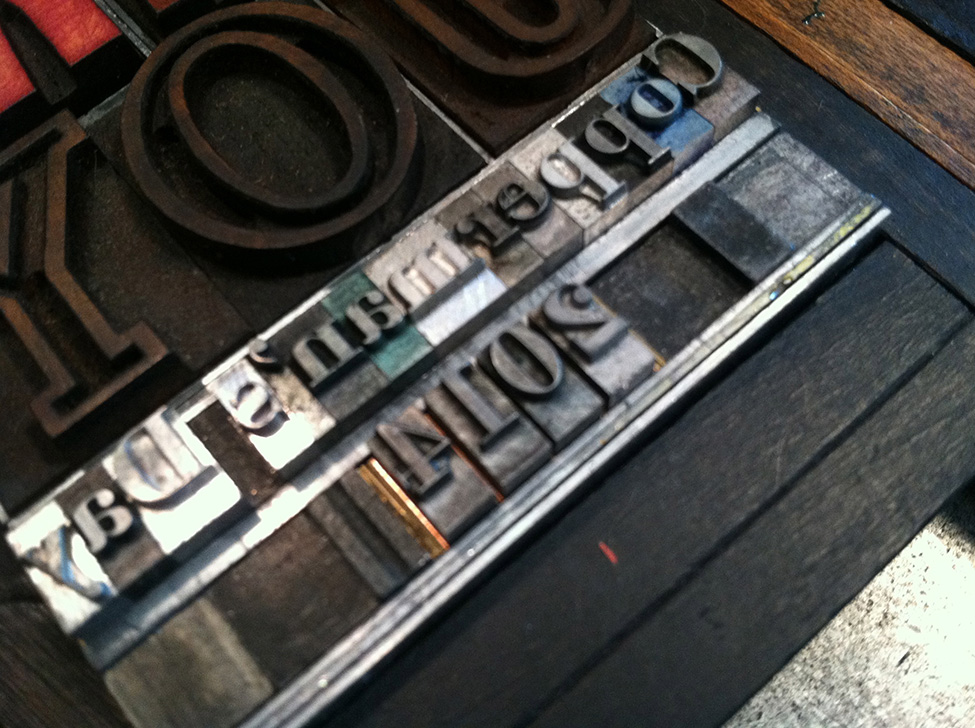
The first Monday after Epiphany marks the date of another obscure holiday, this one from Holland: Copperman’s Day. Convivio Bookworks is, at heart, a print shop, so Copperman’s Day is rather close to our hearts, for it is a printer’s holiday. It was a day when printers’ apprentices got the day off to work on their own projects and to show off the printing skills they had learnt to date in the course of their apprenticeships. They would sell these printed works in exchange for a copper, hence the name, Copperman’s Day. It’s a Dutch tradition that seems fit for revival what with the current renewal of interest in letterpress (and the handmade in general), and perhaps we’re doing our part by beginning an annual Convivio Bookworks Copperman’s Day keepsake. Our inaugural Copperman’s Day print will, if all goes as planned, be available by nightfall on the holiday, or soon after. Here’s to new traditions!