Your August Book of Days

LanternsPines

In case you missed the Convivio Dispatch announcement on the First of the month about the August Book of Days calendar, well, here it is on the Convivio Book of Days Blog: The newest edition of the ongoing Convivio Book of Days calendar project is now available at our website. This month’s Book of Days calendar focuses on the traditions of Obon, which is one of the major summertime festivals in Japan. Thanks to the Morikami Museum in western Delray Beach, we here in South Florida get an annual immersion into this old celebration.

With August, summer matures and already is waning, heading toward fall. And by traditional reckoning of time, with the arrival of Lammas on the First of August, we have actually crossed over into autumn. We are headed for the equinox in September, approaching once again a time of balance of sunlight and darkness.

Here’s that link once more:
http://www.conviviobookworks.com/Images/August2014.pdf

The monthly Book of Days calendar is a printable PDF document. It’s designed to print nicely on standard letter size paper in the US (8.5″ x 11″). Think of it as a good companion piece to the Book of Days Blog.


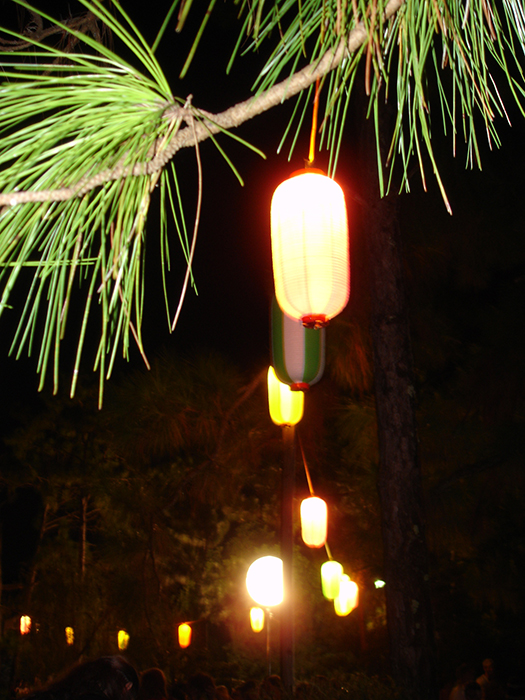
Image: Lanterns in the nighttime sky at Obon at the Morikami.


First Harvest: Lammastide

Lammastide

If you love summer, you may not want to read this Book of Days chapter, for as July melts into August we see already that summer is beginning to wane. We are almost six weeks past Midsummer’s solstice and just a little more than six weeks away from the Autumnal Equinox. And in reaching this point today we arrive at the cross-quarter day of Lammas, perhaps the least known of the traditional markers of the seasonal year.

There was a time when Lammas was celebrated far and wide, but now, it’s just not very well known: an old holiday rooted in our agrarian past that actually is quite useful: useful in gently easing us into thoughts of autumn, for it is the first of the harvest festivals. Lammas celebrates the first grain harvest of the season and tradition calls for the baking of the first loaf from the newly harvested corn or wheat. It is that loaf that gives the day its name: “Loaf-mass” from the Anglo-Saxon Hlafmass. Traditionally, the baked loaf was brought to church to be blessed, or brought to some community gathering. County fairs, perhaps, which begin to pop up this time of year, come out of Lammastide traditions, for they, too, celebrate the harvest.

John Barleycorn figures prominently in the Lammastide festivity. John B. is the personification of the grain, be it barley or corn or wheat, and of course to consume the grain it must be cut down… and so things don’t go well for John Barleycorn in the traditional British folk song, for John Barleycorn must die, of course. But he is resurrected in the circular nature of life as bread, and, since it is a folksong that was probably widely sung in taverns, as whisky, for the same grains that make our bread also make for some intriguing beverages. And so whisky, too, is a part of the Lammas celebration.

The suggestion of course is that you would do well to enjoy a meal tonight that includes a fresh loaf of bread and, if you can, a little whisky. All things in moderation. It’s the least we can do for old Lammas and for old John Barleycorn.


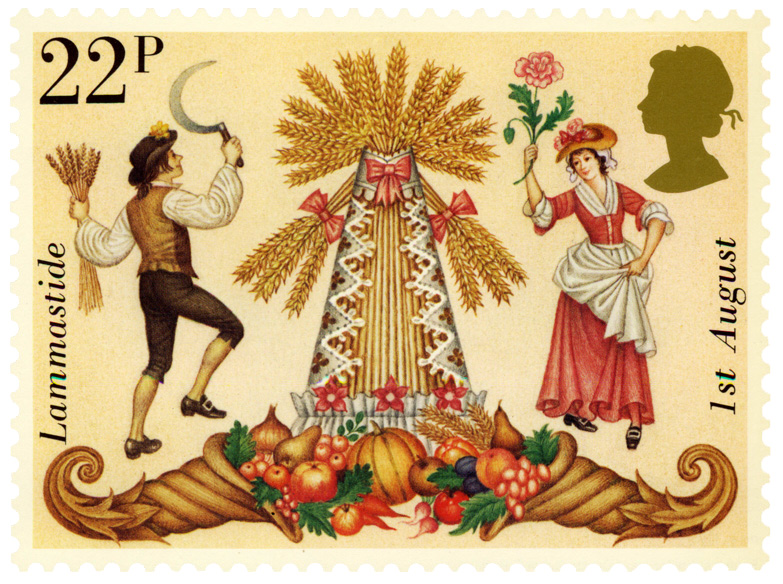
Image: One of a series of postage stamps issued in Great Britain in 1981 celebrating folk traditions.


Eid Mubarak

Fascination

My maternal grandparents came from Lucera, a small city in southern Italy that was, in the 13th century, home to a population of perhaps 60,000 Muslims that had been expelled from Sicily by Frederick II, the Holy Roman Emperor. The colony became known as Lucaera Saracenorum, or Saracen Lucera. My grandmother, a small woman whose deep olive complexion would grow darker and darker as each summer progressed, often told of long-ago Moroccan blood in our family lineage, and whether this is fact or the stuff of story is not entirely known. A good story is a good story.

But the facts do tend to support Grandma’s story. The Saracen colony at Lucera was comprised mostly of people of Northern African descent––Arabs and Berbers from Arabia, Tunisia, and Morocco. And they left their imprint on the culture of Southern Italy in subtle ways that still persist to this day linguistically (the dropping of vowels at the ends of words––which even came over to America and has influenced the Italian American communities in New York, especially) and in the way we cook. When we add fresh mint to a traditional Italian frittata or make a favorite summer zucchini dish that comes from my Grandma Cutrone, heady with the scent of vinegar and mint, it is a nod to that influence on Italy from Northern Africa.

And so I have a longstanding fascination with the cultures and traditions of Northern Africa, and am always in awe of the tile work and the paper marbling and the cinnamon-infused tagines and sweets scented with rose water. And in my mind, itself an aromatic stew that does such a good job of melding fact and fiction that I sometimes don’t know what is real and what is dream, I like to imagine myself at a feast celebrating a holiday like Eid Ul-Fitr. It is the three-day celebration concluding Ramadan, the month of fasting. It is a time of prayer but a time of abundance, with good food and good aromas and good company and good deeds. It is a time meant to bring out the best in people. It begins with the sighting of the new moon’s first faint crescent, which, this year, should be just about now, the 27th or 28th of July. Being a lunar holiday, the dates are not fixed in our Gregorian calendar, which is a solar calendar. But as the days passed last week, I watched the waning crescent moon grow increasingly slight with each passing morning near sunrise, knowing that the waxing crescent moon would soon follow, bringing these joyous days to Muslims all over the world. To them and to all of us, Eid Mubarak.


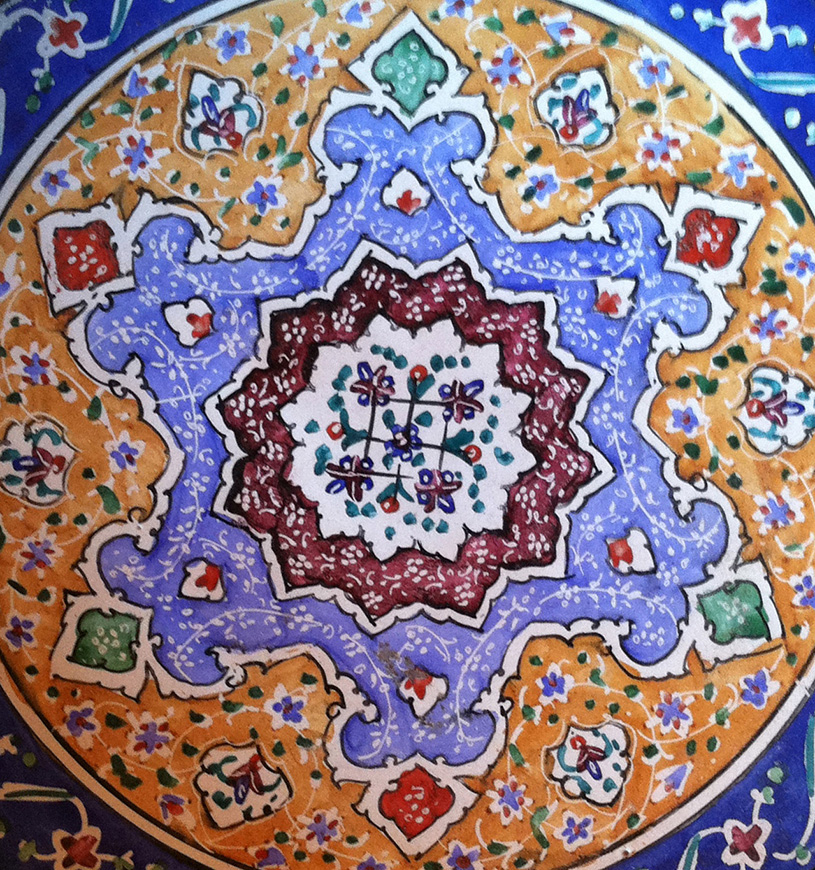
Image: Detail of a small enamel plate from Morocco that was a gift to Seth & me from someone, long ago. The memory melds with all the others in my mind, into that aromatic tagine… but that’s what makes for good cooking and for good stories: Sometimes it’s not the details so much as the whole. The patterns on this plate fascinate me.


Tagged