Juneteenth

Juneteenth

The Civil War effectively ended with the surrender of Robert E. Lee to Ulysses S. Grant at Appomatox Courthouse in Virginia on April 9, 1865, is a fact we’re taught in American History classes. But things were not magically resolved that day, and it took a while for Union forces to take control of all the states that had been in rebellion. It was not until the 18th of June that Union troops arrived on Galveston Island to bring the State of Texas back into the fold, and the next day, June 19, 1865, Union General Gordon Granger read a proclamation from a Galveston balcony:

The people of Texas are informed that, in accordance with a proclamation from the Executive of the United States, all slaves are free. This involves an absolute equality of personal rights and rights of property between former masters and slaves, and the connection heretofore existing between them becomes that between employer and hired labor. The freedmen are advised to remain quietly at their present homes and work for wages. They are informed that they will not be allowed to collect at military posts and that they will not be supported in idleness either there or elsewhere.

This proclamation is at the heart of Juneteenth. Newly emancipated slaves rejoiced right there in the streets of Galveston. It took a few years before that proclamation made its way across the vast State of Texas, and, of course, the news was not always welcome: newly freed slaves were often the targets of violence. Still, by the year that followed that original proclamation in Galveston, Juneteenth celebrations were sprouting up all over Texas and continued spreading, mostly among African American communities, throughout the country. As the years went on, and with the new challenges of Jim Crow and segregation, Juneteenth became a day to gather family, to reassure each other against adversity and challenge. In fact, Emancipation Park in Houston is a fine example of Juneteenth spirit challenging Jim Crow laws: When whites kept blacks from using public spaces, those who wanted to celebrate Juneteenth properly gathered the money necessary to purchase a site of their own, and Emancipation Park is one such site.

Linguistically, the name Juneteenth, which is such a wonderful word, is a portmanteau (itself a wonderful word) of the words June and nineteenth. The day is also known as Freedom Day or Emancipation Day. Folks early on wore their finest clothes for Juneteenth parades and gathered to eat good food, with barbecue always prominent on the Juneteenth menu. Nowadays the dress is less formal but the celebration endures. The day often showcases the importance of the contributions of black Americans and African American culture. But even now, after all these years, Juneteenth is a day to celebrate hard-earned freedoms. We should never become complacent about these things.


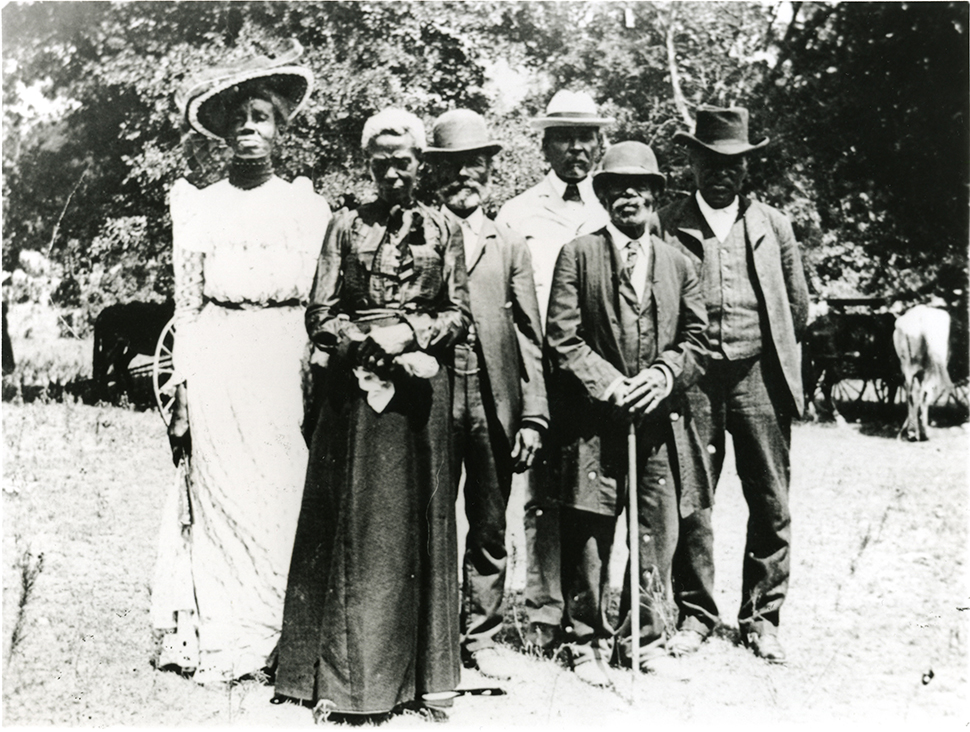
Image: A photograph taken at an early Juneteenth celebration in Austin, Texas.
 

Bloomsday

JamesJoyce

I have a confession to make: I have never read Ulysses. It is a fact I chalk up to poor book design: I own a copy of the famous James Joyce novel, but every time I begin to read it, I cringe upon opening it, and I inevitably falter within the first ten pages. The edition of Ulysses that I have on my bookshelf is just so poorly designed, I can’t read it. The paper is too thin, there is far too little white space, no rest for the eye, and the title, in Futura type, is printed at the top of every single page. I know what I’m reading, thank you very much. I don’t need to be reminded page by page.

Bloomsday is the annual celebration of the pilgrimage through Dublin of Leopold Bloom, the main character in James Joyce’s Ulysses. The action in Joyce’s book takes place on the 16th of June, 1904, and so literary types who love this novel (and who no doubt own better designed editions than mine) honor James Joyce and his book by recreating the adventures of Leopold Bloom each June 16. This happens in Dublin, of course, and these folks dress in Edwardian garb for the day. They stop at the apothecary to buy lemon soap, just as Mr. Bloom did in the book. They fill the pubs and read excerpts from Joyce’s novel and this happens not just in Dublin but in cities all over the world. (It’s even happened once or twice right here in Lake Worth, thanks to our friends at Blue Planet Writers’ Room.)

No matter how well designed your copy of Ulysses may be, this novel, known as a masterpiece of Modernism, is not an easy book to read, and for many, this is reason enough not to read it. Or anything at all by Joyce, for that matter. This, however, is a great disservice to Joyce and to yourself. And while I have still not read Ulysses, I have read Dubliners over and over again. Dubliners, in which James Joyce explored his concept of epiphany: the characters in each of these stories come to some sort of understanding of self. The book ends with “The Dead,” considered one of the finest short stories ever written. To give you the ending of that story here would not require a spoiler alert; James Joyce was not that kind of writer. But read this, read it for the first time, or read it again:

A few light taps upon the pane made him turn to the window. It had begun to snow again. He watched sleepily the flakes, silver and dark, falling obliquely against the lamplight. The time had come for him to set out on his journey westward. Yes, the newspapers were right: snow was general all over Ireland. It was falling on every part of the dark central plain, on the treeless hills, on the Bog of Allen and, farther westward, softly falling into the dark mutinous Shannon waves. It was falling, too, upon every part of the lonely churchyard on the hill where Michael Furey lay buried. It lay thickly drifted on the crooked crosses and headstones, on the spears of the little gate, on the barren thorns. His soul swooned slowly as he heard the snow falling faintly through the universe and faintly falling, like the descent of their last end, upon all the living and the dead.

I can imagine James Joyce typing that paragraph through to the end and sitting back in his chair, spent. I think of the creative energy necessary to find these words within yourself and get them down on paper. I think he must have wept when he was done.

I may have never read Ulysses, but the reason for Bloomsday becomes obvious just by reading that paragraph from “The Dead”. We don’t set many days aside each year to call to mind writers, but on each 16th of June, thanks to a fictional character, we get to remember the man who wrote that achingly beautiful paragraph. He deserves it.


Father’s Day

DadAndMe

My dad’s got quite a few long standing jokes that he’s been telling since, oh… time immemorial. His favorite, though, is probably the joke he uses in reference to Father’s Day: He calls it “Jack Ass Day,” distinctly different from the way he thinks of Mother’s Day. A special day just for him is not something that sits comfortably for Dad, and so he takes shelter in humor.

The holiday itself has its roots in Mother’s Day traditions, and if you follow these Book of Days chapters, you’ll recall from last month how Anna Jarvis was the key figure in establishing Mother’s Day. Well, the Anna Jarvis of Father’s Day was Sonora Smart Dodd, who, after hearing a sermon about Anna Jarvis and her mission to establish a day honoring mothers, sought to do the same for fathers. This was in 1910 in Spokane, Washington, and the first Father’s Day celebration took place in Spokane that June, on the third Sunday, just as we celebrate it now.

Where Jarvis chose to battle the forces of commercialization for the holiday she championed, Dodd did not, and instead welcomed the commercialization of Father’s Day as a way to help establish the holiday, which was not gaining much traction on its own. The backing of trade groups worked, but it took time. The presidential proclamation designating the third Sunday of June as Father’s Day did not occur until Lyndon Johnson did it the honor in 1966, and it was Richard Nixon who made Father’s Day a permanent national holiday in 1972.

Sonora Smart Dodd died in Spokane in 1978, and for all we know, she died content and at peace with her creation, which was not the case with Anna Jarvis, who spent her life and her fortune battling the commercialization of Mother’s Day. And maybe there’s a lesson there for all of us: We create things, we nurture them and give them wings, and they become what they will. We can either fight them and grow weary trying to change them into something they are not, or we can accept them as they are and love them no matter what.

To my dad and to all the fathers out there: Happy Father’s Day.


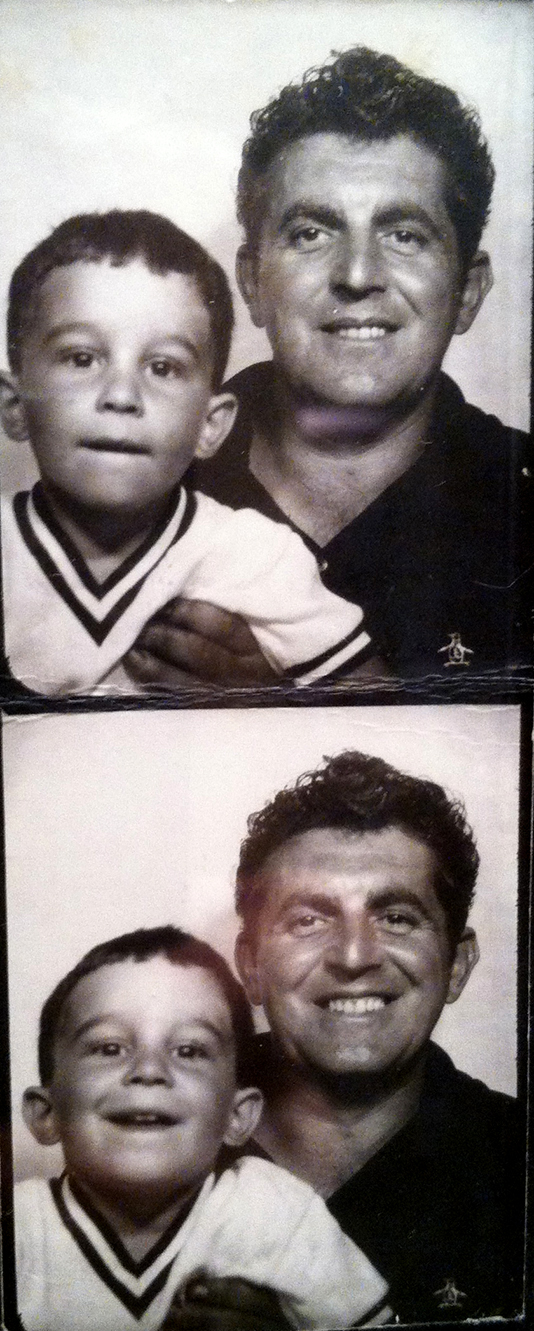
That’s me and that’s my dad, in a photobooth somewhere, circa 1968. Not much has changed: He still has a great head of hair, and my haircuts continue to be goofy.