The Lord of Misrule

Joker

FOURTH DAY of CHRISTMAS:
The Feast of Fools

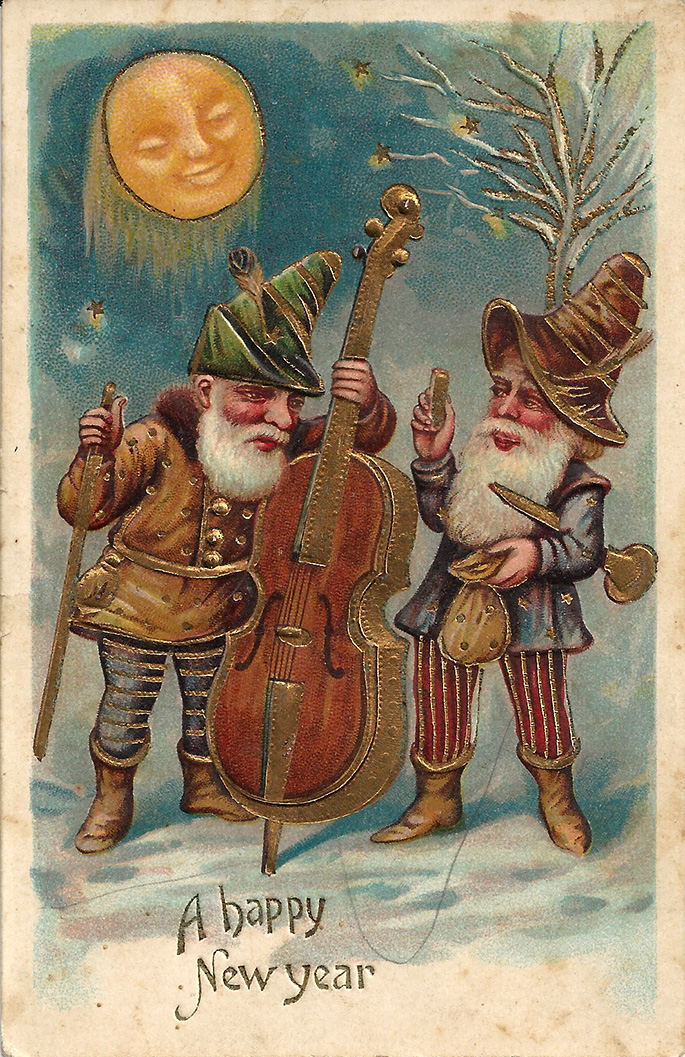
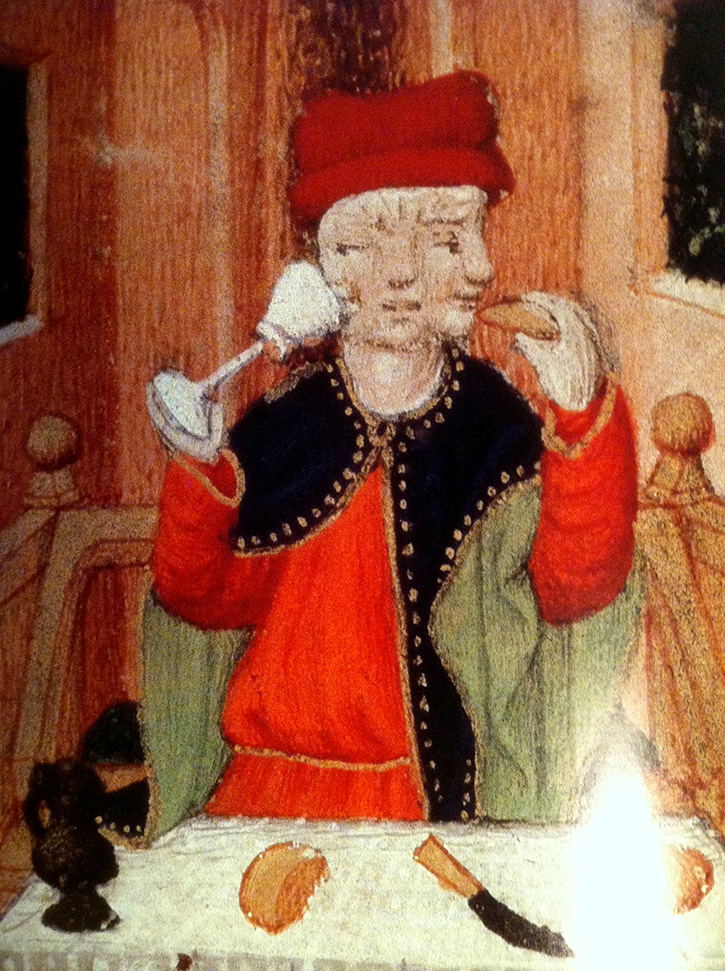
The Fourth Day of Christmas was traditionally given over to silliness, although this Feast of Fools played a part in the whole season, not just this one day… and here we get to traditions that go back further, to old pagan customs, as do so many of our Christmas customs. The Feast of Fools harkens back to the Roman celebration of Saturnalia, another solsticetide celebration, during which society would be turned on its head. Gambling, normally frowned upon, was practiced openly. Slaves were waited upon by their masters. Citizens disguised themselves behind masks. The natural order of things was ceremoniously reversed, and this is precisely the theme of the Feast of Fools, which had its heyday in medieval times.

This Feast of Fools has much in common with the custom of the Boy Bishop, and what can speak more to ceremonious reversals than making a leader out of the lowly and meek? While the Boy Bishop oversaw the cathedral for the Christmas season, it was the Lord of Misrule that oversaw the revels. The jester could become the lord, the servant the master. The Lord of Misrule reigned over the revelry with no fear of retribution.

The Feast of Fools is known in Latin as Asinaria Festa, Feast of the Ass. It was a lowly ass upon which Mary rode into Bethlehem, and an ox and an ass, according to the old carol, were there when the child was born in a stable that first Christmas night… and it was an ass that took top billing at some church services during the Twelve Days of Christmas in medieval times. Donkeys were sometimes allowed in churches during Christmas, and there are records of masses said during this time in which the normal response of “amen” was replaced with the entire congregation braying in unison.

So what brings on this madness and merrymaking? Certainly the mirth and good cheer of the season have plenty to do with it. But with half the Twelve Days of Christmas falling in the old year and half falling in the new, we are at the same time watching the old year die and witnessing the birth of a new one. The madness gives full voice to the disintegration of the old year––the old order––and we welcome in the new year, which is born out of chaos.

Order will return soon enough. The Lord of Misrule reigns until Twelfth Night, when a new lord appears: the King of the Bean. But that’s another story. For now, this Fourth Day of Christmas, this Feast of Fools, you have full license to be a little foolish. Make the most of it.


Tagged ,

Unless Ye Become as Little Children

Kinder

THIRD DAY of CHRISTMAS:
Holy Innocents’ Day, Childremas

The 28th of December has long been considered the unluckiest day of the year. It is the Third Day of Christmas, Holy Innocents’ Day, and it gets its name from the slaughter of the children of Judea at the order of King Herod after the birth of Jesus, who feared losing his earthly throne to the child. Commencing any undertaking on the 28th of December was to be avoided, especially a marriage or a business venture, for anything begun on this day, it was thought, would certainly fail to prosper.

Be that as it may, the Third Day of Christmas has always been focused on children, and it is a good day to honor not only the children in your life, but also the children we once were: to reconnect with a time when we were more willing to suspend disbelief, more willing to be fully immersed in things, as children are wont to be. The child you were has certainly informed the adult you’ve become, so there is a thread that resonates across the years. This, we feel, is something worth nurturing.

One of the oldest midwinter traditions in the Church is the election of a Boy Bishop each St. Nicholas’s Day on the Sixth of December. He would be chosen from the choirboys, and he would rule until Childremas, this Third Day of Christmas. The office was serious business. The Boy Bishop wore full vestments and mitre, and he would perform all the duties of a bishop, save for celebrating mass, although he did often deliver the sermons. The actual bishop would, in some places, have to follow the orders of the Boy Bishop. These traditions tap into the ideas of the Feast of Fools, as well, where the normal order of things is ceremoniously reversed (which blends into the customs for the Fourth Day of Christmas, tomorrow), and perhaps relates to the words of the Magnificat: God has put down the mighty from their throne and has exalted the humble and the meek.

In medieval times, the Boy Bishop could be found in most every cathedral in France, Britain and Germany during the Yuletide season. The custom was treated with such seriousness that if he should die while in office, the Boy Bishop received the same burial honors as a real bishop. The 1869 Chambers Brothers’ Book of Days gives mention to one unfortunate Boy Bishop who did come to his end while in office, telling us that a monument to his memory may be found on the north side of the nave at Salisbury Cathedral.

In Spain and Latin America, the Third Day of Christmas is a day for practical jokes, the victims of which being called inocentes, although sometimes it is the prankster that gets that name in a plea for forgiveness. No matter how you spend the day, the theme, it seems, is universal: celebrating and honoring children.

Image: A scene from one of the Advent calendars I had as a boy. I saved every one of them. I think traditional German Advent calendars are a sure path back to the language we once spoke as children… and that’s pretty much the reason why we sell them at our website.


Tagged ,

Bless Your Wine

Praising Wine

SECOND DAY of CHRISTMAS:
St. John’s Day

We celebrate the feast of St. Stephen, the first Christian martyr, on the First Day of Christmas, but the Second Day is dedicated to St. John the Evangelist, who was the only of the twelve apostles to live to a ripe old age and not die a martyr’s death. Not that no one ever tried to do St. John in––he survived after drinking poisoned wine that was served to him, and for this reason wine plays a major role in the celebration of St. John’s Day on December 27. In Germany and Austria, it is customary to bring wine to church on St. John’s Day to have it blessed, and this St. John’s wine is considered to have healing properties and to even infuse better flavor in other bottles of wine that rest near it.

Whether that is true or not, certainly the Second Day of Christmas is a good day to celebrate with wine, and what better during these long dark nights of winter than mulled wine? There are many recipes to be found for mulled wine, but here’s what we do: pour a bottle of decent red wine into a stainless steel pot and set it on the stove over medium heat. Add some mulling spices (we happen to sell some pretty wonderful mulling spices at our website, from the Sabbathday Lake Shaker Community in Maine), the rind of an orange, and sugar. Many recipes call for a lot of sugar, but we prefer our mulled wine not so sweet, so I’d suggest starting with a couple of teaspoons of sugar and adding more to taste. You can always add more, but you can’t take it away. Heat to allow the flavors to infuse the wine. Strain and pour into ceremonial cups, and of course, raise a toast to St. John, for good health (“Wassail!”), and for a merry Christmastide.

Tagged