Daily Archives: January 1, 2015

Your January Book of Days

Jan15NewYear

It’s a new month and a new year, and here’s your printable Convivio Book of Days calendar for January 2015. Like Janus, the Roman god that gives January its name, we do a lot of looking back and looking ahead in January. We’ve been celebrating Christmas and midwinter since the end of December, but we begin January with New Year’s Day and the second half of the Twelve Days of Christmas. And at the end of the month, we get to sing “Auld Lang Syne,” which many of us sang on New Year’s Eve, all over again, for it is Burns’ Night on the 25th, celebrating the great Scottish poet Robert Burns, who penned that song we know so well.

There is some question in my head each year about St. Distaff’s Day. I have some sources that list the day as a moveable holiday, while other sources––sources I put more faith in––set it at January 7 each year. St. Distaff is one of the folk saints; not a real one based on the life of a real person. St. Distaff’s Day, rather, is part of the series of little known but important celebratory January holidays that ease us back into ordinary time once Christmastide has passed after January 6. St. Distaff’s Day marks the day that women went back to their household tasks, especially spinning. Soon after comes Plough Monday, when the men returned to work on the farms, and Copperman’s Day, a big day for us printers.

We wish you the very best for this new year. A thousand blessings upon you and those you love. Wes Hel!
 

Wes Hel

Christmas-Recipes

SEVENTH DAY of CHRISTMAS:
New Year’s Day

It is an old custom on New Year’s Day to toast each other, as well as the apple trees in the orchard. The toast is “Wassail!” and the drink is wassail, too, and here’s a recipe for a good wassail: Pour the contents of two large bottles of beer or ale (about 4 pints) into a pot and place it on the stove to heat slowly. Add about a half cup sugar and a healthy dose of mulling spices. (If you don’t have mulling spices on hand, you can use cinnamon sticks and whole cloves… though the mulling spices lend a more interesting flavor.) Add a half pint each of orange juice and pineapple juice, as well as the juice of a large lemon. Peel and slice two apples and place the apple slices into the pot, too. Heat the brew but don’t let it boil, then pour the heated wassail into a punchbowl to serve.

Steaming punches like this were quite popular in olden times, even here in the States, and I think it’s about time we bring these festive drinks back. It’s with just such drinks that one gets to use hearty words like “Huzzah!” and “Wassail!” Wassail comes to us from the Old English Wes Hel: “Be of good health!” To really keep the custom, share the wassail with those in attendance but also take the steaming bowl out to the orchard and toast the apple trees and share some with the oldest or biggest tree in the grove. Some folks pour the wassail on the trunk of the tree, while others dip the lower branches into the wassail bowl, and others may place cider-soaked toast or cake in the branches of the tree. All of which are invocations of magic meant to encourage a good crop of apples next summer.

Most wassailing is done at the noon hour, but there’s no reason not to do it later in the day or in the evening. The apple trees won’t mind. Happy New Year! Wes Hel!


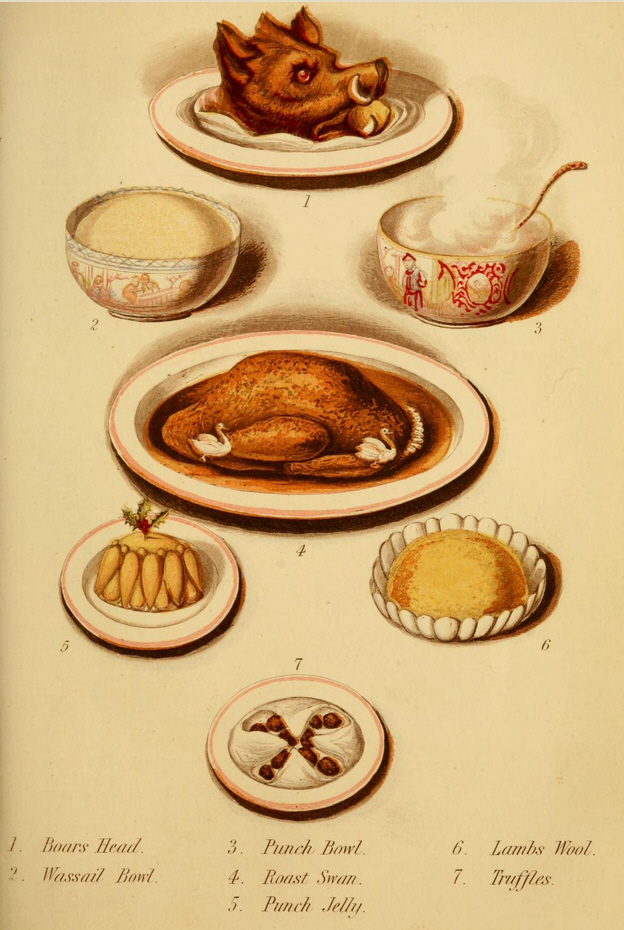
Image: A color plate from Warne’s Model Housekeeper: A Manual of Domestic Economy in All Its Branches, London: Frederick Warne, 1882. [Public domain] via Wikimedia Commons. The wassail bowl is there, along with other features of the Yuletide season.


Tagged