Author Archives: John Cutrone

Céad míle fáilte

Fairyhouse

A hundred thousand welcomes! That’s the translation from the Gaelic of the title of today’s chapter, a traditional Irish toast, quite proper for today, St. Patrick’s Day. There will be a lot of toasting today, to be sure. St. Patrick is sacred to Ireland, and as they say, everyone is at least a little Irish on St. Patrick’s Day. In this house, we’ll be eating the traditional corned beef and cabbage and soda bread, though oysters or shepherd’s pie or bangers and mash would be just as traditional. Take your pick. The day is widely celebrated with the wearing of the green and plenty of iconic imagery: shamrocks, harps, and shillelaghs, leprechauns and pots o’gold.

Patrick was a fourth century saint. He was born in Britain but was captured as a young man and taken to Ireland as a slave. He eventually escaped, made his way by sea to Gaul and became a priest there. He was made a bishop and soon after began to have visions suggesting he return to Ireland to spread the faith, which he did. One story tells of how he explained the Holy Trinity to the people of Ireland through the three leaves of the shamrock. He is most famous, however, for driving the snakes from Ireland. Whether it be by the hand of Patrick or not, there are to this day no snakes in Ireland, at least not in the wild. Some, however, think the story of Patrick driving the snakes from Ireland is more a metaphor for his driving the old Celtic gods and goddesses from the island, replacing the Old Ways with Christian beliefs.

But Ireland is a place of mystery, and if the story of St. Patrick and the snakes is indeed about the Old Ways and not about snakes, then it’s not true that they’re completely driven away, for there are plenty of these old mysteries still at play there, and some of the most fascinating stories, I think, revolve around the fairy folk: the stuff of legend, and yet there are those who firmly believe in the stories and their power. And St. Patrick’s Day, in particular, is a day that is best celebrated with stories and poems and songs of this place. So make your traditional Irish dinner, and pour some Jameson’s or some Guinness or Harp. But be sure, too, there is fiddle music, and something to read or recite.

Here in town tonight, over at St. Bernard’s, in the rectory after his meal, Father Seamus will certainly be pouring a glass of something and reciting Yeats. He is a man who loves to recite poetry to the congregation, and William Butler Yeats, the great poet of his long-ago homeland, is one of his favorites. Tonight, it could be any of his poems of Ireland. Seamus knows so many of them by heart, and perhaps tonight it will be this one:

Where dips the rocky highland
Of Sleuth Wood in the lake,
There lies a leafy island
Where flapping herons wake
The drowsy water rats;
There we’ve hid our faery vats,
Full of berrys
And of reddest stolen cherries.
Come away, O human child!
To the waters and the wild
With a faery, hand in hand,
For the world’s more full of weeping than you can understand.

Where the wave of moonlight glosses
The dim gray sands with light,
Far off by furthest Rosses
We foot it all the night,
Weaving olden dances
Mingling hands and mingling glances
Till the moon has taken flight;
To and fro we leap
And chase the frothy bubbles,
While the world is full of troubles
And anxious in its sleep.
Come away, O human child!
To the waters and the wild
With a faery, hand in hand,
For the world’s more full of weeping than you can understand.

Where the wandering water gushes
From the hills above Glen-Car,
In pools among the rushes
That scarce could bathe a star,
We seek for slumbering trout
And whispering in their ears
Give them unquiet dreams;
Leaning softly out
From ferns that drop their tears
Over the young streams.
Come away, O human child!
To the waters and the wild
With a faery, hand in hand,
For the world’s more full of weeping than you can understand.

Away with us he’s going,
The solemn-eyed:
He’ll hear no more the lowing
Of the calves on the warm hillside
Or the kettle on the hob
Sing peace into his breast,
Or see the brown mice bob
Round and round the oatmeal chest.
For he comes, the human child,
To the waters and the wild
With a faery, hand in hand,
For the world’s more full of weeping than he can understand.

The poem is “The Stolen Child.” Father Seamus loves it because it reminds him so intensely of the home he left behind when he crossed the western ocean and came to America. And as much as he loves it here, Ireland is always in his heart, and the world, he knows, is indeed full of weeping. St. Patrick’s Day is bittersweet for Seamus. Fairy folk are fewer and farther between here, and sometimes he feels a bit himself like a stolen child, removed from his homeland. But tonight, Seamus gets to celebrate that place. We all do, because we’re all Irish on St. Patrick’s Day. Céad míle fáilte!


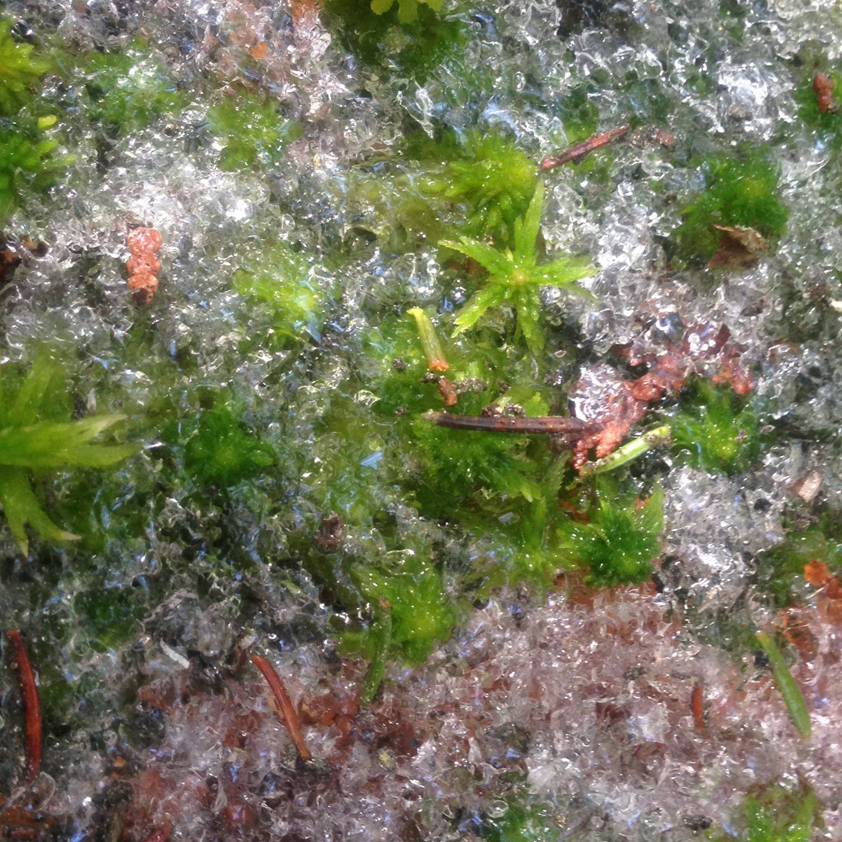
This chapter of the Convivio Book of Days is a re-worked version of one published originally for St. Patrick’s Day, 2014. The image then and the image today is of a fairy house I stumbled upon at the base of a tree in a woods in Maine some years ago. Certainly some fairy folk exist there, too. Good to know.


Dream Waltz

Viola Turpeinen

Here we are in the midst of one of the most interesting weeks of the year, at least in terms of quirky holidays. We have not one, not two, but three saints’ days to celebrate, and while saints’ days are not all that unusual, each one of these is important to a particular ethnic group, which makes for some very big celebrating, especially welcome in these more somber days of Lent.

There is of course the granddaddy of saints’ days: St. Patrick’s Day, on the 17th. Everyone, it it said, is at least a little Irish on St. Patrick’s Day. Two days later brings St. Joseph’s Day: not as widely celebrated, but immensely important to Italy and the Italian American community. But ahead of St. Joseph’s Day and ahead of St. Patrick’s Day both comes today’s celebration: St. Urho’s Day. And today, perhaps, everyone is at least a little bit Finnish.

St. Patrick may have driven all the snakes from Ireland, but it was St. Urho who drove all the grasshoppers from Finland, saving the vineyards and the the grape harvest and thus the wine. This he accomplished by proclaiming Heinäsirkka, heinäsirkka, mene täältä hiiteen, or in English, “Grasshopper, grasshopper, go to Hell!”

Perhaps you are thinking, “I’m not familiar with this story.” This is because you do not live near Finns. I first heard about St. Urho many years ago here at the local Finlandia Days celebration, which back then was held at Bryant Park on the lagoon here in Lake Worth. In that same park there is a memorial to Finnish war heroes. Up the road on Lake Avenue in the Allstate Insurance Office is the Finnish Consulate. Across the town line in Lantana is the Finnish American Rest Home and Suomi Talo (or Finland House, the Finnish social club) and Palm Beach Bakery, one of a couple of Finnish bakeries in the area. Between Lake Worth and Lantana, we have more Finns here than anywhere else save Finland. And so in this land, where it is so easy to come across folks speaking Spanish and Creole and Portuguese most any day of the week, it is just as easy to hear some Finnish, too. And Finnish tales, like the legend of St. Urho.

And so at Finlandia Days celebration years ago, somewhere in between the Wife Carrying Contest and a performance by the Finnish Accordion Orchestra, I heard the story of the saint who drove the crickets from Finland. He is honored the day before a certain more famous saint who drove the snakes from Ireland. The Irish may wear green on St. Patrick’s Day, but on St. Urho’s Day the Finns wear green and purple, too. Chances are good they’ll be listening today to the music of Viola Turpeinen, the legendary Finnish American accordionist who lived here in Lake Worth in the 1950s. She called her house “the home that polka built.” Unelma Valssi is a favorite Viola Turpeinen recording: “Dream Waltz.” So fitting for a spring day in Lake Worth or in Lapland or in Michigan, where she was born in 1909. It’s the kind of music that floats out onto the air through the open windows in this gentle season and lulls us all to springtime dreaming.

Image: Viola Turpeinen and her accordion.


Tagged ,

Ye Olde Simnel Cake

SimnelCake

The Simnel Cake is a tradition in England for Easter, but simnel cakes actually have their origin in traditions for Laetare Sunday, or Midlent… which also happens to be Mothering Sunday there. As Lent is a moveable time, so is Laetare Sunday and Mothering Sunday, but this year it is tomorrow, Sunday March 6. The day marks the midpoint in the Lenten journey, and it brings a change in attitude: We switch for this one day from solemn purple to joyful rose. And much like Mother’s Day here in the States, Mothering Sunday is a day to honor our mothers. Tradition would have you visit your mother and bring her a simnel cake.

And so here is a recipe for simnel cake from the BBC. For sure you will find many recipes to choose from online, but the idea is generally this: a light fruit cake made with layers of marzipan. And for those of you who like a little culinary history with your culinary creations, here’s the history of the simnel cake as recorded in 1869 in the Chambers Bros. Book of Days. Enjoy, and get baking:


Simnel

IT IS AN OLD CUSTOM in Shropshire and Herefordshire, and especially at Shrewsbury, to make during Lent and Easter, and also at Christmas, a sort of rich and expensive cakes, which are called Simnel Cakes. They are raised cakes, the crust of which is made of fine flour and water, with sufficient saffron to give it a deep yellow colour, and the interior is filled with the materials of a very rich plum-cake, with plenty of candied lemon peel, and other good things. They are made up very stiff; tied up in a cloth, and boiled for several hours, after which they are brushed over with egg, and then baked. When ready for sale the crust is as hard as if made of wood, a circumstance which has given rise to various stories of the manner in which they have at times been treated by persons to whom they were sent as presents, and who had never seen one before, one ordering his simnel to be boiled to soften it, and a lady taking hers for a footstool. They are made of different sizes, and, as may be supposed from the ingredients, are rather expensive, some large ones selling for as much as half-a-guinea, or even, we believe, a guinea, while smaller ones may be had for half-a-crown. Their form, which as well as the ornamentation is nearly uniform, will be best understood by the accompanying engraving, representing large and small cakes as now on sale in Shrewsbury.

The usage of these cakes is evidently one of great antiquity. It appears from one of the epigrams of the poet Herrick, that at the beginning of the seventeenth century it was the custom at Gloucester for young people to carry simnels as presents to their mothers on Midlent Sunday (or Mothering Sunday).

It appears also from some other writers of this age, that these simnels, like the modern ones, were boiled as well as baked. The name is found in early English and also in very old French, and it appears in mediæval Latin under the form simanellus or siminellus. It is considered to be derived from the Latin simila, fine flour, and is usually interpreted as meaning the finest quality of white bread made in the middle ages. It is evidently used, however, by the mediæval writers in the sense of a cake, which they called in Latin of that time artocopus, which is constantly explained by simnel in the Latin-English vocabularies. In three of these, printed in Mr. Wright’s Volume of Vocabularies, all belonging to the fifteenth century, we have ‘Hic artocopus, anglice symnelle,’ ‘Hic artocopus, a symnylle,’ and ‘artocopus, anglice a symnella;’ and in the latter place it is further explained by a contemporary pen-and-ink drawing in the margin, representing the simnel as seen from above and sideways, of which we give below a fac-simile. (N.B.: For Convivio Book of Days readers, that image is presented above.)

It is quite evident that it is a rude representation of a cake exactly like those still made in Shropshire…. It is curious that the use of these cakes should have been preserved so long in this locality, and still more curious are the tales which have arisen to explain the meaning of the name, which had been long forgotten. Some pretend that the father of Lambert Simnel, the well-known pretender in the reign of Henry VII, was a baker, and the first maker of simnels, and that in consequence of the celebrity he gained by the acts of his son, his cakes have retained his name. There is another story current in Shropshire, which is much more picturesque, and which we tell as nearly as possible in the words in which it was related to us. Long ago there lived an honest old couple, boasting the names of Simon and Nelly, but their surnames are not known. It was their custom at Easter to gather their children about them, and thus meet together once a year under the old homestead.

The fasting season of Lent was just ending, but they had still left some of the unleavened dough which had been from time to time converted into bread during the forty days. Nelly was a careful woman, and it grieved her to waste anything, so she suggested that they should use the remains of the Lenten dough for the basis of a cake to regale the assembled family. Simon readily agreed to the proposal, and further reminded his partner that there were still some remains of their Christmas plum pudding hoarded up in the cupboard, and that this might form the interior, and be an agreeable surprise to the young people when they had made their way through the less tasty crust. So far, all things went on harmoniously; but when the cake was made, a subject of violent discord arose, Sim insisting that it should be boiled, while Nell no less obstinately contended that it should be baked.

The dispute ran from words to blows, for Nell, not choosing to let her province in the household be thus interfered with, jumped up, and threw the stool she was sitting on at Sim, who on his part seized a besom, and applied it with right good will to the head and shoulders of his spouse. She now seized the broom, and the battle became so warm, that it might have had a very serious result, had not Nell proposed as a compromise that the cake should be boiled first, and afterwards baked. This Sim acceded to, for he had no wish for further acquaintance with the heavy end of the broom. Accordingly, the big pot was set on the fire, and the stool broken up and thrown on to boil it, whilst the besom and broom furnished fuel for the oven. Some eggs, which had been broken in the scuffle, were used to coat the outside of the pudding when boiled, which gave it the shining gloss it possesses as a cake. This new and remarkable production in the art of confectionery became known by the name of the cake of Simon and Nelly, but soon only the first half of each name was alone pre-served and joined together, and it has ever since been known as the cake of Sim-Nel, or Simnel!

Images: Photo from the BBC; Simnel cakes engraving from the Chambers Bros. Book of Days, Edinburgh, 1869.


Tagged ,