Author Archives: John Cutrone

To Make a Rare Bartlemas Beef

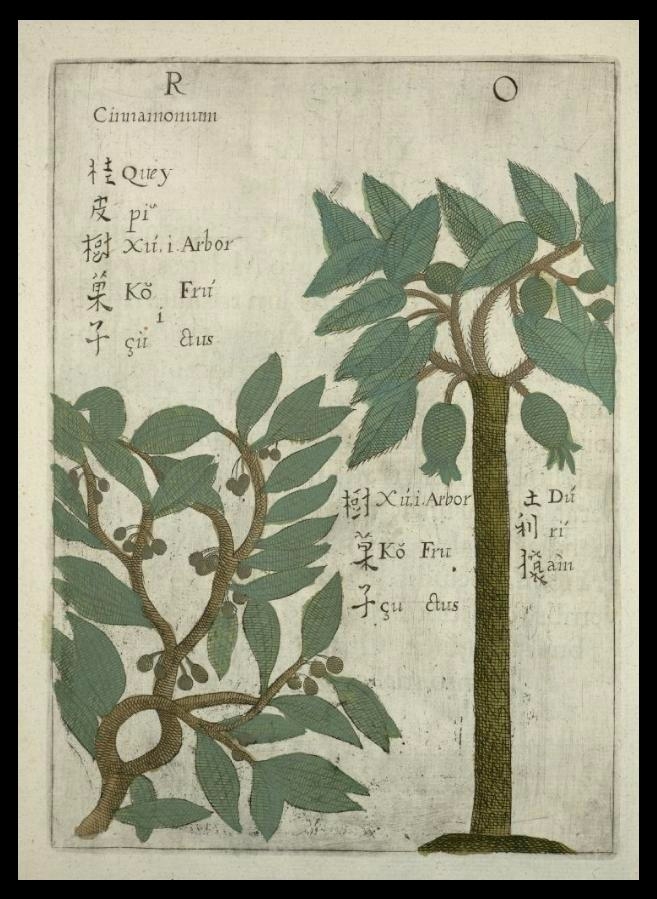
Flora_Sinensis_-_Cinnamon

Last year, a couple of days before St. Bartholomew’s Day, which is on the 24th, I went to the butcher shop to procure a beef brisket, and the next day began the preparations for our first Bartlemas Beef, using a recipe more than 350 years old… modified a bit to suit contemporary cooking methods. It turned out to be a really good meal, quite fitting for the traditional celebratory Printers’ Wayzgoose that also falls on St. Bartholomew’s Day, which, this year, is coming up on Wednesday. The Wayzgoose is a day worthy of celebration not just for us printers but for anyone who is a bibliophile. I suspect that describes most of the people who are subscribers to this blog. The preparations can take a bit of time. If you want to join in the celebration this year by cooking a traditional Rare Bartlemas Beef of your own, here’s a reprint of the recipe to get you going.

Some helpful hints on the recipe: we began with a fresh beef brisket and went straight to the step that calls for wine and vinegar. The vinegar we used was white vinegar. “Cover with paste”: I took this to mean put flour on it, like you do when browning beef for stew. We cooked ours all day in the slow cooker, and we ate our meal hot, rather than cold. And if you are going to eat your Bartlemas Beef cold, you’d best cook it Monday or Tuesday rather than on Wednesday. So here you go: the recipe, with some Bartlemas background to boot. It was the Convivio Book of Days chapter on August 22, 2015… though I did find a new illustration and I did alter the dates a bit so it fits this year’s calendar. Enjoy!

*

Wednesday, the 24th of August, brings St. Bartholomew’s Day, the day of the traditional Printers’ Wayzgoose, and this is a big day for book artists like me: St. Bartholomew is a patron saint of bookbinders and book artists and his day has been of significance to printers and papermakers, as well, for centuries. Goose is one traditional meal for the day, as is cheese, for St. Bart is also a patron saint of cheesemakers. But so is Bartlemas Beef, which takes some time to prepare… hence today’s post, designed to give you the time necessary to prepare a proper meal for your Wednesday Wayzgoose.

This recipe for a Rare Bartlemas Beef is taken from The Cook’s Guide by Hannah Wolley, printed in London in 1664. (The book’s full title is quite long: The Cook’s Guide: or, Rare receipts for cookery Published and set forth particularly for ladies and gentlewomen; being very beneficial for all those that desire the true way of dressing all sorts of flesh, fowles, and fish; the best directions for all manner of kickshaws, and the most ho-good sawces: whereby noble persons and others in their hospitalities may be gratified in their gusto’s. Phew. Perhaps the first celebratory printer’s wayzgoose came about once the typesetter triumphantly finished setting the type for this long-winded title.)

Lady Wolley calls this beef “rare” meaning fine or good. It does not refer to the cooking temperature. Judging by the three days soaking, she means for us to use salted beef, but that was 1664 and this is not and I think we can begin with fresh beef at the second step of her recipe, where the vinegar and wine is introduced. Be that as it may, here is her full 1664 recipe for a Rare Bartlemas Beef:

Take a fat Brisket piece of beef and bone it, put it into so much water as will cover it, shifting it three times a day for three dayes together, then put it into as much white wine and vinegar as will cover it, and when it hath lyen twenty-four hours take it out and drye it in a cloth, then take nutmeg, ginger, cinnamon, cloves and mace, of each a like quantity, beaten small and mingled with a good handful of salt, strew both sides of the Beef with this, and roul it up as you do Brawn, tye it as close as you can; then put it into an earthen pot, and cover it with some paste; set it in the Oven with household bread, and when it is cold, eat it with mustard and sugar.

There you have it: an old old recipe for celebrating an old old holiday. The St. Bart’s Wayzgoose is not widely celebrated today, but, considering the current boom of interest in letterpress printing and book arts, perhaps it should be. Pass the mustard, please.

Cinnamon is one of the spices you’ll need to make a Rare Bartlemas Beef. The image of a cinnamon tree is from one of the earliest natural history books about China. Its author was an unnamed Jesuit missionary. Engraving, 1656 [Public domain] via Wikimedia Commons.
 

Tagged

Cucuzza, Assunta, & Ferragosto

Cucuzza

I spent a couple of hours yesterday, the 14th of August, in pursuit of cucuzza longa, the odd, obscure vegetable that Italians love to cook for the Feast of the Assumption. My best hope, I thought, would be the Italian market up in Palm Beach Gardens. That’s not close by.

“Why don’t you just call before you go?” Seth suggested. I thought about it. In my head, I conjured a teenage girl at the market answering the phone. I’d ask, “Do you have cucuzza longa?” and she would say, “I’m sorry, what?” “Cucuzza longa,” I would say again. “You know, the long green vegetable that’s kind of like zucchini, but really it’s a gourd. For the Assumption. You know. Don’t you?”

Of course she wouldn’t know. Cucuzza longa is one of the bizarre Mediterranean things our ancestors left behind in the Old Country that didn’t quite translate to their new home. But a few of them longed for these things even after they set foot on American soil, and they continued to grow them in their backyard gardens. My grandfather did, anyway, and so did Rosa, the old woman with the rough hands that my mom would buy vegetables from each summer. Rosa would wrap all our purchases in newspaper and twine. The cucuzza, I remember, would stick out of the paper; there was too much vegetable, in that case, to wrap completely.

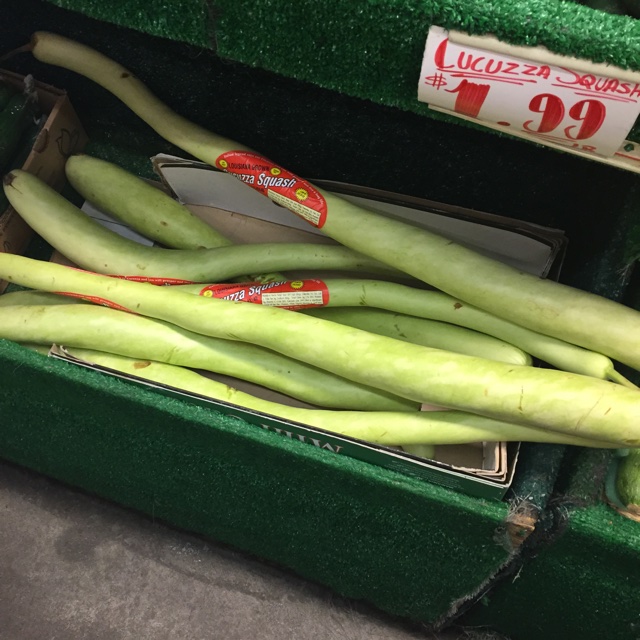
So I drove up to the market instead, feeling not very hopeful but at the same time half expecting to see a big, special display of cucuzza awaiting me as I walked through the doors. Alas, no luck. (The photo, in case you’re wondering, is a random find from the Internet––thank you Unknown Cucuzza Photographer.)

My grandmother was born on the 15th of August, 1898; her parents, my great-grandparents, gave her the name Assunta, for she was born on Azzunzione, the Feast of the Assumption, which comes every 15th of August. It is a holy day of obligation for us Catholics. The Church in America moves the date around so that it falls on a Sunday each year, but in Italy it remains the 15th of August, its proper day, and a national holiday. It is, as well, the start of Ferragosto, a time when most Italians close up shop and head to the seaside, a practice that goes back to the country’s Ancient Roman roots. The name Ferragosto, in fact, is derived from the Latin Feriae Augusti (Holidays of the Emperor Augustus).

The cucuzza longa in the picture above are each, no doubt, upwards of three feet long. They’re gourds, not squashes, and the plant’s flowers are white, not yellow like squash flowers. They can grow straight as bowling pins, yet some grow into curvy serpentine shapes. We peel them, cut them into long strips, and cook them up with a scramble of eggs, parmesan cheese, and lots of flat-leaf Italian parsley. Some fresh olive oil and salt and pepper complete the dish. Paired with a crusty loaf of bread, it is a very good meal, and it is traditional for the Feast of the Assumption (and for Grandma’s birthday). If you know of a source here in South Florida, please let me know. Next year, though, my plan is to grow my own cucuzza in my summer garden, right next to the okra and the sunflowers.

August 15th brings another transition of late summer into fall: the dog star, Sirius, has been rising together with the sun each morning for the past six weeks and now Sirius begins to emerge from the sun’s bright light and heat to rise independently. This six-week joining of stellar forces each summer is known as the Dog Days of Summer, a time when days are thought to be the sultriest. This year, here in Florida at least, that was certainly the case. Tomorrow, with Sirius’s first independent rising in weeks, the Dog Days are over, the Dog Days are done. For another year, at least.


Tagged

Bon Festival: Obon

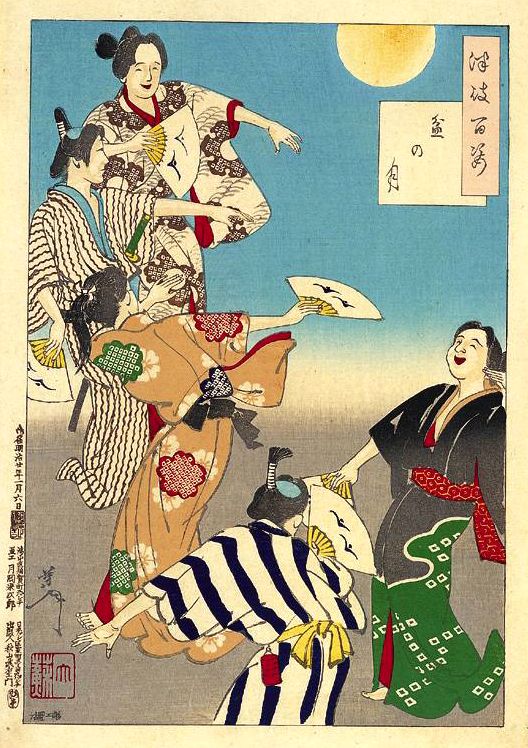
Bon No Tsuki

Here in late summer comes another celebration honoring those who have gone before us: in Japan, it is the time of Obon. It is a celebration familiar to us here in South Florida thanks to the presence of the Morikami Museum in Delray Beach. Although I do have a bone to pick with the Morikami these days, now that they’ve moved their Obon celebration to October and renamed it “Lantern Festival”. (What the… ? You can’t just move traditional celebrations around like that!) In this strange green land where things can change so rapidly and so immensely (someone once attributed Florida’s malleability to its sandy soil, which can be so easily bulldozed and sculpted… an idea that seems to hold some truth), I get a bit wistful about Obon.

Back when the Morikami first started its Obon Festival, it was a pretty quiet affair, and it was so beautiful. The beauty seemed to be dripping from the pine trees, which most often at Obon were dripping with rain, too. The celebration was outdoors, of course, because Obon is an outdoor event. The festival began in the late afternoon, for it is at heart a festival of the night, and here, in late summer, it rains most afternoons: it is the daily respiration of the land. I would have the scent of pennyroyal on me: pennyroyal to keep the mosquitoes at bay. In a clearing amongst the dripping pines would be the yagura, an elevated platform, painted with red and white stripes, on which taiko drummers and flutists perform. Illuminated lanterns were strung from the yagura and lines of dancers performed bon odori––traditional folk dances––moving in circular patterns around it. The dancers danced to the rhythm of the drums, but sometimes they danced to recorded music: traditional Japanese folk songs with strange cadences that filled the thick Florida air, and there were traditional motions that were part of the dances––dances like “Coal Miners’ Dance,” in which the dancers journeyed around the yagura with a shoveling motion, taking a few steps forward and almost just as many back. Their progress around the yagura was always very slow and languid… the rhythm of late summer.

Nearby, also in the pines, the street fair: the ennichi, where you could buy food and fresh lemonade and toys and all manner of things. So much to buy! One Obon I bought a set of small woodcut prints tied up in string. Electric lanterns were strung up throughout the pine trees at the ennichi and near the yagura, and that, too, was a beautiful sight. But anticipation grew as the sun grew heavy at the western horizon, for we all knew that once darkness fell, there would be the other lanterns––candlelit paper lanterns, set upon the water. Hundreds of them, certainly; thousands perhaps, illuminated and cast out upon Morikami Pond. In Japan, Obon always concludes this way, for Obon is a celebration of the dead returning to the land of the living for a brief spell, to have some fun again with the living, and when it is over, the spirits return to the other shore aboard these lanterns. It is a breathtaking and spellbinding sight, as they drift silently away. We would stand there, at the water’s edge or as close to it as we could get, watching and thinking, “See you next year.” Any method we have to keep open the channels of communication is all right by me.

My wistfulness about Obon goes back to those early days when the Morikami was small and so was the celebration. And I suppose this is how wistfulness generally works: holidays seemed better when we were younger. But the Morikami grew up into a major museum and the Morikami’s Obon festival grew and grew in popularity to the point where it was hardly fun anymore. Lots of people, yes, but in Japan, Obon is a celebration that goes on for two or three days, and maybe the Morikami could have followed those ways as a device to spread out the crowds. Eventually they began taking very good care of us, too: they built a shelter to protect us all from the summer rains, but in the process of protecting us, they took away the sky and the stars and separated us from the majestic pines. And now they are protecting us from the heat and humidity by moving the celebration from August to October. I’m sure Lantern Festival at the Morikami is lovely… but it’s not Obon.

In Japan, Obon is coming to a close about now, probably tonight. Some regions may have celebrated Obon as early as July. Much with local Obon ways depend on regional customs and with the use of varied calendars, lunar and solar. The Florida celebration was based on the Morikami celebration, and so Obon for me is the August one. Eventually, I suppose, folks here will get accustomed to the Lantern Festival of October and think of Obon as October, as well. And I will be a crotchety old man shaking my fist, yelling, “No, no, damnit! It’s in August!”

One Obon, when it was not possible to go to the celebration, a friend and I made our own lanterns: he made one and so did I. We each cut a block of wood and set it inside a paper bag, upon which we wrote messages in deepest dark black sumi ink. I wrote to my grandparents. We had no yagura, no dances, and no ennichi street fair. But when the sun sank low and night fell upon the land, we went outside to the pond behind my family’s home and we lit our lanterns and set them out to sail. We watched for a while as they drifted further away, two lights illuminated on the water, making their way toward the distant shore.

Image: “Bon no tsuki” (Bon Festival Moon) by Tsukioka Yoshitoshi. Woodcut print, late 1800s [Public domain] via Wikimedia Commons.