Tonight we eat pancakes for our supper. It is Shrove Tuesday, and with this dinner we clear out the pantry, for tomorrow, we enter a new month and the lenten season, too: our annual forty days of solemn reflection that set the stage for rebirth and the miracle of spring. Forty days, or Quadragesima in Latin, fortieth, which is why the Italians call this season Quaresima. It sounds lovely, no? Not nearly as spare as the English word lent, pared down to four letters, bare-bones. But whether we say lent or quaresima, it is, traditionally, a period in stark contrast to the excess of carnival, which has been going on for weeks now in festive towns like Venice and New Orleans and ends tonight with Mardi Gras. And once Mardi Gras passes, so lent, quaresima, begins.
It is no secret that here at home, it’s been a rough time for us. We lost my dad earlier this month. But life is all of this, the joy and the sorrow, embracing it all, not turning from the hardest parts. And so we do not turn away and we love, even if it brings hardship. Family was the most important thing to my dad. And my dad, it seems, took care of us to the very end. While the past few months brought many challenges his way, and worry on the part of the rest of us, Dad took care of that worry for us. He checked out on his own terms, at peace, it seems, with all he had to make peace with, and he took those worries we had about him and dispelled them, sent them out to the world, diluting them to nothing. One last great act of love and caring.
Ceremony, celebration, is a curious thing. It appears at times like frivolity, and it certainly can be. But there are deeper roots to these ceremonies we hold, year after year, as our parents and grandparents did, through time immemorial. Roots that grow through the ground, the ground that holds my father and all our ancestors, all who came before us. It is the one commonality we all share. Were it not for death, we would have no pressing reason to celebrate, no reason to make the most of each day. And this is why we say there is a seat for death at the table at all our celebrations. Death is the guest who must be present at every celebration, every ceremony. Without death, the “ceremony of a day” is nothing.
And so we approach these forty days, forty days that begin with ashes and an invitation to be well, to put all our efforts into making a good life for ourselves and for all around us: “Remember man that thou are dust and to dust you shall return.”
And yet there is more than this, too. The dust is what remains and there is something more that is larger than all of us. Here, I know, we run into belief systems and philosophies, but I think we can all agree that something more remains once we are gone: spirit, soul, memories… call it what you will. What you call it does not matter.
Last Friday, after work, I stopped at the rehab center where I would go see Dad most every day for the last few weeks of his life. More than two weeks had passed since I was last there, and it felt important that day to stop and to say thank you to the nurses and assistants who took such good care of him in his last days on this earth. It was, perhaps, another aspect of closure I was seeking. And so I drove up, with a heavy heart, and I entered the building. At the reception desk, where earlier in the month I had been checking in multiple times each day, I explained, as tears welled up in my eyes, what I wished to do. The volunteer there expressed her condolences and she issued me a visitor’s badge. I went up to the second floor, stepped off the elevator, and walked the corridors, past Dad’s first room, past the nurse’s station, past the room Dad moved to halfway through his stay, past the second nurse’s station, and then another loop around again. There were RNs and nursing assistants everywhere, but I didn’t recognize a single soul. Not one of them. Even Dad’s old roommate and his wife: they were gone. “Why do you seek the living amongst the dead?” echoed through my mind, and I began chuckling a bit. There was nothing for me there. I stepped again into the elevator. I descended, and I left the building. Outside, the sun was bright and the air was warm. There was a gardener working in a bed nearby. I looked at him twice, but definitely did not recognize him, either.
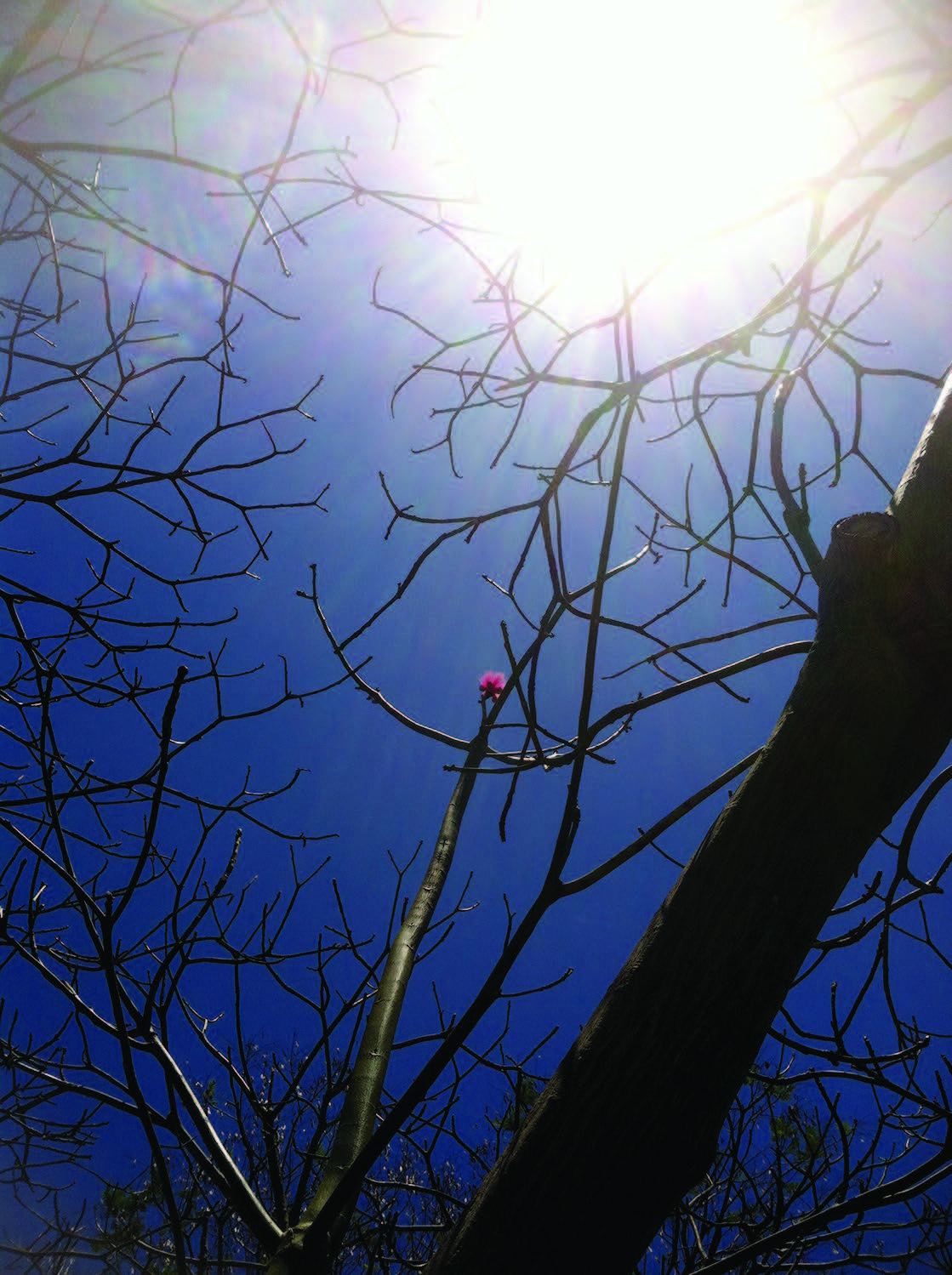
Here is a link to where you’ll find your Convivio Book of Days Calendar for March. It may not be updated to March’s calendar when I first publish this blog chapter, but if not, check back again in an hour or two, for it will be. This month’s cover star is a type of shaving brush tree that we see round Lake Worth and neighboring towns. The tree loses its leaves each winter, one of our few deciduous trees here in South Florida. Come spring, it blossoms in advance of the year’s new green leaves. The blossoms are amazing bursts of pink energy––the pink shaving brushes that give the tree its common name. Death and rebirth: the story never grows old.