And now it is March. The month begins this year with a new moon and Ramadan, the lunar monthlong celebration in the Islamic calendar focused on daytime fasting, good deeds, and prayer. It’s a holiday dependent on the local first sighting of the crescent moon, so it began yesterday in some places, and begins today in others, and possibly even tomorrow in yet other places. All month long, observers will enjoy a big meal, called suhoor, each day before the sun rises, and won’t take any food or water until the sun sets. When it does, the fast is broken usually with a date, and then another big meal, this one called iftar. And so it will go, all through the lunar month, through all the phases of the moon, until the sighting of the next crescent moon, when Ramadan ends and Eid al-Fitr begins: three days of feasting and gift-giving and remembrance of all that Ramadan taught us.
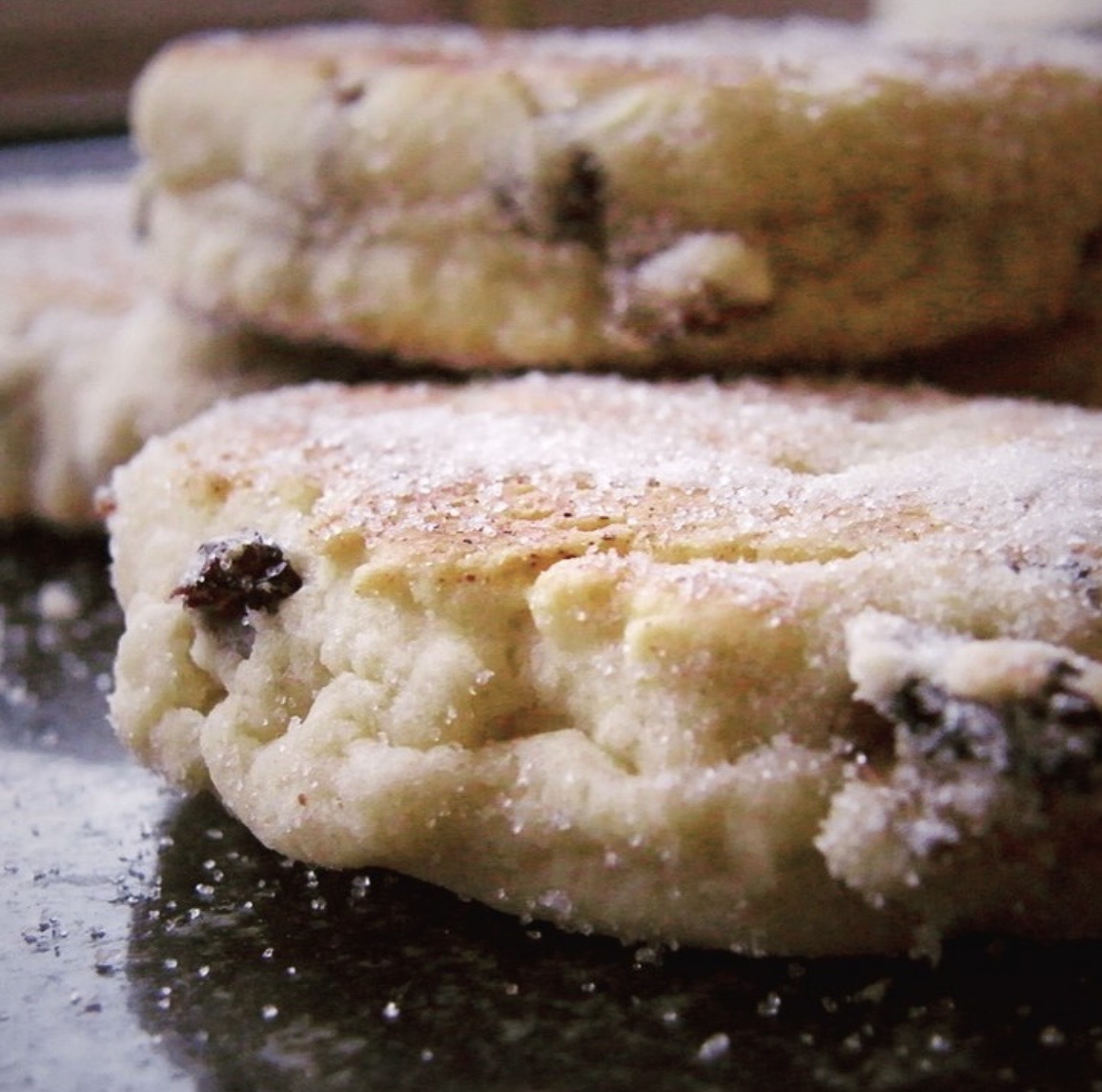
Whilst Ramadan is a movable holiday, one that comes earlier and earlier each year, one constant holiday on the First of March each year is St. David’s Day. The day is sacred to Wales. It’s a day for leeks and daffodils, but even better: for Welsh Cakes. Here’s our recipe; serve the cakes with strong tea with milk and sugar:
W E L S H C A K E S
It’s not uncommon to find recipes for Welsh Cakes that call for regular granulated sugar, butter, and nutmeg, but the traditional recipe will add lard to the mix, use caster sugar in place of the regular sugar, and will be flavored with the more mysterious flavor of mace. If you want the best Welsh Cakes, stick to the traditional version. If you can’t find caster sugar, make your own: pulse regular granulated sugar in a blender until very fine. Do not use powdered confectioners’ sugar, which has added corn starch.
3 cups all purpose flour
½ cup caster sugar
1 ½ teaspoons baking powder
1 teaspoon ground mace
½ teaspoon cinnamon
½ teaspoon salt
6 tablespoons lard
6 tablespoons butter
¾ cup dried currants
2 eggs, beaten lightly
3 to 4 tablespoons milk
granulated sugar
Whisk together the flour, caster sugar, baking powder, mace, cinnamon, and salt in a mixing bowl, then work in the butter and lard with your fingers until the mixture has the texture of course crumbs. It’s ok if some larger chunks of butter remain. Mix in the currants. Add the beaten egg, working it into the mixture, adding just enough milk to form a soft dough that is not too sticky. Wrap; chill in the refrigerator for 30 minutes or until you are ready to make the cakes.
Turn the dough out onto a floured board and roll to a thickness of about ¼”. Using a biscuit cutter (scalloped, if you have one), cut into rounds. Gather up any remnants to roll out again and cut more cakes.
Heat a lightly buttered skillet (cast iron works great) over low to medium heat, cooking the cakes until each side is lightly browned (about 3 to 4 minutes… if they’re cooking quicker than that, lower the heat). Let the cakes cool for a minute or two, then set each in a bowl of granulated sugar, allowing sugar to coat both sides and the edges. Best served warm, split, with butter and jam, or, for a more savory treat, with cheese and leeks, at a table set with a small vase of daffodils.
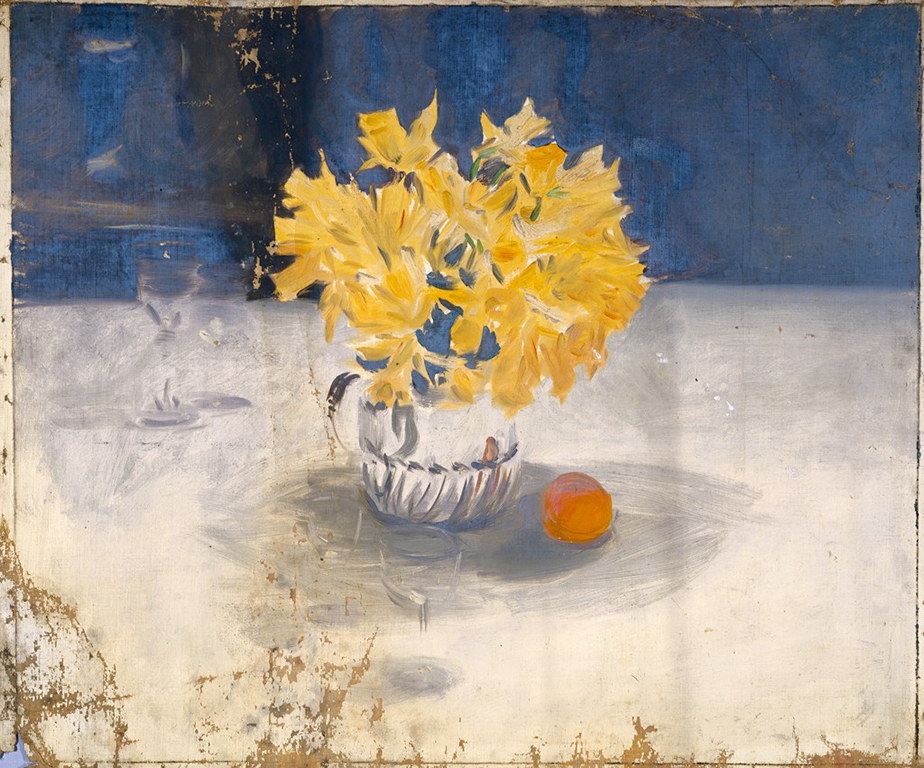
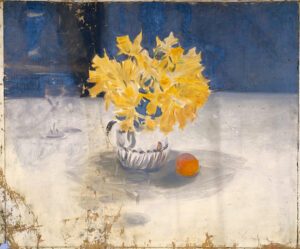
The daffodils are traditional for St. David’s Day in Wales, as are leeks, and if you’re there today, you may find folks wearing one or the other in their lapels. The legend of the leeks goes back to an ancient battle in Wales in which St. David himself is said to have advised the Welsh troops to wear leeks in their caps in order to distinguish themselves from the Saxon troops they were fighting. This animosity between the Celtic Welsh and the Saxon-descended English went on for some time, and there’s an old story about a man traveling on horseback in the north of Wales who comes to a river that he wishes to cross. There was another fellow working the field nearby, so the man on horseback asked, in English, if it was safe to cross the river and the laborer replied, in English, that it was indeed. The horse, however, knew better, and refused to pass into the river. So the man upon the horse asked the laborer once again if it was safe to cross the river, this time in Welsh. “Oh, I beg your pardon, sir,” said the man on the ground. “I thought you were an Englishman.”
Let’s hope the animosity has by now subsided. I love leeks, but it’s the daffodils that I’ve chosen to focus upon for your Convivio Book of Days calendar for March. The calendar is our monthly gift to you, a printable PDF and a fine companion to this blog. March this year will be dominated by the forty days of Lent, and on Tuesday night, we’ll be eating pancakes for Shrove Tuesday, the night that brings an end to the Carnival season. Ash Wednesday the next morning will usher in our annual season of penitence: a season that came out of necessity in times past, but this year, perhaps this somber time has its place for those of us who feel a need to step back from the madness of the world. Forty days to attempt to make sense of what’s become of things, to reflect, to reset, to understand what is most important to us and to decide how we wish to live our lives: by the strange examples we see daily these days from the people who are supposed to be role models and exemplars of respect and integrity and compassion, or by our own internal compass that comes from both spine and heart.
COME TO THE SHOP!
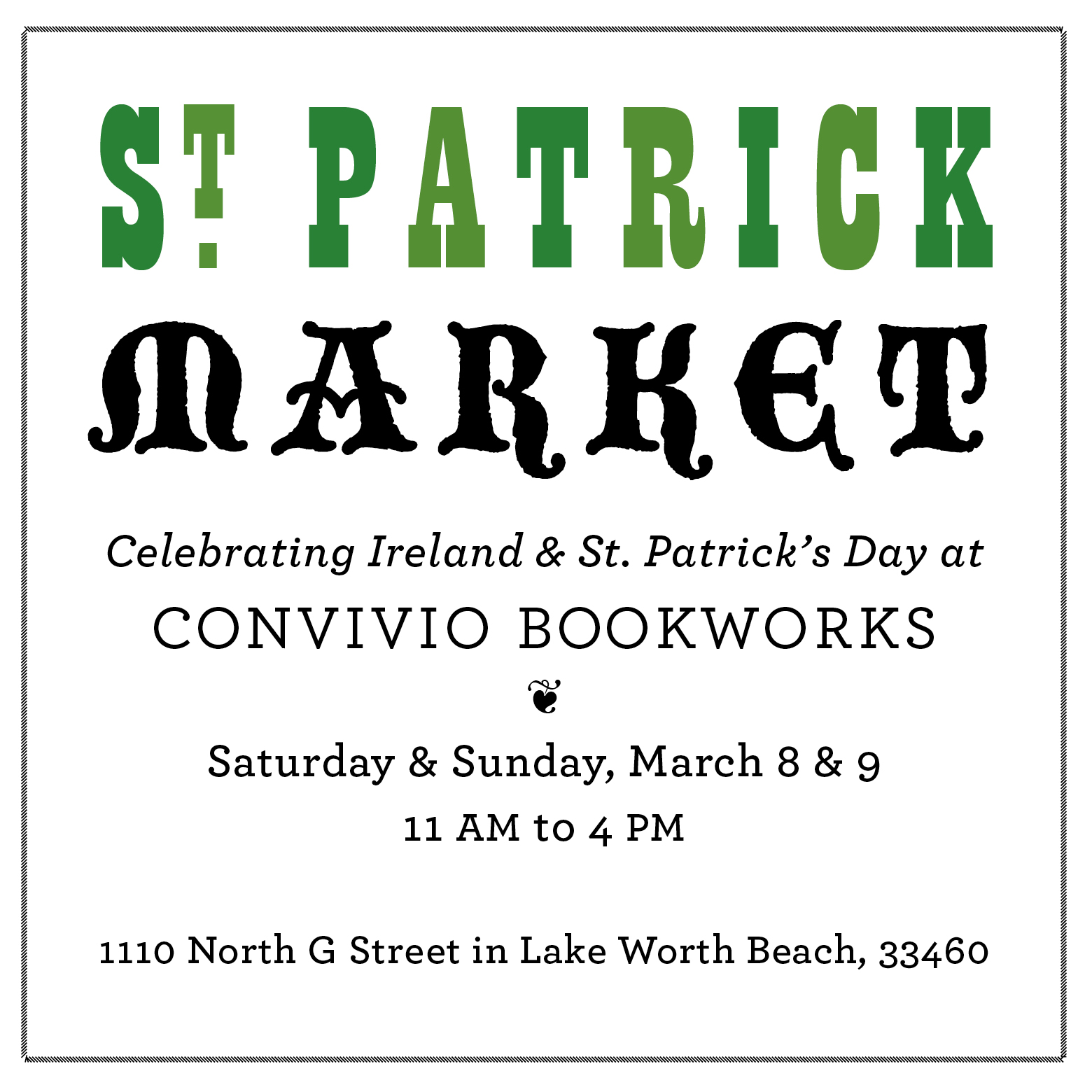
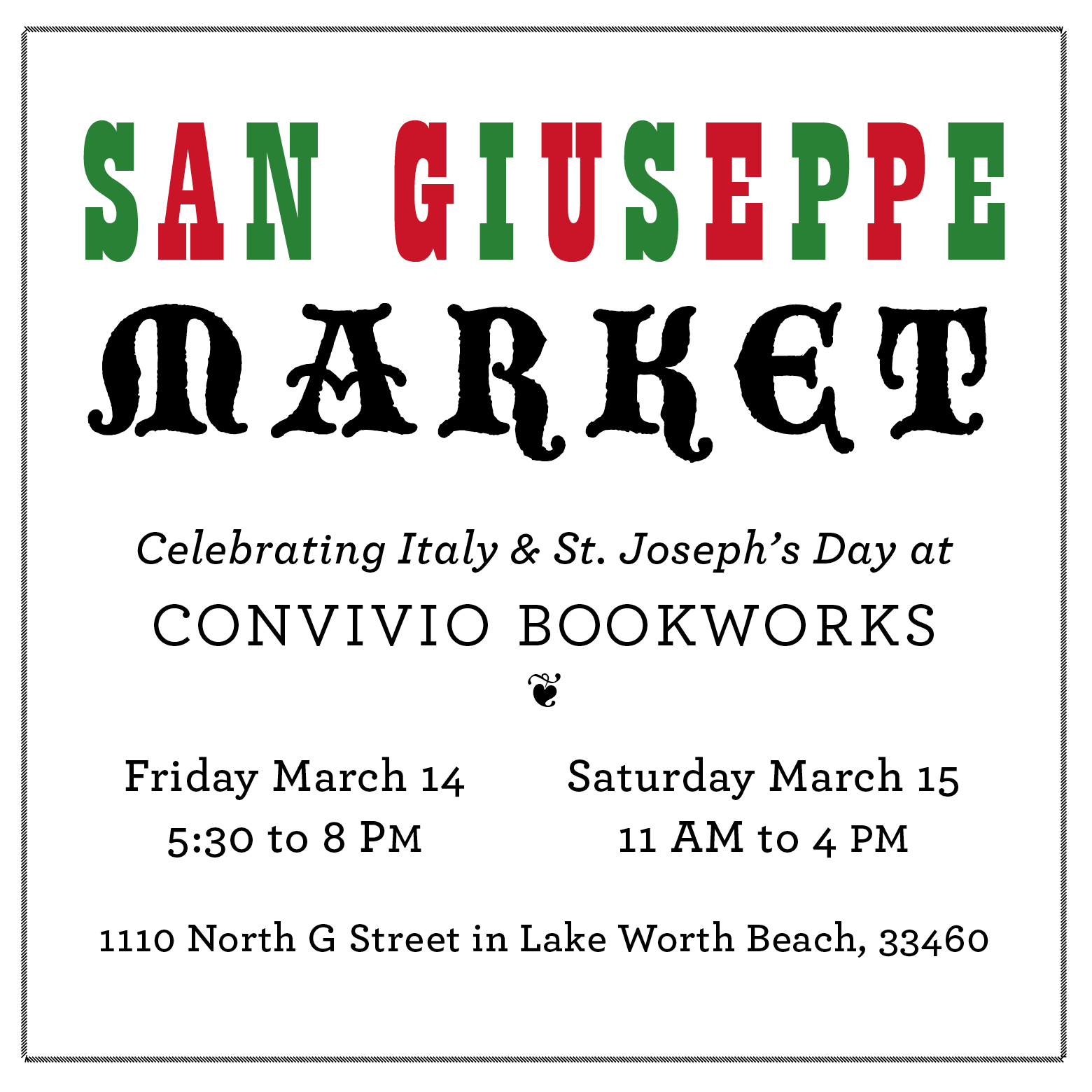
Locals: the shop is open Saturdays from 11 AM to 4 PM at 1110 North G Street, Lake Worth Beach, FL 33460. (Do take note, though, that we’ll be closed Saturday March 22 and Saturday March 29.) And we’ve got two special events for you in March. First up, it’s our St. Patrick Market on Saturday & Sunday, March 8 & 9, from 11 AM to 4 PM each day. We’ll be playing Celtic music and featuring our offerings for St. Patrick’s Day and for St. Brigid’s Day and serving homemade Irish soda bread and our own Löfbergs Swedish Coffee while you shop. The following week, come back for our San Giuseppe Market on Friday evening, March 14, from 5:30 to 8:30 PM, and on Saturday, March 15, from 11 AM to 4 PM. At this event, we’ll be playing Italian music and featuring our offerings from Italy and serving our Löfbergs Coffee with homemade Zeppole di San Giuseppe, the classic Italian pastry that we enjoy once each year to celebrate St. Joseph’s Day. Both events should be great fun. You’ll love what we have in store for you! As for the rest of you, you’ll find all these offerings (minus the soda bread and zeppole, sorry) when you visit our online shop. We appreciate your support! (Click the images below to make them larger.)
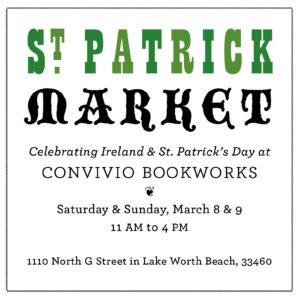
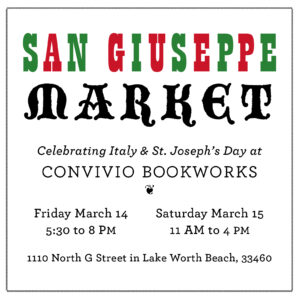
Image: Daffodils in a Vase by John Singer Sargent. Oil on canvas, circa early 1890s [Public domain, via Wikimedia Commons.]