Category Archives: St. David’s Day

Zippin’ Into Springtime, or Your March Book of Days

It’s St. David’s Day, and the Welsh will be donning leeks and daffodils on their hats and lapels today, and there will be Welsh Cakes served with butter and jam or with leeks and cheese. I am more the butter and jam sort. St. David, sacred to Wales, brings in March, a month of transition as winter officially gives way to spring. It is a month of many saints’ feast days that are sacred to particular countries: after St. David and the Welsh, we can look forward on the 5th to St. Piran’s Day for the Cornish, St. Patrick’s Day on the 17th for the Irish, St. Joseph’s Day on the 19th for the Italians, and then there’s St. Urho’s Day on the 16th for the Finns. St. Urho, who drove the grasshoppers from Finland: known only in the lands where Finns have settled. It’s a good story if there ever was one.

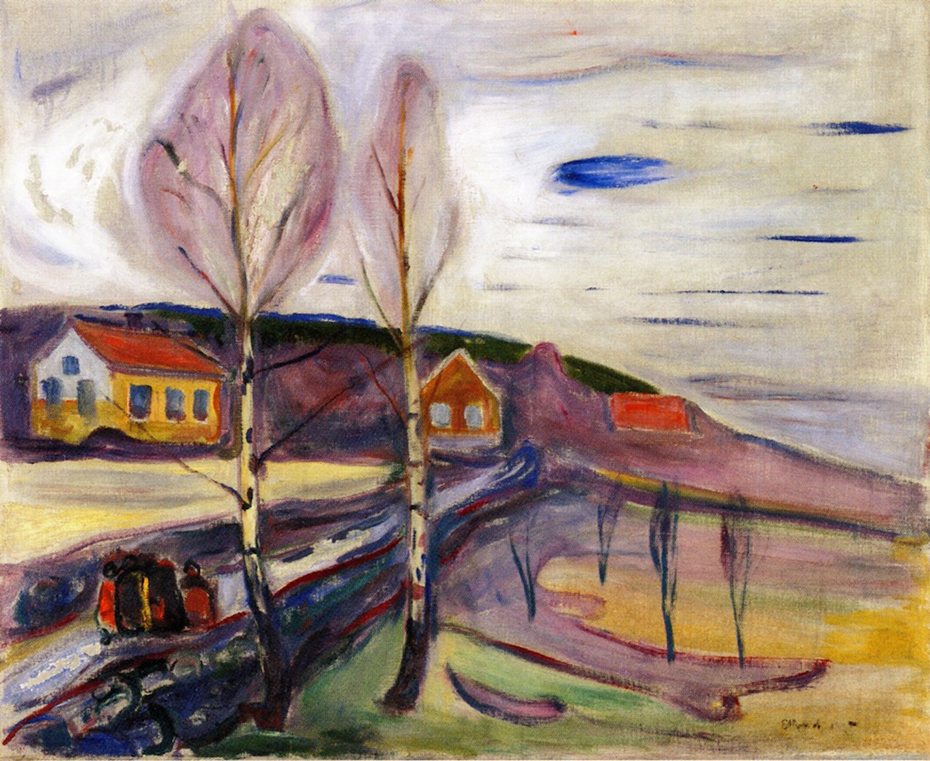
It’s an interesting month, March is, and here is your Convivio Book of Days Calendar for it. A printable PDF, as usual, and a fine companion to this blog. This month’s cover star is “Early Spring in Åsgårdstrand,” painted by Edvard Munch in 1905. You might admire the painting while enjoying a nice Welsh Cake today. Here’s our recipe:

W E L S H   C A K E S

It’s not uncommon to find recipes for Welsh Cakes that call for regular granulated sugar, butter, and nutmeg, but the traditional recipe will add lard to the mix, use caster sugar in place of the regular sugar, and will be flavored with the more mysterious flavor of mace. If you want the best Welsh Cakes, stick to the traditional version. If you can’t find caster sugar, make your own: pulse regular granulated sugar in a blender until very fine. Do not use powdered confectioners’ sugar, which has added corn starch.

3 cups all purpose flour
½ cup caster sugar
1 ½ teaspoons baking powder
1 teaspoon ground mace
½ teaspoon cinnamon
½ teaspoon salt
6 tablespoons lard
6 tablespoons butter
¾ cup dried currants
2 eggs, beaten lightly
3 to 4 tablespoons milk
granulated sugar

Whisk together the flour, caster sugar, baking powder, mace, cinnamon, and salt in a mixing bowl, then work in the butter and lard with your fingers until the mixture has the texture of course crumbs. It’s ok if some larger chunks of butter remain. Mix in the currants. Add the beaten egg, working it into the mixture, adding just enough milk to form a soft dough that is not too sticky. Wrap; chill in the refrigerator for 30 minutes or until you are ready to make the cakes.

Turn the dough out onto a floured board and roll to a thickness of about ¼”. Using a biscuit cutter (scalloped, if you have one), cut into rounds. Gather up any remnants to roll out again and cut more cakes.

Heat a lightly buttered skillet (cast iron works great) over low to medium heat, cooking the cakes until each side is lightly browned (about 3 to 4 minutes… if they’re cooking quicker than that, lower the heat). Let the cakes cool for a minute or two, then set each in a bowl of granulated sugar, allowing sugar to coat both sides and the edges. Best served warm, split, with butter and jam, or, for a more savory treat, with cheese and leeks, at a table set with a small vase of daffodils.

COME SEE US!
We’ve got two springtime pop-up shops in the works. At each, you’ll find our full selection of handcrafted artisan goods for Easter and Springtime from Germany, Sweden, and Ukraine, plus a few other surprises, too.

Find us first at the DELRAY BEACH ST. PATRICK’S DAY PARADE & FESTIVAL in Downtown Delray Beach on Saturday March 11. Our Convivio Bookworks tent will be at Old School Square, 51 North Swinton Avenue, from 1 to 7 PM. Next, on Saturday April 1, we’ll be at JOHAN’S JOE in Downtown West Palm Beach from 7 AM to 3 PM for a little Springtime Market that Johan’s Joe and Convivio Bookworks are hosting together. We had a Christmas Market last December and it was so much fun and we met so many wonderful people, we’ve decided to collaborate again for Easter.

Meanwhile, at our online catalog, save $10 off your purchase of $85 or more, plus get free domestic shipping, too, when you use discount code BUNNY at checkout. It’s our Zippin’ Into Springtime Sale, good on everything in the shop, now through Easter (and probably a bit beyond, too). What’s new? Some great new handcrafted artisan goods for Easter from Germany, plus a new supply of real pysanky eggs and wooden crucifixes from our friend Kyrylo Cherniak in Ukraine. It took almost a whole year for him to gather these things from the artisans he works with throughout Ukraine, and it is our deep privilege and honor to bring them to you. Kyrylo, so far, is safe and as well as can be. We have some new paper mache egg containers and splint wood baskets on their way from Germany, too, which should be arriving any day. We’re about to load about two or three dozen new hand embroidered tea towels made by my mom onto the website, too. Millie’s Tea Towels: you love them, and Mom loves making them for you! CLICK HERE to shop! And don’t forget to use discount code BUNNY at checkout if your order is $85 or more.

Dydd Gŵyl Dewi Hapus! Happy St. David’s Day!


Image: “Early Spring in Åsgårdstrand” by Edvard Munch. Oil on canvas, 1905. [Public domain] via Wikimedia Commons.


Spring Excursion, or Your March Book of Days

The First of March brings St. David’s Day, sacred to Wales, and this year it also brings the moveable Shrove Tuesday, which goes by many names: Fat Tuesday, Mardi Gras, Pancake Tuesday. It is the final day of Carnival, the day that ushers in the solemn forty days of Lent that begin with Ash Wednesday. It is the night we traditionally eat pancakes or crepes for supper –– this, to use up the last of the eggs and the last of the milk and sugar before the restrictions of Lent kicked in.

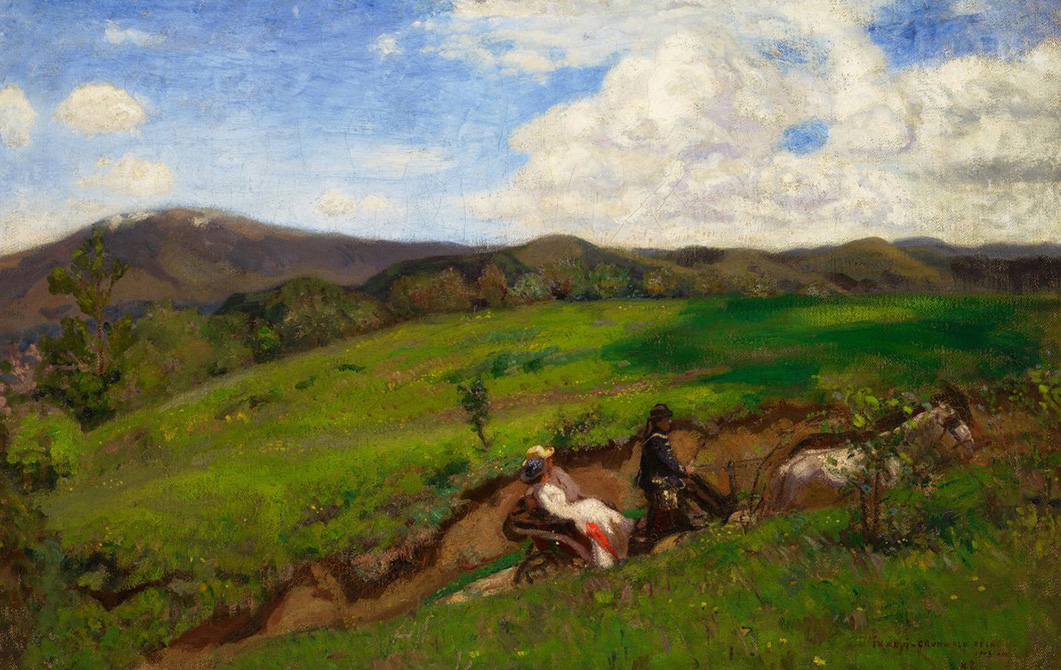
This First of March also brings you the latest Convivio Book of Days Calendar. It’s a printable PDF, and a fine companion to this blog. This month’s cover star: a 1903 oil painting by Hungarian painter Béla Iványi-Grünwald called “Spring Excursion.” This is the month, after all, of the vernal equinox. We began our anticipation of spring at the start of February with St. Brigid’s Day, but in March, the season is made manifest. Days and nights will be of equal length for a spell, all across the globe, while here in the Northern Hemisphere light will continue to increase until the Midsummer solstice of June. Ever changing, ever the same.

The name Shrove Tuesday comes from Shrovetide, which is the time we’ve been in in recent weeks: this time after Christmas ends and before Lent begins. Ash Wednesday will bring its time of fasting and penance and reflection. Which is perhaps something we need every now and then. Well certainly once a year, it was thought, and why not now, when the larders were getting empty. Back in the days when food was not as plentiful and easily procured as it is now, Lent was crucial to help get everyone through to spring and renewal.

There are many traditions in foodways for Shrove Tuesday. The Polish bakeries will have pączki today, a rich filled doughnut, and the Swedish bakeries will have cream filled buns called semla. If they’re doing things right they’ll be selling them today but definitely not tomorrow and not again until next Shrovetide. In Germany, it is Fasnacht, and folks will be making doughnuts for the occasion this night (nacht) before the fast.

Seth and I, we will eat our pancakes tonight with festivity and in good spirit, and in the morning, if we have it in us, we will approach that altar to have ashes smeared on our foreheads with the spoken reminder: Remember man that thou are dust and to dust you shall return. We are made of the stuff of this earth and we shall return to it. But the stuff of this earth is made of the stuff of the stars, too, and that is something to ponder. If nothing else, these forty days that follow tonight’s pancake supper will hopefully remind us that life is short, and we would do well to live the time we have with compassion and kindness for our fellow human beings, and to love each day, and, as we like to say here, to live the ceremony of each day, too.

Image: “Spring Excursion” by Béla Iványi-Grünwald. Oil on canvas, 1903 [Public domain] via Wikimedia Commons.
 

Wind on the Wold, or Your March Book of Days

And now it is March, a month often thought of as unpredictable: mild, then freezing cold, calm, then stormy… and a month filled with blustery days, to be sure. There is an old weather rhyme associated with the first few days of the month:

First comes David,
Next comes Chad,
Then comes Winnal,
Roaring mad.

David refers to St. David’s Day, which is today: a day sacred to Wales and a day for the wearing of leeks and daffodils on the lapel and for the making of Welsh cakes. (More on that later.) Chad and Winnal refer to the two saints whose feast days follow St. David’s: St. Chad on the Second and St. Winnal on the Third, both of them ancient saints largely by now forgotten here on earth––which may explain why Winnal is so roaring mad. Then again, it may simply be because his month of March is one of the transition months, which makes complete sense, an idea I’ve only just come across recently in my reading of this year’s Almanac by Lia Leendertz, an annual seasonal guide that I discovered last year when my friend Lisabet Summa gave me a copy of the 2020 edition. As Lia explains it: the days are growing longer, the sun is higher in the sky, and the air is being warmed by the sun. But cold pockets of air still remain. The warm air rises, and as it does, cool air swoops in to replace it… thus, wind. My description may be a bit of a simplification, but I think it relays the general idea: that wind, as Lia Leendertz says, is “nature’s attempt to even everything out and create an equilibrium.”

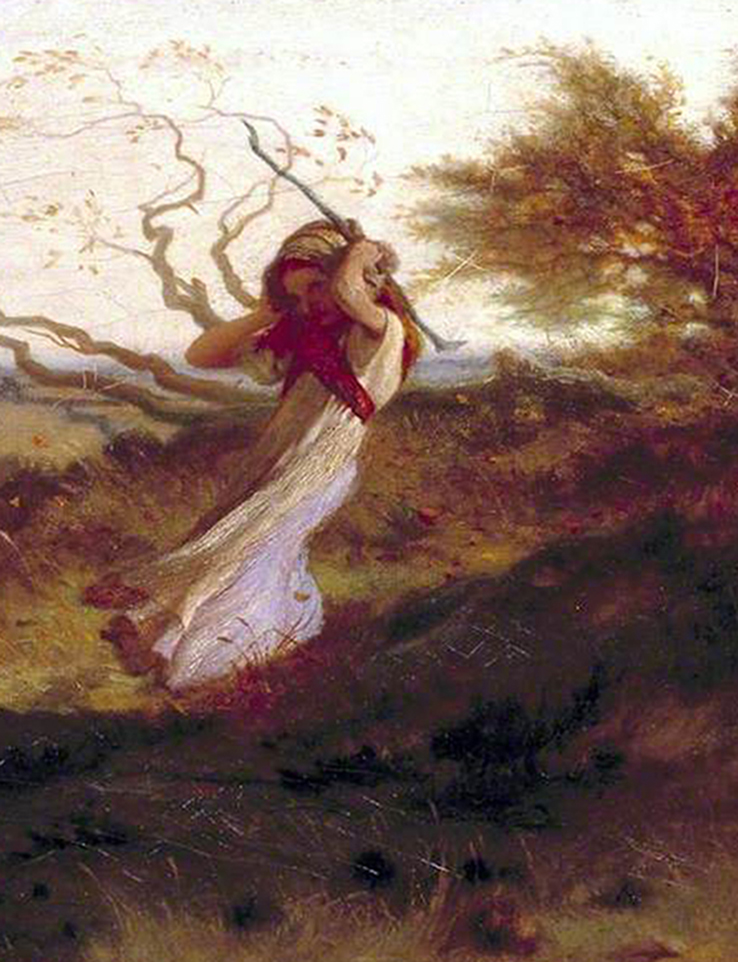
To honor this, our monthly gift to you, the Convivio Book of Days calendar, this time around features the winds of March as its cover star, as depicted in a painting by George Heming Mason, 1863. The calendar is, as usual, a printable PDF. Click here and it’s yours. The calendar is a fine companion to this blog as we walk through the month together and seek the equilibrium that nature seeks, too, in its windiest days.

Back now to St. David’s Day: Dydd Gŵyl Dewi Hapus is the St. David’s Day greeting in Welsh, but in English, a simple “Happy St. David’s Day” will do. In Wales, it is a day of national pride and national celebration, similar to St. Patrick’s Day in Ireland. It is a day of leeks and daffodils, perhaps because both are similar in name in Welsh. The legend of the leeks goes back to an ancient battle in Wales in which St. David himself is said to have advised the Welsh troops to wear leeks in their caps in order to distinguish themselves from the Saxon troops they were fighting. This animosity between the Celtic Welsh and the Saxon-descended English went on for some time. Here’s a story I relate most years on the First of March: it’s an old story of a man traveling on horseback in the north of Wales who comes to a river that he wishes to cross. There was a man working the field nearby, so he asked, in English, if it was safe to cross the river and the laborer replied, in English, that it was indeed. The horse, however, knew better, and refused to pass into the river. So the man upon the horse asked the laborer once again if it was safe to cross the river, this time in Welsh. “Oh, I beg your pardon, sir,” said the man on the ground. “I thought you were an Englishman.”

I hope by now that the Welsh and the English have come to be at peace with each other. The leek is now a symbol of Welsh national pride, as is the daffodil. And perhaps the Welsh cake, too. Here’s our recipe:

W E L S H   C A K E S

It’s not uncommon to find recipes for Welsh Cakes that call for regular granulated sugar, butter, and nutmeg, but the traditional recipe will add lard to the mix, use caster sugar in place of the regular sugar, and will be flavored with the more mysterious flavor of mace. If you want the best Welsh Cakes, stick to the traditional version. If you can’t find caster sugar, make your own: pulse regular granulated sugar in a blender until very fine. Do not use powdered confectioners’ sugar, which has added corn starch.

3 cups all purpose flour
½ cup caster sugar
1 ½ teaspoons baking powder
1 teaspoon ground mace
½ teaspoon cinnamon
½ teaspoon salt
6 tablespoons lard
6 tablespoons butter
¾ cup dried currants
2 eggs, beaten lightly
3 to 4 tablespoons milk
granulated sugar

Whisk together the flour, caster sugar, baking powder, mace, cinnamon, and salt in a mixing bowl, then work in the butter and lard with your fingers until the mixture has the texture of course crumbs. It’s ok if some larger chunks of butter remain. Mix in the currants. Add the beaten egg, working it into the mixture, adding just enough milk to form a soft dough that is not too sticky. Wrap; chill in the refrigerator for 30 minutes or until you are ready to make the cakes.

Turn the dough out onto a floured board and roll to a thickness of about ¼”. Using a biscuit cutter (scalloped, if you have one), cut into rounds. Gather up any remnants to roll out again and cut more cakes.

Heat a lightly buttered skillet (cast iron works great) over low to medium heat, cooking the cakes until each side is lightly browned (about 3 to 4 minutes… if they’re cooking quicker than that, lower the heat). Let the cakes cool for a minute or two, then set each in a bowl of granulated sugar, allowing sugar to coat both sides and the edges. Best served warm, split, with butter and jam, or, for a more savory treat, with cheese and leeks, at a table set with a small vase of daffodils.

Image: Detail from “Wind on the Wold” by George Heming Mason. Oil on canvas, 1863. Used with gratitude through Creative Commons [Public domain] via Wikimedia Commons.

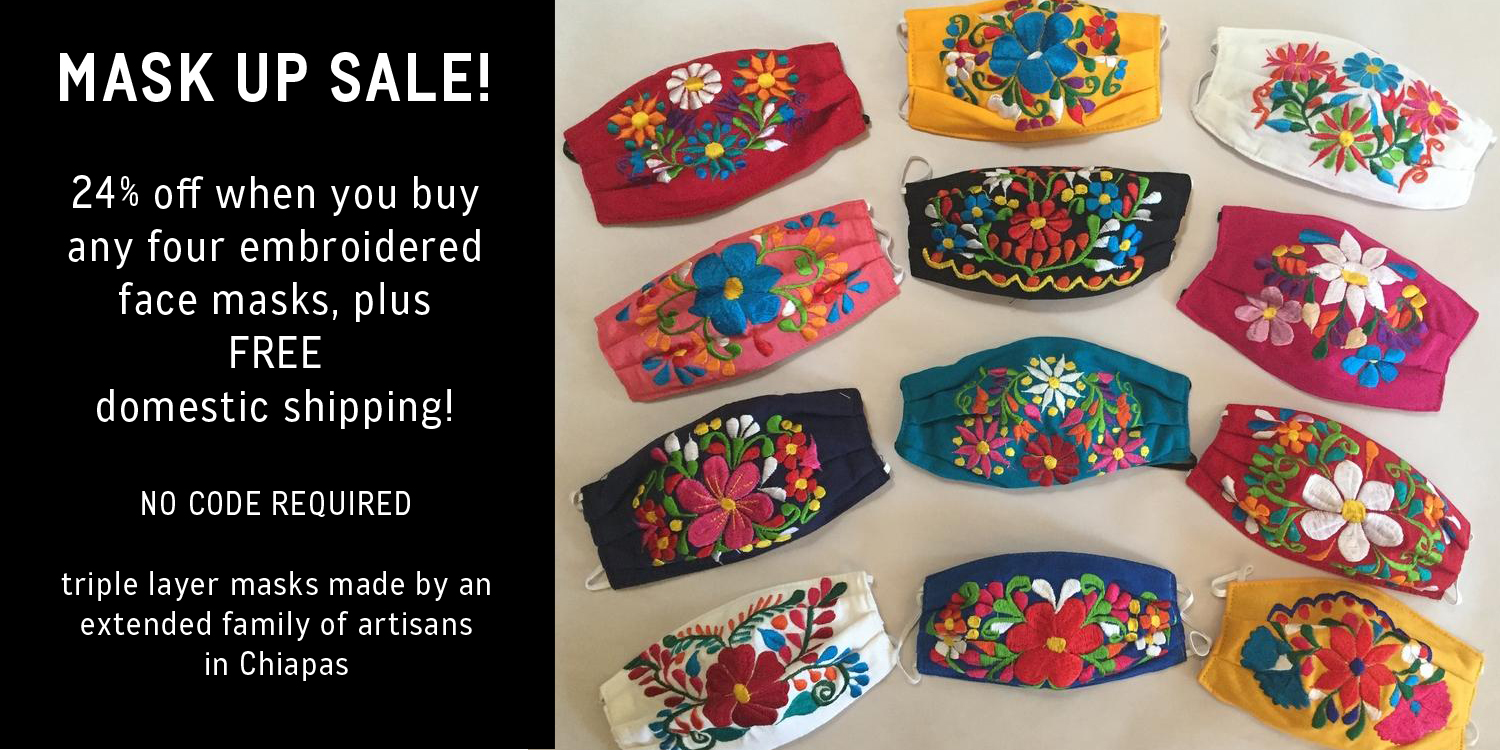
MASK UP SALE! It’s the final few days of our current sale on masks: Buy any four or more of our beautiful triple layer embroidered face masks and you’ll automatically save 24% plus free shipping to US destinations! It’s practically like getting one mask free (and all of them shipped to you for free, too). These triple layer masks are made by an extended family of artisans in Chiapas, Mexico, who truly appreciate every sale. So please throw a little transactional support their way if you can, while helping to keep yourself and those around you safe so we can gather again someday without thinking twice about it. And if you need us to ship to destinations outside the US, email us first and we can make arrangements to ship for just $1 per mask.  Click here to start shopping!

Click on the picture to see a full size version of it… the masks pictured here are the floral ones, but we also have other designs featuring calaveras, Frida Kahlo, Catrina, Maria Bonita, Our Lady of Guadalupe, sugar skulls, and mandalas, too. All of the Otomi-inspired masks are currently sold out, but we’re ordering more for March delivery.