Category Archives: Lent

San Giuseppe

SanGiuseppe

Today is the feast day of St. Joseph: a pretty big deal to my people. He is one of many saints sacred to Italy and his day provides a good excuse to eat rich and festive pastries in the middle of the otherwise somber lenten season. Even the Church offers a special dispensation to allow for corned beef & cabbage on those years when St. Patrick’s Day falls on a Friday, so even if you’ve given up sweets for lent, go ahead: St. Joseph’s Day comes but once each year. Today’s chapter of the Convivio Book of Days Blog is a reprint of last year’s. The only difference is that last year, lent began much later than it did this year. Anyway, I thought this chapter was really good and I think you’ll enjoy reading it again while I go out and get some zeppole from the Italian bakery. ––John


It’s St. Joseph’s Day today, the 19th of March. When the Lenten season begins early, which this year it did not, St. Joseph’s Day arrives bringing a welcome respite from Lent’s bare-bones penitence in the form of decadent desserts. This year, we’re only two weeks into Lent at this point… but still, we’ll take the decadent desserts.

St. Joseph is sacred to Italy. He is a patron saint of children and of pastry chefs, both of whom typically have a fondness for sweets, and any Italian bakery worth its salt today will be selling at least a couple of pastries made especially for San Giuseppe. It’s a good sign if you walk into one such bakery today and see trays and trays of zeppole and sfinci. Both are pastries of fried dough, generous in size, each typically something you could fit into two open hands. Zeppole are filled with custard and often include a few cherries on top. Sfinci are filled with sweetened ricotta cream, perhaps with a few small chocolate chips, very much like a cannoli filling. Many Italian bakeries sell these pastries for a few weeks before and after St. Joseph’s Day, but today is their traditional day, and we take that first bite into a delectable zeppole, with the aroma of strong espresso in the air, and we thank San Giuseppe for bringing a bit of sweetness to Lent’s otherwise stark and penitent nature.

Variations of these sweets, in name and in shape and ingredients, exist throughout Italy for the feast of San Giuseppe, but it is in the South, from where my family hails, that they are best known. Both sfinci and zeppole are pastries with histories that go back many centuries, with names that come out of the Arabic influence on the region. How far back do they go? The ancient Romans made fried pastries each year on the 17th of March in honor of Bacchus, and it is thought that the zeppole and sfinci we make today are direct descendants of those springtime sweets.

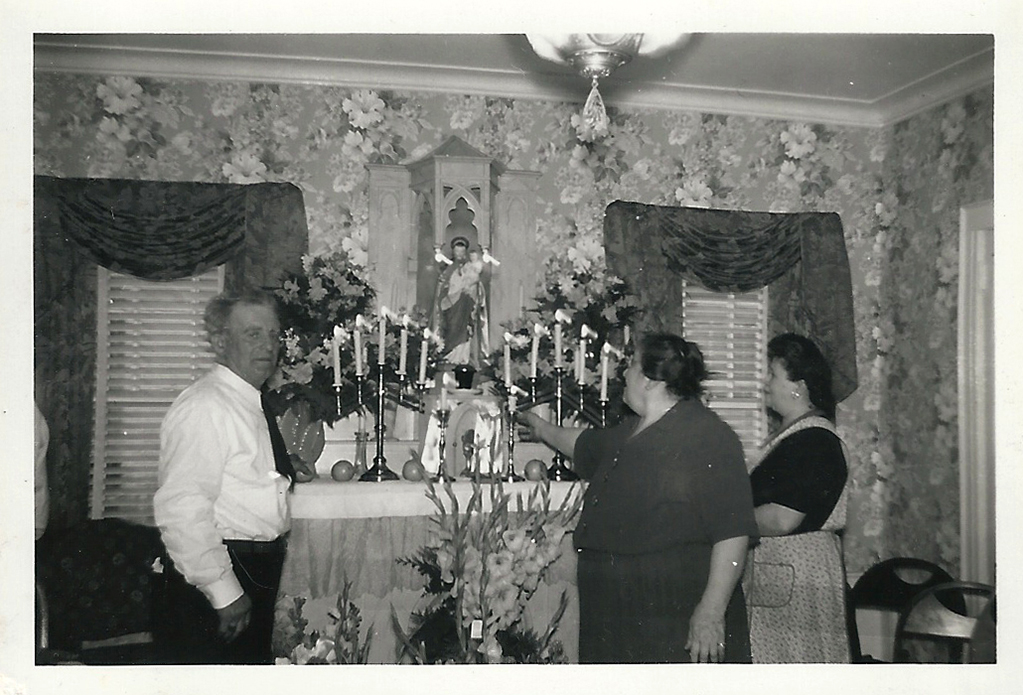
Both of my grandmothers were devotees of San Giuseppe. Many years before I was born, Grandma Cutrone used to prepare an altar to St. Joseph each year for his feast day. My dad would help her set up the altar in their home, and on it Grandma would place breads and ceci beans and oranges and animal crackers for the children. There are old 8 mm black and white home movies of friends and neighbors coming in to see the altar and pay their respects. The priest would come to bless it, and Grandma Cutrone would give each person who visited an orange to take home with them.

My Grandma Assunta did not have such an altar in her home, but she would often pray to San Giuseppe, and we couldn’t leave church each Sunday before she lit the big candle at St. Joseph’s statue in the chapel. We would visit him each week there. To this day, every time I go to a church, I light a candle for her, because that’s what she would do, and it’s one of many ways I have of keeping in touch with those who came before us.

I’m glad they both loved St. Joseph so much. A good friend of ours, Father Philip Joly, recently helped me see St. Joseph in a new light. St. Joseph, who is also a patron saint of families, is almost always depicted as an old man. The truth is, though, Mary was probably just a teenager when the angel came to tell her she would be giving birth to a son, the son of God. Joseph, who was engaged to her, was probably not much older himself, and he, too, received a visit from the angel saying, “Don’t be afraid.” There he was, a young man, with a pregnant teenage wife, pregnant not by him, asked to become a father to a son that was not his. That’s a lot to swallow, no? But he supported his betrothed, and he went through with it. He had compassion, and he had faith. Joseph’s family was no ordinary family. And so when we think of San Giuseppe as the patron saint of families, we know that that extends to all families, no matter how traditional or non-traditional they may be. What a guy.


Image: That’s Grandma Cutrone on the right, Grandpa Cutrone on the left, my dad’s Aunt Carmela between them, and the altar to San Giuseppe in their home for St. Joseph’s Day, circa 1940s, Brooklyn, New York.


Pancakes!

Pancake Maker

To begin with: my apologies. We lost a good friend and mentor in late January, Arthur Jaffe, it was difficult to get back on two feet once that happened. Arthur was a great guy: the type of person we all want to emulate, the type of person who reminds us that it is important to appreciate each day, and that, after all, is what this blog is all about. He was a subscriber to the blog and a believer in it and in me and was looking forward to seeing the Convivio Book of Days as a real book someday, for he was a man who loved books and left a real legacy of them.

And so I missed writing to you about St. Valentine and about St. Agatha and who knows what else. But I was at the Finnish bakery in Lantana the other day, the place packed with tall Finns speaking a tongue I do not understand, and on the top of the cases was something I had never seen there before: round pastries that were bursting with whipped cream. I asked the Finnish woman behind the counter about them. “We make them every February,” she said. “They are filled with almond paste and whipped cream. You should have one.”

She said they were not affiliated with any particular holiday (“No, we just make them every February”), but it was a day or two later, in realizing I had forgotten about St. Agatha’s Day, that I realized the Finns at the bakery were probably tuning into a tradition perhaps long forgotten, for the shape and the filling happens to be exactly like that of the pastries that the nuns of Catania in Sicily make for St. Agatha’s Day, which was on the 5th of February. The story is gruesome (in her martyrdom in the third century, St. Agatha’s breasts were severed) but the pastries are delicious (meant, as they are, to evoke what was lost by the saint) and people have been unapologetic about these things through the ages. Why wouldn’t we bake something like this in February?

I also missed writing to you about Carnevale, and now, today, it is Mardi Gras, its festive conclusion. It is known in some places as Shrove Tuesday, and tradition would have us eat pancakes for supper tonight. Pancakes for supper? Yes, please. That alone is cause for celebration. The idea is it is a supper designed to use up the last of the eggs, the last of the butter, the last of all that was restricted in earlier days as we enter the somber season of lent, which begins tomorrow with Ash Wednesday. It was a matter of necessity as much as of observance in those times, for by this time of year, the stocks of food from the harvest were probably quite depleted. If folks were to make it through to the first harvests of spring and summer, a little restraint now was an important thing.

But that is tomorrow. Tonight, we celebrate. Tonight, we have pancakes for supper, and we remember the importance to love each day.


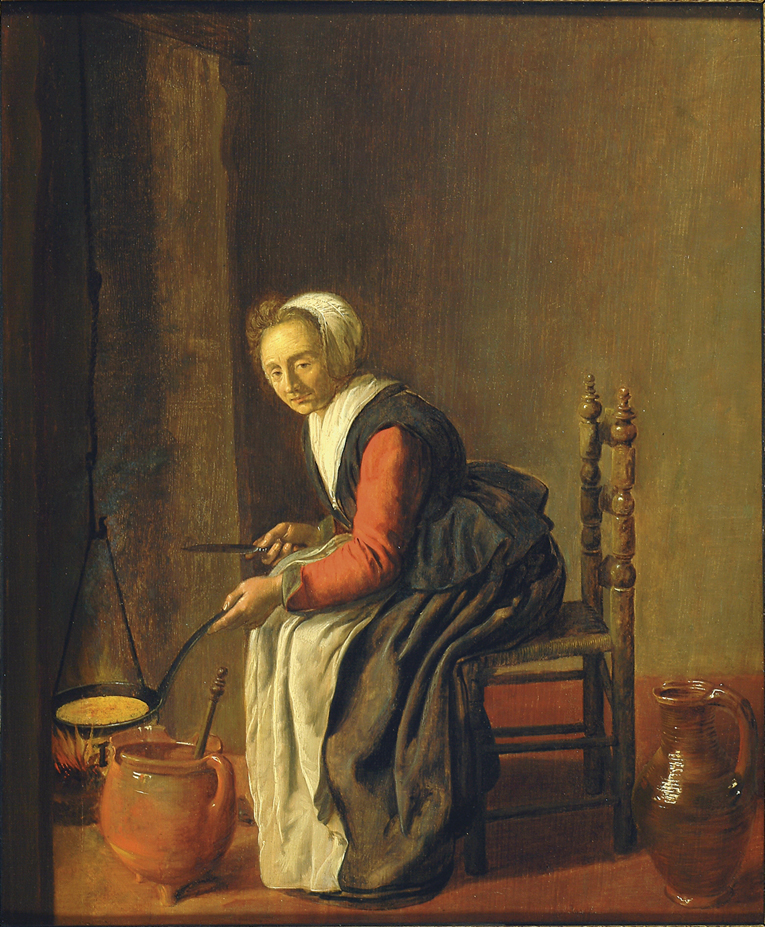
Image: De Pannenkoekenbakster (The Pancake Maker) by Jan Miense Molenaer. Oil on canvas, 1645 [Public domain] via Wikimedia Commons.


Tagged ,

Holy Week

the-entry-into-jerusalem

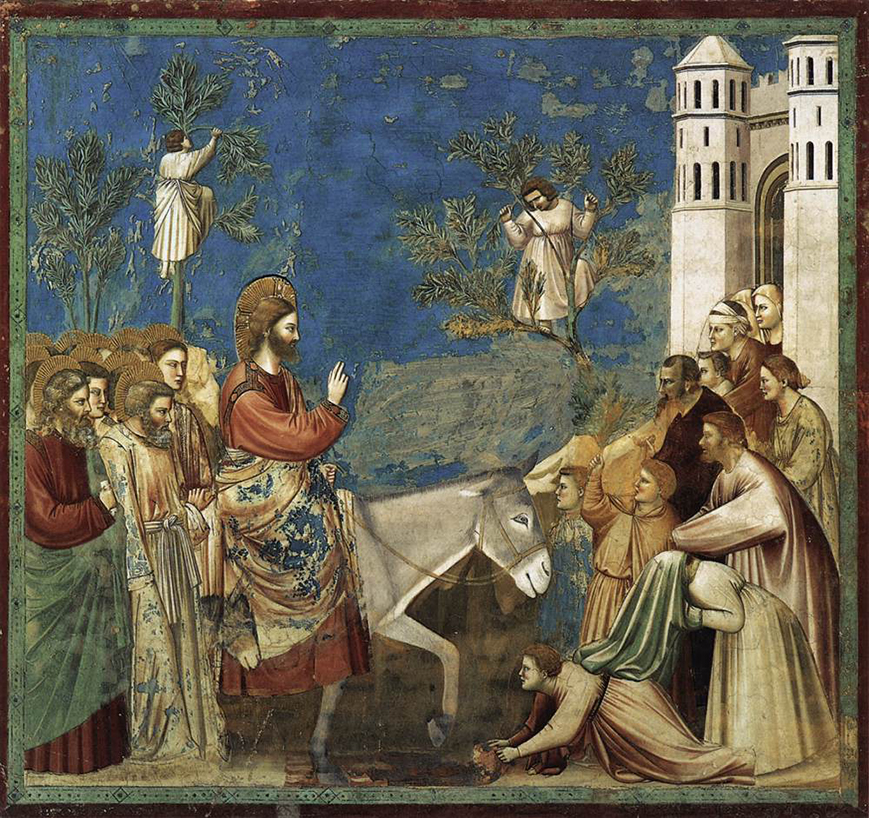
Lent is nearly over. Sunday is Palm Sunday, or Passion Sunday, marking the day of Jesus’s triumphant entry into Jerusalem, setting the events of Holy Week in motion. The Passion of Christ is read in churches on Palm Sunday, and this, together with the blessing of palms, makes for one very long service, so be prepared!

But you do leave with gifts: blessed palms. One of the most common traditions associated with Palm Sunday is the fashioning of these palms into crosses and other figures. Some folks pin a piece of palm to their lapel or their hat. A lesser known custom for Palm Sunday is the eating of figs. This comes from Christ’s cursing of the fig tree, which occurred soon after he came to Jerusalem:

In the morning, as he was returning to the city, he became hungry. And seeing a fig tree by the wayside, he went to it and found nothing on it but only leaves. And he said to it, “May no fruit ever come from you again!” And the fig tree withered at once. (Matthew 21: 18-19)

This passage always struck me as so bizarre. It seems like such a mean thing to do to this fig tree. Be that as it may, some people make sure to eat figs on Palm Sunday just because of this verse and a similar one in Mark. They’ll be eating dried figs, for sure, because it’s not fig season. You’d think Jesus would have known that, too.

And with Palm Sunday’s close, we begin to clean. Just as we “made our house fair as we are able” during Advent, these next few days are days of making our house fair as we are able for the coming feast of Easter. By Wednesday night, all should be done, and all distractions set aside, for the mysteries of Easter begin with Holy Thursday: one of the most special nights of the year, a night rich with ceremony and ending in pilgrimage and peaceful contemplation. It is the first part of the Triduum of Holy Thursday (or Maundy Thursday), Good Friday, and Holy Saturday. And that Triduum we’ll discuss later in the week.


Image: L’entrata in Gerusalemme (The Entry into Jerusalem) by Giotto, fresco, c.1305, [Public domain], via WikiPaintings.