Category Archives: Lent

Daffodils, or Your March Book of Days

And now it is March. The month begins this year with a new moon and Ramadan, the lunar monthlong celebration in the Islamic calendar focused on daytime fasting, good deeds, and prayer. It’s a holiday dependent on the local first sighting of the crescent moon, so it began yesterday in some places, and begins today in others, and possibly even tomorrow in yet other places. All month long, observers will enjoy a big meal, called suhoor, each day before the sun rises, and won’t take any food or water until the sun sets. When it does, the fast is broken usually with a date, and then another big meal, this one called iftar. And so it will go, all through the lunar month, through all the phases of the moon, until the sighting of the next crescent moon, when Ramadan ends and Eid al-Fitr begins: three days of feasting and gift-giving and remembrance of all that Ramadan taught us.

Whilst Ramadan is a movable holiday, one that comes earlier and earlier each year, one constant holiday on the First of March each year is St. David’s Day. The day is sacred to Wales. It’s a day for leeks and daffodils, but even better: for Welsh Cakes. Here’s our recipe; serve the cakes with strong tea with milk and sugar:

W E L S H   C A K E S

It’s not uncommon to find recipes for Welsh Cakes that call for regular granulated sugar, butter, and nutmeg, but the traditional recipe will add lard to the mix, use caster sugar in place of the regular sugar, and will be flavored with the more mysterious flavor of mace. If you want the best Welsh Cakes, stick to the traditional version. If you can’t find caster sugar, make your own: pulse regular granulated sugar in a blender until very fine. Do not use powdered confectioners’ sugar, which has added corn starch.

3 cups all purpose flour
½ cup caster sugar
1 ½ teaspoons baking powder
1 teaspoon ground mace
½ teaspoon cinnamon
½ teaspoon salt
6 tablespoons lard
6 tablespoons butter
¾ cup dried currants
2 eggs, beaten lightly
3 to 4 tablespoons milk
granulated sugar

Whisk together the flour, caster sugar, baking powder, mace, cinnamon, and salt in a mixing bowl, then work in the butter and lard with your fingers until the mixture has the texture of course crumbs. It’s ok if some larger chunks of butter remain. Mix in the currants. Add the beaten egg, working it into the mixture, adding just enough milk to form a soft dough that is not too sticky. Wrap; chill in the refrigerator for 30 minutes or until you are ready to make the cakes.

Turn the dough out onto a floured board and roll to a thickness of about ¼”. Using a biscuit cutter (scalloped, if you have one), cut into rounds. Gather up any remnants to roll out again and cut more cakes.

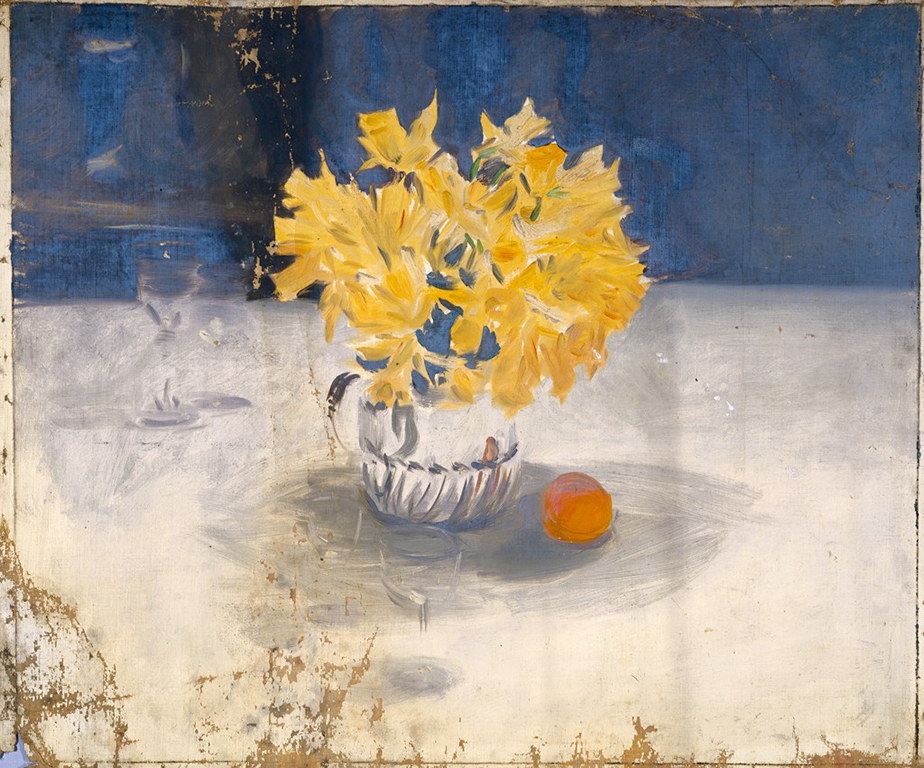
Heat a lightly buttered skillet (cast iron works great) over low to medium heat, cooking the cakes until each side is lightly browned (about 3 to 4 minutes… if they’re cooking quicker than that, lower the heat). Let the cakes cool for a minute or two, then set each in a bowl of granulated sugar, allowing sugar to coat both sides and the edges. Best served warm, split, with butter and jam, or, for a more savory treat, with cheese and leeks, at a table set with a small vase of daffodils.

The daffodils are traditional for St. David’s Day in Wales, as are leeks, and if you’re there today, you may find folks wearing one or the other in their lapels. The legend of the leeks goes back to an ancient battle in Wales in which St. David himself is said to have advised the Welsh troops to wear leeks in their caps in order to distinguish themselves from the Saxon troops they were fighting. This animosity between the Celtic Welsh and the Saxon-descended English went on for some time, and there’s an old story about a man traveling on horseback in the north of Wales who comes to a river that he wishes to cross. There was another fellow working the field nearby, so the man on horseback asked, in English, if it was safe to cross the river and the laborer replied, in English, that it was indeed. The horse, however, knew better, and refused to pass into the river. So the man upon the horse asked the laborer once again if it was safe to cross the river, this time in Welsh. “Oh, I beg your pardon, sir,” said the man on the ground. “I thought you were an Englishman.”

Let’s hope the animosity has by now subsided. I love leeks, but it’s the daffodils that I’ve chosen to focus upon for your Convivio Book of Days calendar for March. The calendar is our monthly gift to you, a printable PDF and a fine companion to this blog. March this year will be dominated by the forty days of Lent, and on Tuesday night, we’ll be eating pancakes for Shrove Tuesday, the night that brings an end to the Carnival season. Ash Wednesday the next morning will usher in our annual season of penitence: a season that came out of necessity in times past, but this year, perhaps this somber time has its place for those of us who feel a need to step back from the madness of the world. Forty days to attempt to make sense of what’s become of things, to reflect, to reset, to understand what is most important to us and to decide how we wish to live our lives: by the strange examples we see daily these days from the people who are supposed to be role models and exemplars of respect and integrity and compassion, or by our own internal compass that comes from both spine and heart.

COME TO THE SHOP!
Locals: the shop is open Saturdays from 11 AM to 4 PM at 1110 North G Street, Lake Worth Beach, FL 33460. (Do take note, though, that we’ll be closed Saturday March 22 and Saturday March 29.) And we’ve got two special events for you in March. First up, it’s our St. Patrick Market on Saturday & Sunday, March 8 & 9, from 11 AM to 4 PM each day. We’ll be playing Celtic music and featuring our offerings for St. Patrick’s Day and for St. Brigid’s Day and serving homemade Irish soda bread and our own Löfbergs Swedish Coffee while you shop. The following week, come back for our San Giuseppe Market on Friday evening, March 14, from 5:30 to 8:30 PM, and on Saturday, March 15, from 11 AM to 4 PM. At this event, we’ll be playing Italian music and featuring our offerings from Italy and serving our Löfbergs Coffee with homemade Zeppole di San Giuseppe, the classic Italian pastry that we enjoy once each year to celebrate St. Joseph’s Day. Both events should be great fun. You’ll love what we have in store for you! As for the rest of you, you’ll find all these offerings (minus the soda bread and zeppole, sorry) when you visit our online shop. We appreciate your support! (Click the images below to make them larger.)
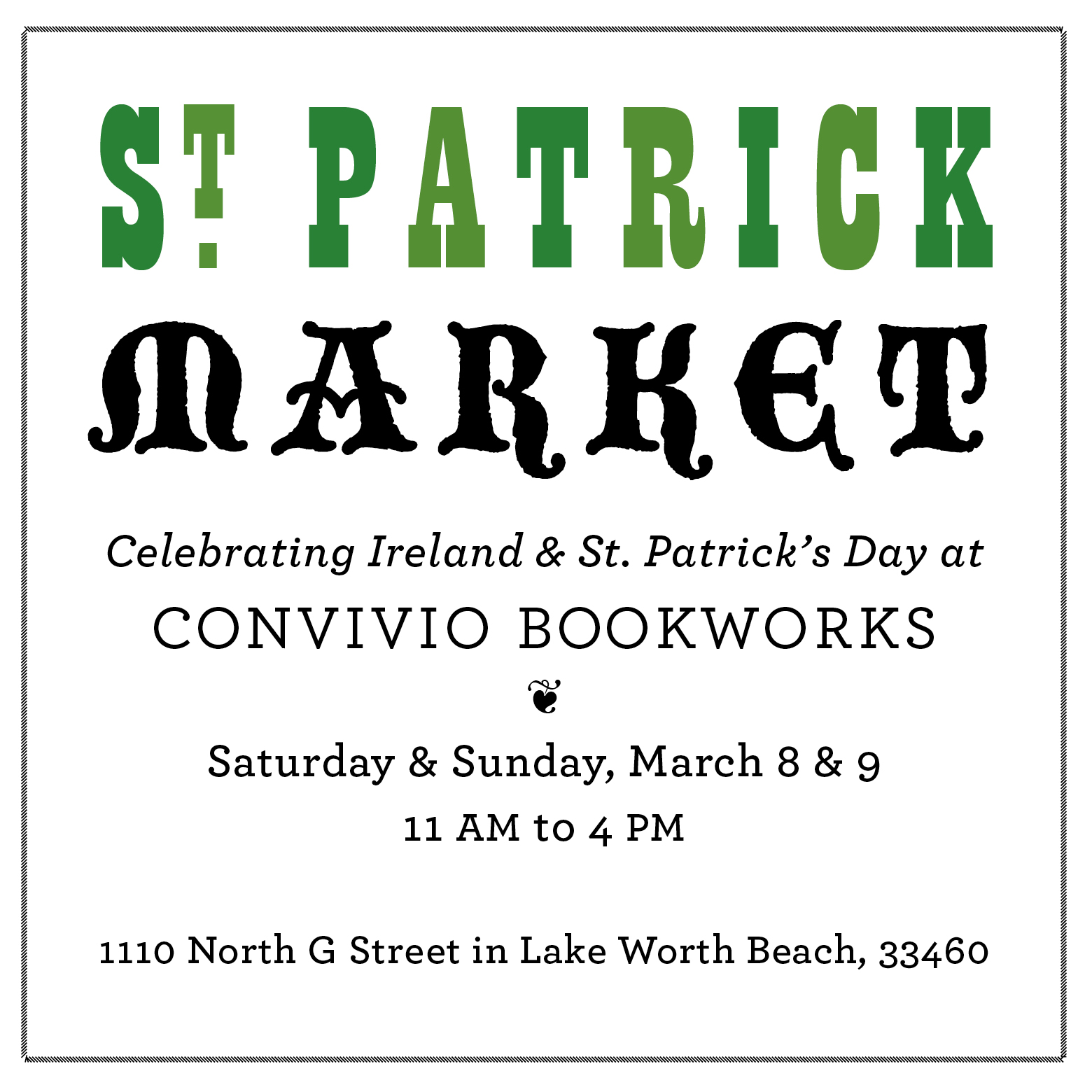
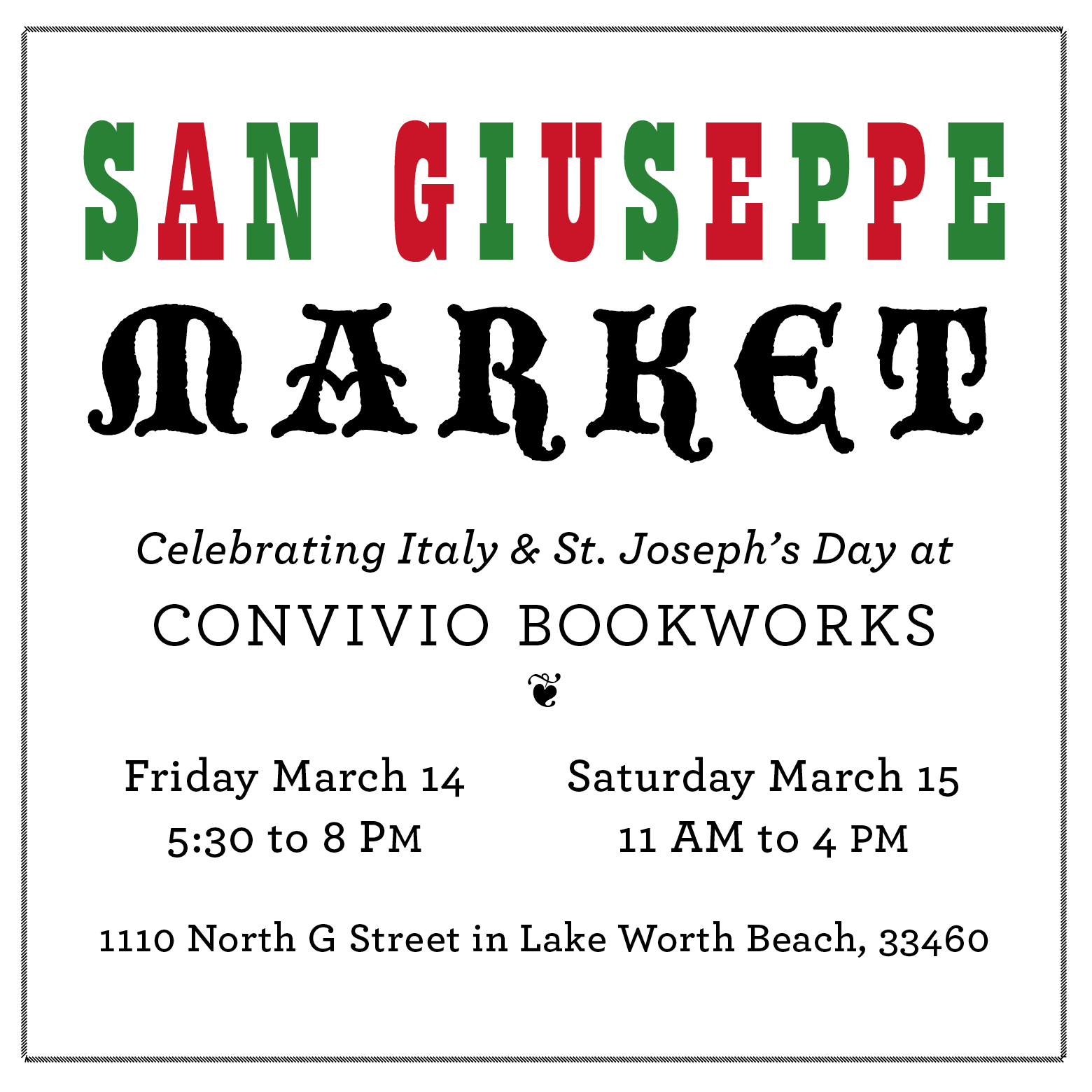
Image: Daffodils in a Vase by John Singer Sargent. Oil on canvas, circa early 1890s [Public domain, via Wikimedia Commons.]

Pancakes, Heart & Soul

The Pancake Bakery

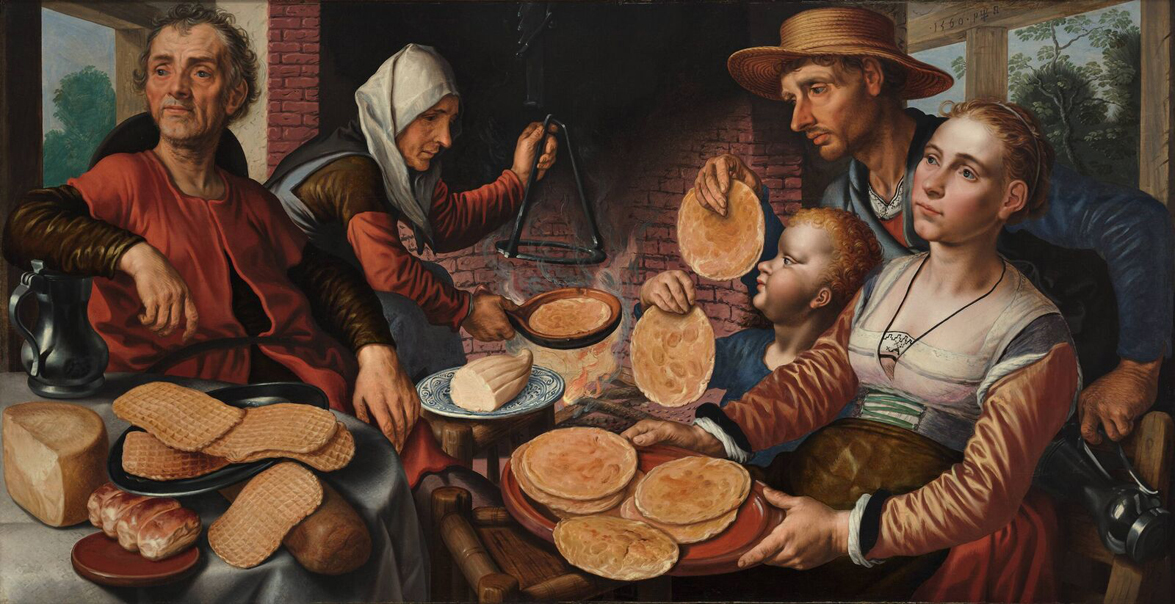
It’s a mid-week in mid-February and here come a couple of multi-faceted, multi-ceremonial days. It’s Tuesday today to begin with, and an extraordinary one at that: It is Mardi Gras in New Orleans and Mobile and Key West, and in Venezia, it is Martedi Grasso, and both the French and the Italian translate to Fat Tuesday. This is a movable celebration based on the timing of Lent, which is based on the timing of Easter, which is based on the timing of the full moon that comes with or after the Vernal Equinox. Tonight, the festivity of Carnival concludes. But for most of us, those of us who are far from the cities that celebrate Mardi Gras, tonight is simply a time to eat pancakes or crepes for supper, for the day is also known as Pancake Tuesday, and Shrove Tuesday.

Shrove Tuesday concludes Shrovetide, which is the time we’ve been in for several weeks now: the time after Christmas ends and before Lent begins, and there are many traditional foodways for Shrove Tuesday, even beyond the delectable pancake. Polish bakeries will have pączki today, a rich filled doughnut, and Germans will be making doughnuts, too, for this night they call Fasnacht: this night (nacht) before the fast. And in Sweden and Finland, you’ll find semlor on the table: buns scented with cardamom and filled with almond paste and cream. Our friends at Johan’s Joe, the Swedish coffeehouse in West Palm Beach where Seth and I have been known to buy a semla or two, tell us that originally semlor were made only for Fat Tuesday, or Fettisdagen, but nowadays Swedes bake semlor for all the Tuesdays of Lent. Traditions are living things; they do evolve.

How celebratory for a Tuesday to have pancakes for supper! But no matter if you are eating pancakes tonight, or doughnuts, or semlor, the idea behind all these things is the same. To clear the larder of the things that, traditionally, were not to be consumed during the Lenten fast, and in years past, this was a fairly extensive list (much more so than it is today): no eggs, no meat, no lard, no milk, no cheese, no sugar… no nothin’. And it was not just on Fridays; it was for the full forty days of Lent. When our ancestors fasted for Lent, they really meant it. Lent was forty days of beans and pulses and vegetables and fish and absolutely nothing fun. The Italians certainly understood this. Their traditional symbol for Carnival was a jolly plump fellow called il Carnevale Pazzo: Crazy Carnival. He’s usually seen dancing and playing a mandolin while a necklace of sausages dangles around his neck. But Lent brings la Quaresima Saggia: Wise Lent. She is thin and gaunt and somber. Head cast down, pensive, she is dressed in rags and carries a rope of garlic and dried cod.

It is il Carnevale Pazzo who tucks us into bed tonight on Shrove Tuesday, and in the morning, la Quaresima Saggia is the one who wakes us up, and when she does, we awaken to Ash Wednesday, the first day of our 40-day Lenten journey. Lent these days, it must be said, is no big sacrifice. Some folks give up sweets for Lent, or give up booze, or give up gossiping. All the Church asks is that we be more prayerful and more penitent and give up meat on Fridays. As a kid, for me this meant a season of fish sticks for supper on Fridays, or lentil soup without the sausage. Which was all fine with me. I was the sort of kid who ate anything that was put on my plate, no questions asked. Lucky for me, though, I was born in an age where fish sticks on Fridays met the obligatory sacrifice for Lent, and no one took away my eggs and cheeses and desserts. That would be a real sacrifice.

And then sometimes, like this year, St. Valentine runs headlong into la Quaresima Saggia, and therein lies a dilemma for young lovers who find themselves seated at fancy restaurants for an amorous Valentine’s Day dinner, debating whether they should have the fish or the lentil soup… or the Boeuf Bourguignon cooked to perfection. We may find ourselves sitting there, wondering WWJD (What Would Julia (Child) Do?).

I am not “old” but I am older, and Seth and I have more sense than to dine out on Valentine’s Day. One of our favorite Valentine’s Day celebrations was take out Thai noodles, picnic-style on a blanket on the floor, while we watched A Room with a View on DVD. This year, our niece is coming to dinner and she doesn’t eat meat, anyway. She won’t even realize it’s a ceremonial night of sacrifice when I put a bowl of Pasta Fagioli in front of her. It is an experiment, mind you: She’s not terribly adventurous when it comes to food, and this will be her first encounter ever, I am told, with the mild yet delectable cannellini bean. My hope is she will love cannellini beans and my version of Pasta Fagioli––cavatappi with those creamy white beans, infused with garlic and drizzled with fresh olive oil, seasoned just right with freshly-ground salt and pepper. Where love takes root, we say, let it grow. Especially on Valentine’s Day (and especially one combined with Ash Wednesday).


ONLINE SPECIALS: A COPPERMAN’S DAY SPECIAL, PLUS A VALENTINE SALE!
You’ll find our newest Copperman’s Day print and all our Copperman’s Day prints now at our our online catalog when you CLICK HERE. Order 5 or more of any of our mini prints (Copperman’s Day prints, B Mine Valentines, and our famous Keep Lake Worth Quirky prints) and use the code COPPERMAN when you check out; we’ll take $5 off your order to help balance out our flat rate domestic shipping charge of $9.50. (And if you ordered Copperman’s Day prints last week, when we were first announced them, worry not! Your orders should ship out tomorrow.)

If you’re doing more serious shopping (and we do have lots to offer if you are), you may instead use discount code LOVEHANDMADE to save $10 on your $85 purchase, plus get free domestic shipping, too. That’s a total savings of $19.50. Spend less than $85 and our flat rate shipping fee of $9.50 applies. Newest arrivals: Letterpress printed Valentine cards in the Valentine section, and check our Specialty Foods section for some incredibly delicious chocolate we found from Iceland, including a particularly Icelandic blend of milk chocolate and licorice. If you love both these things, well… Icelanders long ago discovered that covering black licorice in milk chocolate, then dusting the result in licorice powder, is just amazing. (Trust me: we’re on our third bag so far.)  CLICK HERE to shop; you know we appreciate your support immensely.

Image: “The Pancake Bakery” by Peter Aertsen. Oil on Panel, 1560. Museum Boijmans Van Beuningen, Rotterdam. [Public domain] via Wikimedia Commons.

Chiacciere for Carnevale

Carnevale, the pre-Lenten season of extravagance, began this past weekend in Venice.  There are some places in Italy where the Carnival season begins as soon as Epiphany has passed, but Venice to me always seems like the gold standard of Carnival celebrations. I love its High Baroque style: the elaborate costumes, the masks, the harlequin. It is another of the many celebrations we don’t pay much attention to here in the States, except perhaps in the cities that were settled by the French: New Orleans and Mobile come to mind, and Key West, too (and that is probably not so much a French influence but more a simple fact that the Conchs in our state’s southern-most city love a good party).

Carnevale––these days preceding Lent––is extreme in its extravagance purposefully, for the forty days of Lent that follow are extreme in the opposite direction: a season of fasting and penitence. Those forty somber days, a sort of cleansing and putting things in order, are instituted by the Church, but even without the religious aspect, some semblance of this would be necessary. Food, one must remember, was not as easy to come by in years past as it is now. Even I––and I am not that old––can remember winter, when I was a kid, being a time of canned and frozen fruits and vegetables. Imagine things a century or two ago: By this time, as winter drags on in its approach to spring, food stores would be running low and some fasting, whether penitential or not, would certainly be necessary.

But that is Lent and this is not. Before the fast comes, we are granted time to be extravagant and to celebrate and to make good use of all the things that will soon be forbidden. Carnival is a time of parades and street festivals while inside, it is a time for clearing out the larder. All the sausages, all the roasts, all the eggs, all the milk and cheese… it all had to go now.

Traditional festive foods for Carnevale vary throughout Italy, but many, especially the sweets, are fried. It is even thought that the ever popular Cannoli, the Italian dessert known around the world, originated as a Carnevale treat from Sicily. A simpler Carnevale recipe to try, and a favorite throughout Italy at this time of year, is for a delicately fried sweet called Chiacciere. They take their name from the Italian for chatter, or gossip, but we’re talking here not about gossip but about strips of lemon-scented dough, twisted and fried crisp and dusted with confectioners’ sugar. Here’s a typical recipe for Chiacciere. You’ve got some time to ponder making these treats. My sister will probably be making some before Lent begins; we’ll be enjoying them, and if you try them, too, let us know!

And so Carnevale has just begun and it will continue this year through the 13th of February, which is Shrove Tuesday, the day before Ash Wednesday, and it is Ash Wednesday that marks the beginning of Lent. Shrove Tuesday is a day to eat pancakes for supper. That is a particularly British custom, and here in this land settled first by English Puritans, this is what most Americans know about the season of Carnival. And while it is no comparison to Carnevale in Venice, still, pancakes for supper is not such a bad thing. In Italian, that day is Martedi Grosso; in French, it is Mardi Gras, and those are words we all know and associate especially with New Orleans and Mobile.

Nowadays the restrictions of Lent are pretty easy: the only hard and fast rule is no meat on Fridays. In times past, though, Lent was indeed a time of serious fasting: no meat, no eggs, no fun, no nothing. But again: these things are days and days away. For now, all we need to know is it’s time to enjoy a bit of extravagance.


SHOP OUR VALENTINE SALE!
At our online catalog right now use discount code LOVEHANDMADE to save $10 on your $85 purchase, plus get free domestic shipping, too. That’s a total savings of $19.50. Spend less than $85 and our flat rate shipping fee of $9.50 applies. If you’ve not taken a look lately at what Convivio Bookworks has to offer, I think you’ll be pleasantly surprised at what you’ll find here. Newest arrivals: Check our Specialty Foods section for some incredibly delicious chocolate we found from Iceland, including a particularly Icelandic blend of milk chocolate and licorice. If you love both these things, well… Icelanders long ago discovered that covering black licorice in milk chocolate, then dusting the result in licorice powder, is just amazing. (Trust me: we’ve gone through two bags so far.)  CLICK HERE to shop; you know we appreciate your support immensely.

Image: “Carnival in Venice” by Aleksandra Exter. Oil on canvas, circa 1930s, via Wikimedia Commons.