Category Archives: Lent

It’s Laetare Sunday, and Mother’s Day in the UK, Father’s Day in Italy

It’s Midlent: The Fourth Sunday of Lent, and halfway through our Lenten journey we get a Sunday whose color is rose, the color of joy, rather than penitent purple. A little break, a small reprieve, in celebration of being midway through. The day is called Laetare Sunday, a name derived from the first few words of the Mass for this day, in Latin: It is Isaiah 66:10: Laetare Jerusalem (“Rejoice, O Jerusalem”). It’s the day when folks in the United Kingdom honor their mothers: Mothering Sunday, they call it. And this year, Laetare Sunday happens to fall on St. Joseph’s Day. San Giuseppe, sacred to Italy, where today is Father’s Day, in honor of the saint who was foster father to Jesus.

I apologize for not writing more this past week, when we honored St. Patrick, of course, and one day before that, St. Urho, whom the Finns know as the saint who drove the grasshoppers out of Finland. Either St. Urho has not gotten as much publicity as Patrick, or he is completely fictional: we’ll leave that up to you. Of St. Joseph, though, we can be certain, and we can be certain, too, that it is a day to find a good Italian bakery and some zeppole to enjoy with your after-dinner espresso tonight. We Italians consume zeppole in great quantities on this day, and there is nothing quite like being in an Italian bakery on this feast day and witnessing the rolling racks filled with zeppole: delicately light pastries filled with custard and garnished with cherries, or their lesser known cousins, sfinci, the same delicate pastry filled not with custard but with sweet ricotta, like cannoli. These things make us swoon this one day each spring. We are a dramatic, operatic people and the Festa di San Giuseppe is one of our annual highlights (and surprise: it revolves around food).

And by Monday it will be spring by the almanac: Balance comes to this old earth Monday, March 20, at 5:24 PM Eastern. Day and night roughly equal from North Pole to South, for just a short time, and then our Northern Hemisphere days grow longer than our nights as we make our way toward the Midsummer Solstice of June. The constant rearrange, so subtle we barely perceive it until we sit back and ponder it in the blocks of time we call seasons. These things will never cease to amaze me.

It was last summer that we were going to have our annual Wayzgoose at the Jaffe Center for Book Arts –– an online video event featuring the fabulous letterpress printer Jennifer Farrell of Starshaped Press in Chicago with music by singer/songwriter and recording artist Patty Larkin and me as host –– but Patty Larkin suffered a terrible accident before we could film the Wayzgoose last summer. It was obvious to me that we had to wait for Patty to recover. “No Patty Larkin, no Wayzgoose.” She had a long road ahead of her, but she did it. Patty’s been touring again, and earlier this winter, she recorded her Wayzgoose concert for us. In the meantime, I recorded my interview with Jen Farrell, and still these past few weeks I’ve been filming and editing, and the last edits will be coming at a more furious pace these next few days, all so we can have the Wayzgoose ready for its March 25 World Premiere. Won’t you join us? You can watch from anywhere in the world, and if you join us at 7 Eastern on Saturday, you’ll be part of a worldwide wave of viewers celebrating good print and good music. Click here to learn more and to watch on Saturday at 7. (The premiere takes place at the Jaffe Center’s website.)

I have a suggestion for your Saturday viewing party: Fix yourself and for those watching with you a steaming plate of waffles. I’ll explain why at the Wayzgoose. The Wayzgoose traditionally falls on Bartlemas, St. Bartholomew’s Day –– a very quirky day in the Round of the Year if ever there was one. And when it came to rescheduling this Wayzgoose, I chose the 25th of March for similar reasons. Trust me: make the waffles, serve them with maple syrup or with ice cream, then sit down with us at 7 on Saturday evening to watch. You’ll love the work of Jennifer Farrell and Patty Larkin’s concert will have you beaming… and you will appreciate the waffle connexion.

So many good wishes for you this day and this coming week!
John

COME SEE US! Find us on Saturday April 1 at JOHAN’S JOE in Downtown West Palm Beach from 7 AM to 3 PM for a little Springtime Market that Johan’s Joe and Convivio Bookworks are hosting together. We had a Christmas Market last December and it was so much fun and we met so many wonderful people, we’ve decided to collaborate again for Easter. We’ll have all our handcrafted goods for spring and Easter there from Germany, Sweden, and Ukraine.

SAVE ONLINE! At our online catalog, save $10 off your purchase of $85 or more, plus get free domestic shipping, too, when you use discount code BUNNY at checkout. It’s our Zippin’ Into Springtime Sale, good on everything in the shop, now through Easter (and probably a bit beyond, too). CLICK HERE to shop! And don’t forget to use discount code BUNNY at checkout if your order is $85 or more.


Zeppole e Sfinci

Images: Zeppole and sfinci, above. The zeppole are more popular; the sfinci at this bakery are identified by green candied cherries. Top: “Stasera Zeppole” translates to “Tonight Zeppole.” The photograph of a baker’s storefront window was taken by Giovanni Dall’Orto in Syracuse, Sicily.


Carnevale Pazzo & Quaresima Saggia


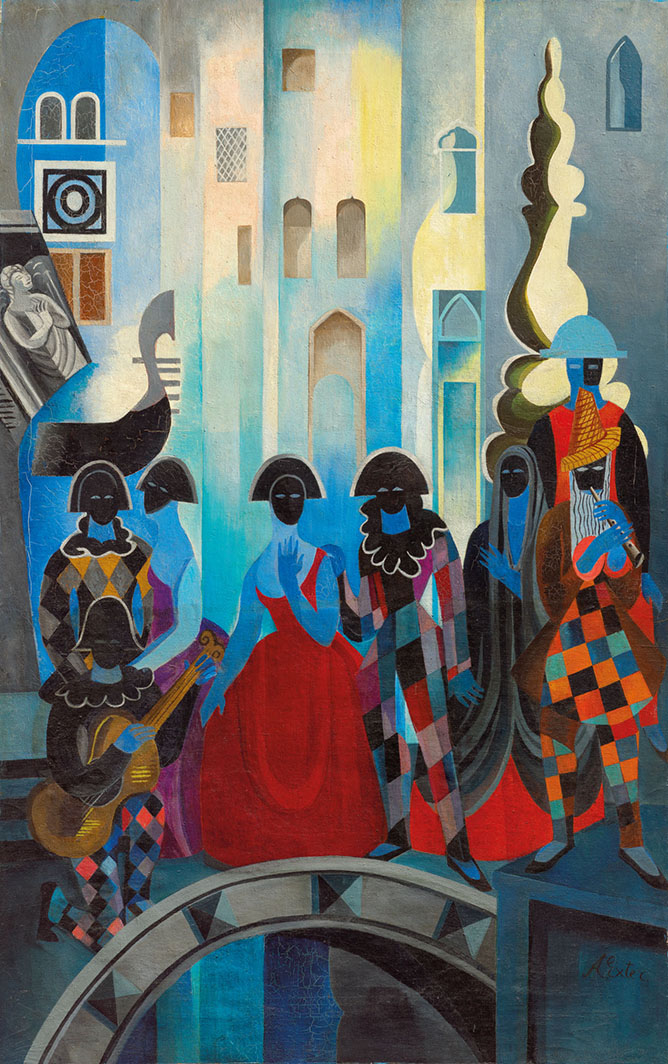
We are firmly on the approach to spring. The Carnevale of Venice, with all its passion and opera and high baroque fashion and masks, began in earnest over two weeks ago. The celebrations come to a close tonight with Martedi Grasso: Fat Tuesday… Mardi Gras. Stateside, the celebrations culminate tonight in New Orleans and in Key West and in Mobile, Alabama, the places where Mardi Gras is an old friend. For most of us Americans, though, the day doesn’t get a second thought as to its specialness, although many of us will be celebrating by making pancakes for supper. Shrove Tuesday is the proper name for this final day before the start of Lent, and we eat pancakes tonight to use up the last of the eggs, the last of the milk, the last of the butter. In Germany, and for the same reasons, it is Faschnacht, or Fasnacht, a night for homemade doughnuts. And in Sweden and Finland, you’ll find semlor on the table: buns scented with cardamom and filled with almond paste and cream. Our friends at Johan’s Joe, the Swedish coffeehouse in West Palm Beach, tell us that originally semlor were made only for Fat Tuesday, or Fettisdagen, but nowadays Swedes bake semlor for all the Tuesdays of Lent. Traditions are living things; they do evolve.

Lent these days is no big sacrifice. Some folks give up sweets for Lent, or give up booze, or give up gossiping. All the Church asks is that we be more prayerful and more penitent and give up meat on Fridays. As a kid, for me this meant a season of fish sticks for supper on Fridays, or lentil soup without the sausage. As a kid who would eat anything put in front of him, I didn’t mind, and Lent never felt like a sacrifice. In ages past, though, this abstinence from meat was not just on Fridays but for all the forty days of Lent, and it was not just meat but also eggs, cheese, milk, and lard. Lent was forty days of beans and pulses and vegetables and fish.

It’s been said, though, that even without this fast enforced by the Church, Lent would have had to have been invented, out of necessity. It was not all that long ago that food was a much more locally produced commodity, and by late winter, food stores would be at their lowest supply. If the populace was going to make it through the winter to the first fresh foods of spring, some abstinence was going to be necessary –– whether by order of the Church or by the simple fact that by late winter, there’s only so much food to go around.

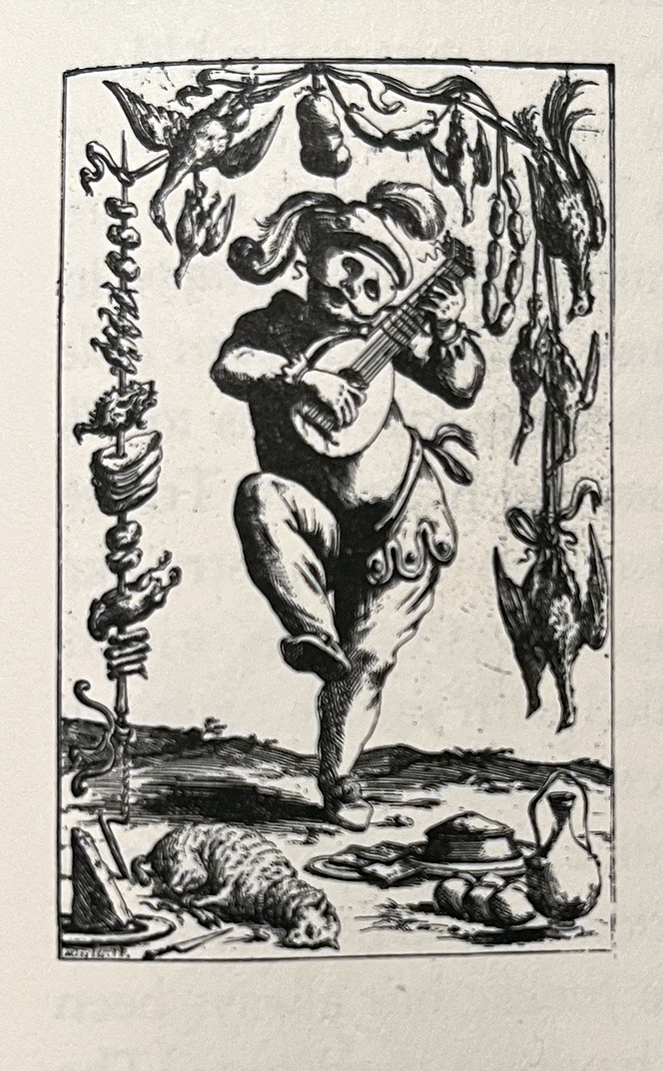
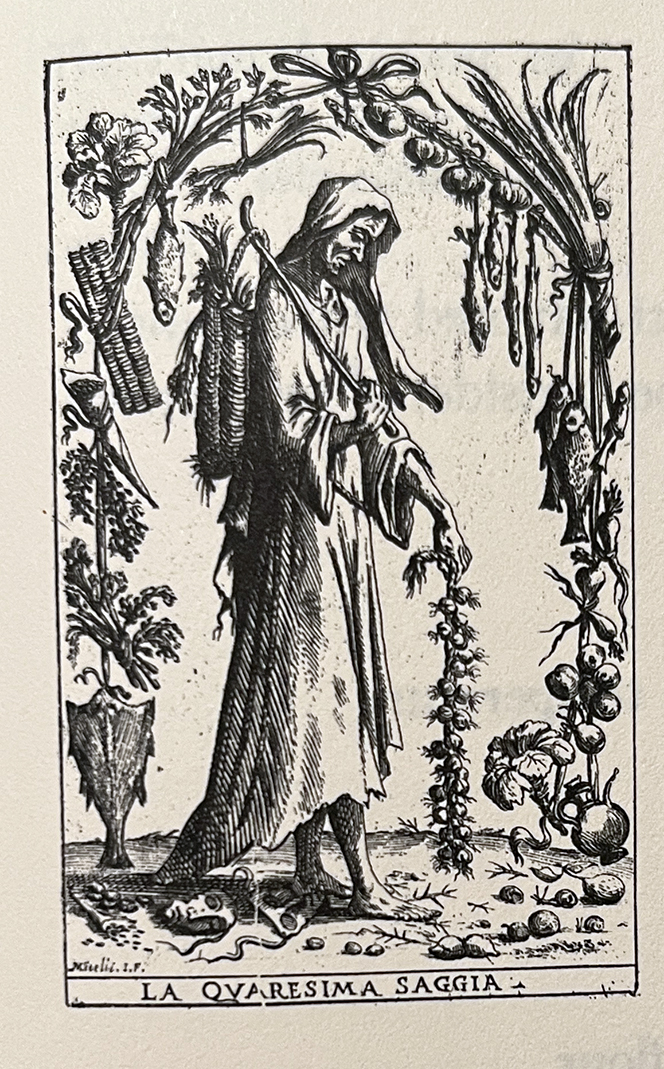
The contrast between the Carnival season and the Lenten season could not be more pronounced. The season of excess typically began with Christmas and its Twelve Days and resumed again with Carnevale (and in some places, where Carnevale would begin right after Epiphany, just continued on without a break). In Italy, the symbol for Carnevale is a plump and jovial fellow, dancing and having a grand old time, well dressed, plume in cap, and often wearing a ring of sausages around his neck. He is called il Carnevale Pazzo: Crazy Carnival. He rules the roost all through the Carnival season and through this culminating night of celebration on Fat Tuesday. Come Wednesday morning, though, there is a distinct shift and a new figure takes center stage: she is la Quaresima Saggia: Wise Lent. She is thin and gaunt and somber. Head cast down, pensive, she is dressed in rags and carries a rope of garlic and dried cod. Her reign begins on Ash Wednesday, and she treads barefoot upon the discarded masks of Carnevale. She is known, too, as la Vecchia: the old woman.

Seth and I, we will eat our pancakes tonight with festivity and in good spirit, and in the morning, if we have it in us, we will approach that altar to have ashes smeared on our foreheads with the spoken reminder: Remember man that thou are dust and to dust you shall return. We are made of the stuff of this earth and we shall return to it. But the stuff of this earth is made of the stuff of the stars, too, and that is something to ponder. If nothing else, these forty days that follow tonight’s pancake supper will hopefully remind us that life is short, and we would do well to live the time we have with compassion and kindness for our fellow human beings, and to love each day, and, as we like to say here, to live the ceremony of each day, too.


Tagged ,

Spring Excursion, or Your March Book of Days

The First of March brings St. David’s Day, sacred to Wales, and this year it also brings the moveable Shrove Tuesday, which goes by many names: Fat Tuesday, Mardi Gras, Pancake Tuesday. It is the final day of Carnival, the day that ushers in the solemn forty days of Lent that begin with Ash Wednesday. It is the night we traditionally eat pancakes or crepes for supper –– this, to use up the last of the eggs and the last of the milk and sugar before the restrictions of Lent kicked in.

This First of March also brings you the latest Convivio Book of Days Calendar. It’s a printable PDF, and a fine companion to this blog. This month’s cover star: a 1903 oil painting by Hungarian painter Béla Iványi-Grünwald called “Spring Excursion.” This is the month, after all, of the vernal equinox. We began our anticipation of spring at the start of February with St. Brigid’s Day, but in March, the season is made manifest. Days and nights will be of equal length for a spell, all across the globe, while here in the Northern Hemisphere light will continue to increase until the Midsummer solstice of June. Ever changing, ever the same.

The name Shrove Tuesday comes from Shrovetide, which is the time we’ve been in in recent weeks: this time after Christmas ends and before Lent begins. Ash Wednesday will bring its time of fasting and penance and reflection. Which is perhaps something we need every now and then. Well certainly once a year, it was thought, and why not now, when the larders were getting empty. Back in the days when food was not as plentiful and easily procured as it is now, Lent was crucial to help get everyone through to spring and renewal.

There are many traditions in foodways for Shrove Tuesday. The Polish bakeries will have pączki today, a rich filled doughnut, and the Swedish bakeries will have cream filled buns called semla. If they’re doing things right they’ll be selling them today but definitely not tomorrow and not again until next Shrovetide. In Germany, it is Fasnacht, and folks will be making doughnuts for the occasion this night (nacht) before the fast.

Seth and I, we will eat our pancakes tonight with festivity and in good spirit, and in the morning, if we have it in us, we will approach that altar to have ashes smeared on our foreheads with the spoken reminder: Remember man that thou are dust and to dust you shall return. We are made of the stuff of this earth and we shall return to it. But the stuff of this earth is made of the stuff of the stars, too, and that is something to ponder. If nothing else, these forty days that follow tonight’s pancake supper will hopefully remind us that life is short, and we would do well to live the time we have with compassion and kindness for our fellow human beings, and to love each day, and, as we like to say here, to live the ceremony of each day, too.

Image: “Spring Excursion” by Béla Iványi-Grünwald. Oil on canvas, 1903 [Public domain] via Wikimedia Commons.