Author Archives: John Cutrone

Approach to Spring

St_Brigids_Cross

Come February, we are thoroughly along in our journey away from winter, toward spring. The thermometer may not be giving a clear indication of it, but we are now about halfway between the winter solstice and the spring equinox. Sunlight has been increasing each day here in the Northern Hemisphere since the 21st of December. In another six weeks, night and day will once again be nearly balanced.

These halfway points are cross-quarter days, and this one, in the old Celtic calendar, is Imbolc, derived from the word Oimelc, Gaelic for ewe’s milk, for as the milk begins to flow for newborn lambs at this time of year, so soon will frozen streams and rivers begin to melt and flow, and so soon will green––and warmth––return. We are on the approach to spring.

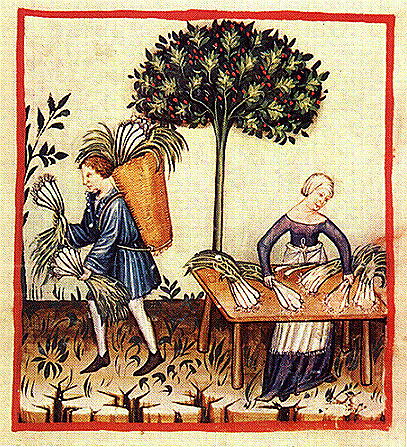
The Church gave the day to St. Brigid, or Brigit… a bridge from winter to spring. Brigid is more proper, as is the more Celtic pronunciation of her name (brigg-id or bree-id) and she is sacred to Ireland, second there only to St. Patrick in stature. It is traditional on this day to fashion a St. Brigid’s Cross out of rushes or reeds, as well as to leave an oat cake and butter on a windowsill in your home. This, to encourage Brigid to visit your home and bless all who live there. She bridges us also to Candlemas, which comes tomorrow, and tonight, being Candlemas Eve, marks the true and official end of the Christmas season. If there still remain vestiges of yuletide greenery in your home, this is the night to remove it. And so tonight return to nature what is hers––the rosemary, bays, mistletoe, holly, ivy, all––if for no other reason than that soon, the earth itself will be erupting in green.


Image: St. Brigid’s Cross by Liscannorman [Creative Commons], via Wikimedia Commons.


Tagged , ,

The Honey’d Middle of the Night

Santa_Agnese

Friends last night took Seth and me to the Kravis Center in West Palm Beach for a concert by the Budapest Festival Orchestra. I went knowing nothing about the Budapest Festival Orchestra or what would be on the program. The first two pieces were by Mozart, and they were good, certainly. The second half, though, was Felix Mendelssohn, who is more my speed. It was A Midsummer Night’s Dream, and it felt just about perfect to hear this now. I am still at the press every chance I get, working on my annual Copperman’s Day print, and usually listening to old obscure Christmas carols while I do so, for Copperman’s Day is the last of the odd “Goodbye to Yuletide” holidays. But even as I do so, the days are getting longer as we progress further and further from Midwinter’s longest night and toward Midsummer’s longest day. Here we are at the 21st of January, and it’s been one full month now of days lengthening since that shortest day. Each passing day adds a few minutes more daylight as the sun continues to trek further north in the sky. Sometimes we are given precisely what we need (even without realizing we needed it), and last night, Mendelssohn’s Midsummer Night’s Dream was just that thing.

Copperman’s Day was the Monday after Epiphany but I’ll keep working on that print until it’s done. Tonight, though, it’s another obscure old holiday, St. Agnes Eve, with its own traditions. It is a night of divination of a particular sort: a night when young girls could expect to see visions of their future loves. In Scotland, the tradition is to throw grain onto the soil of a field at midnight while reciting the following words:

Agnes sweet and Agnes fair,
Hither, hither, now repair;
Bonny Agnes, let me see
The lad who is to marry me.

The spells vary far and wide. In Italy, young girls go to bed without supper in order to dream of their future husbands. (One might wonder if this is worth it. I, for one, would be more content going to bed sated while dreaming of other things than a future love.) In other places, one must walk backwards to bed or bake a cake or eat a hard boiled egg before bed, yolk removed, the cavity filled with salt. Your future husband will, they say, bring you water in a dream. But of course you’d be dreaming of water to drink if you ate all that salt in one sitting.

John Keats in 1820 wrote a long poem titled “The Eve of St. Agnes” and in it, he put to paper many of these old traditions.

They told her how, upon St. Agnes’ Eve,
Young virgins might have visions of delight,
And soft adorings from their loves receive
Upon the honey’d middle of the night.

St. Agnes, like St. Valentine that follows soon after her, focuses on romance and matters of the heart, things that help melt the chill of winter. Like a surprise performance of A Midsummer Night’s Dream, St. Agnes warms the heart and the night.


Image: Saint Agnes, from the Basilica of Sant’Agnese Fuori le Mura in Rome.


Plough Monday & Copperman’s Day

PloughMonday

With the Christmas season’s end last week, the women had their “official” and traditional Back to Work day last Wednesday, on the 7th of January, with St. Distaff’s Day. But tomorrow, the first Monday after Epiphany, it’s time for the men to have their own version of this. It’s Plough Monday, and there may be some ceremonial ploughing of the frozen ground on this day, but mostly it is the last of the Christmas ceremonies in this period of shifting out of Christmastide and into ordinary time.

Of course today we welcome a more egalitarian approach: why shouldn’t the men be at the spindle and distaff, if they so wish, and the women at the plough? Nonetheless, these are traditions that come out of a time of more traditional division of labor between the sexes, and we heartily encourage you to mix things up to your liking. Our goal, simply, is to help you be aware of days worth celebrating, of course.

And so on Plough Monday it would be not at all unusual to see a gaggle of men parading through the village with a plough, finely decorated. The men themselves would be finely decorated, too, in all manner of foolish costumes, hearkening the Feast of Fools aspect of the Twelve Days of Christmas that have just passed. One man will be dressed as the Bessy, an old woman, and whether he realizes it or not, she is the personification of the old hag of winter or the goddess in her crone stage. And the ploughmen may perform an old mummers play, filled with images of death and rebirth. Soon, of course, winter will pass and it will be time to plough the earth in earnest and these things all relate to each other. With the spring, the young goddess will be born again. Though all seems cold now, and dead, life will return.

There will be mysterious old dances and a good deal of noise in the banging of drums and the blowing of horns, and there will most likely be a collection box passed around to help pay for the sport (as well as a few rounds at the tavern).

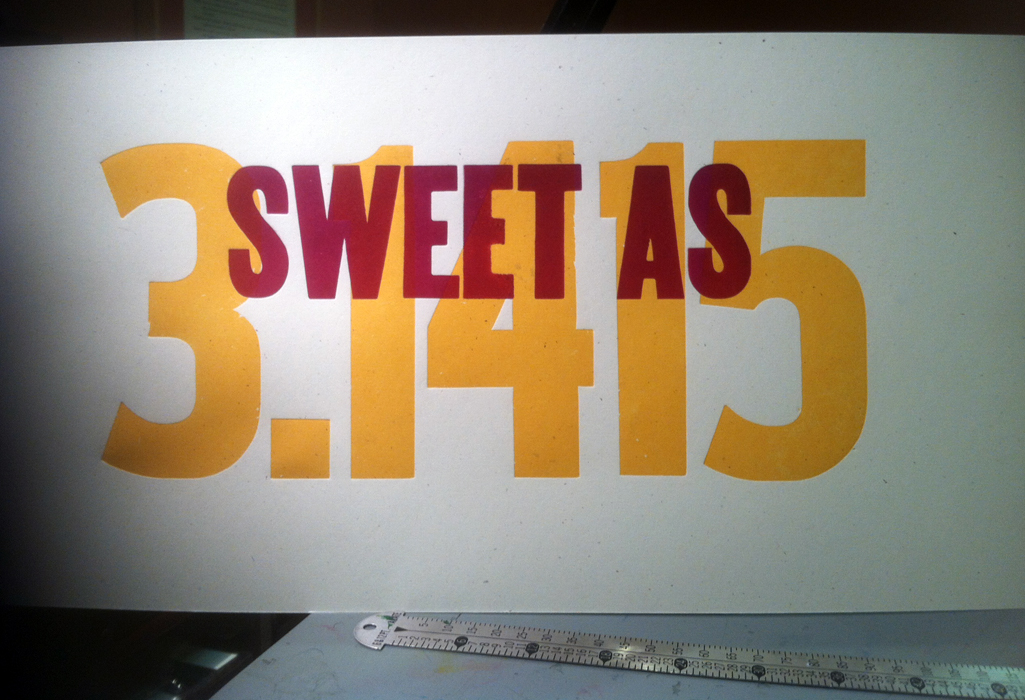
A lesser known celebration on this same day is Copperman’s Day, particular to Holland, and known especially in the print trade. And since Convivio Bookworks is a place that is a printshop at heart, it is a day we hold in high esteem. On the first Monday after Epiphany each year, print apprentices would be given the day off to work on their own projects, which they would later sell for a copper.

Last year, we printed an inaugural Convivio Bookworks Copperman’s Day print, and we’re planning one for this year, too. This year’s is a continuation of last year’s theme, inspired by a Christmas Revels reading first penned by Fra Giovanni Giocondo. It is said to have been written on Christmas Eve, 1513, and in his letter, Fra Giovanni encourages us to take heaven, to take peace, and to take joy. Because when you get right down to it, life deals us what it will and it is up to each of us to decide how we respond. Even in times of darkness, we can choose to take joy, and so last year’s print was just that message: Take Joy. This year, we’re working on Take Peace. I’m working in historic wood type, though, and so far I’m having a devil of a time finding the two Es I need to spell “peace,” at least if I want to stick to my original design plan. On top of that, I do not have the day off from work tomorrow, as the old Dutch coppermen of yore did on the Monday after Epiphany.

So be patient, our annual Copperman’s Day print may take a few extra days this year. Be that as it may, we do encourage other letterpress printers around the globe to take part in this old tradition that we see fit for revival. It’s all about loving what you do, and sharing it with others. It’s all about taking joy.


Image: Procession of the Plough on Plough Monday, an engraving from The Book of Days: A Miscellany of Popular Antiquities by the Chambers Bros., Edinburgh, 1869.